By Jemimah Wellington, JKNewsMedia Correspondent
ESCALATING CONFLICT linked to the Iran conflict have triggered sharp volatility across global energy markets, pushing oil prices higher and weighing on financial markets as governments respond to mounting supply and security concerns.
JKNewsMedia.com reports that crude oil prices surged amid fears of disruption to key shipping routes, particularly the Strait of Hormuz, a critical passage for global oil transport.
Global media reports show that West Texas Intermediate crude climbed above $96 per barrel, while Brent crude rose to $112.57, reflecting heightened market anxiety over restricted access to the waterway.
Foreign ministers from the Group of Seven (G7) issued a joint statement calling for “an immediate halt to attacks on civilians and civilian infrastructure” and emphasised the need to restore safe navigation through the Strait of Hormuz.
The ministers warned that the conflict is already disrupting “energy, fertilizer, and commercial supply chains,” signalling broader economic implications.
“We focused on the value of diverse partnerships, coordination, and supporting initiatives, including to mitigate global economic shocks such as disruptions to economic, energy, fertilizer and commercial supply chains, which have direct impacts on our citizens,” they said in the statement seen by Reuters.
The G7 member ministers consisting of the U.S., Britain, Canada, France, Germany, Italy and Japan, and the European Union, also reiterated the need to restore safe and toll-free freedom of navigation in the Strait of Hormuz.
Already, financial markets reacted sharply to the developments.
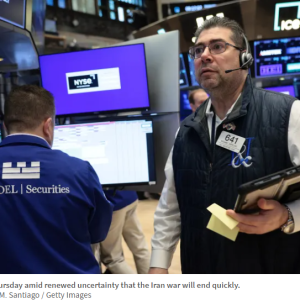
Major United States (U.S.) indexes declined, with the Nasdaq Composite entering correction territory after recent losses.
The Dow Jones Industrial Average dropped nearly 800 points, while the S&P 500 also recorded significant declines as investor sentiment weakened.
Meanwhile, President Donald Trump set an April 6 deadline for Iran to reopen the Strait of Hormuz, warning that the U.S. could target power infrastructure if the demand is not met.
The deadline follows earlier warnings that had been extended amid ongoing tensions.
Also, diplomatic exchanges between both sides have continued without resolution.
The U.S. submitted a 15-point proposal aimed at ending the conflict, while Iran responded with a five-point plan.
But Iranian officials stated publicly that they have no intention of engaging in talks with American counterparts.
Iranian state media reported that Tehran rejected a ceasefire proposal, maintaining its position as hostilities persist.
JKNewsMedia.com also reports that rising crude prices have translated into increased fuel costs across countries globally.
Currently, average gasoline prices in the U.S. have climbed to just under $4 per gallon, representing an increase of about $1 since the conflict began.
Supply concerns have extended beyond energy markets, affecting global trade routes and commercial activity.
Economic analysts note that disruptions linked to the Strait of Hormuz are contributing to broader instability in supply chains.
Security concerns are also expanding beyond the Middle East as officials in Asia have warned that prolonged conflict could affect U.S. strategic commitments in the Indo-Pacific region, particularly if military resources are redirected.
Also, allies including Japan, South Korea, Taiwan, and Philippines have raised concerns over regional stability and energy security as supply disruptions continue.
They noted that energy sector operations have also been affected just as offshore rig activity in the Gulf of Mexico has declined, while companies face logistical constraints, rising insurance costs, and reduced demand despite elevated oil prices.
Officials added that the situation remains under review as governments assess the impact on supply routes and economic stability.
Do you have a news tip for JKNewsMedia.com? Please email us at jkmediapress@gmail.com.