By Jemimah Wellington, JKNewsMedia Reporter
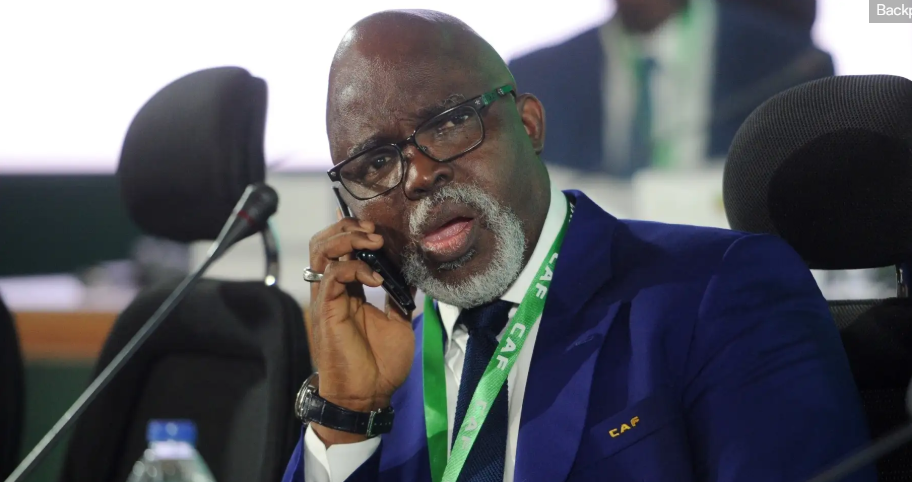
NIGERIA’s AMAJU Pinnick has failed in his attempt to retain his seat on the FIFA Council after losing out in the highly contested election at the 14th CAF Extraordinary General Assembly in Cairo, Egypt.
The former Nigeria Football Federation (NFF) president secured 28 votes, just one short of the tally needed to clinch one of the six available African slots on the global football governing body’s decision-making council.
The elected members include Morocco’s Faouzi Lekjaa, Mauritania’s Ahmed Yahya, Comoros’ Kanizat Ibrahim, Djibouti’s Souleiman Waberi, Niger’s Hamidou Djibrilla, and Egypt’s Hani Abo Rida.
Pinnick’s loss marks a significant setback for Nigeria’s representation in international football governance. He was first elected to the FIFA Council in 2021, becoming the third Nigerian to hold a position on the council after Oyo Orok Oyo and Amos Adamu.
The FIFA Council, which comprises 37 members, is responsible for overseeing global football affairs in the intervals between FIFA Congress meetings.
Members are elected by FIFA Congress for a renewable four-year term.
During his tenure, Pinnick played a key role in lobbying for African football interests on the global stage. However, this latest defeat adds to a series of electoral disappointments for the Nigerian football administrator.
He previously lost his bid to retain the position of CAF first vice president, a role he held under the presidency of Madagascar’s Ahmad Ahmad before being replaced in 2019.
Pinnick’s electoral losses have often been tied to shifting alliances within African football politics.
His close relationships with FIFA President Gianni Infantino and CAF President Patrice Motsepe have been well documented, but they were not enough to secure him another term on the FIFA Council.
The latest setback raises questions about Nigeria’s influence in CAF and FIFA, particularly as the anglophone bloc’s voice will now be absent from the FIFA Council.
His defeat in Cairo has drawn parallels to his previous loss in the Egyptian capital when he was ousted from the CAF vice presidency.
Observers note that Cairo has not been a favourable venue for Pinnick’s political ambitions, as he has faced successive electoral defeats in the city.
With Patrice Motsepe securing a second term as CAF president, there is speculation about whether Pinnick could still be appointed to a key administrative role within African football.
Some analysts believe that despite his electoral loss, Pinnick’s vast experience and network within the football fraternity could see him co-opted into the CAF Executive Committee.
The former NFF president, who led Nigerian football between 2014 and 2022, has been a prominent figure in football administration, championing reforms and developmental initiatives across Africa.
However, his recent loss suggests a diminishing political influence in the power dynamics of global football governance.