By Jemimah Wellington, JKNewsMedia
GRASSROOTS PUSH urged as drug war nets 62,595 arrests; 10.3 million kilos seizures.
Also, state governments have been asked to take ownership of the war against substance abuse by implementing grassroots-focused drug prevention and treatment strategies, as the National Drug Law Enforcement Agency (NDLEA) revealed that it had arrested over 62,000 suspects and seized more than 10 million kilograms of illicit drugs in just over four years.
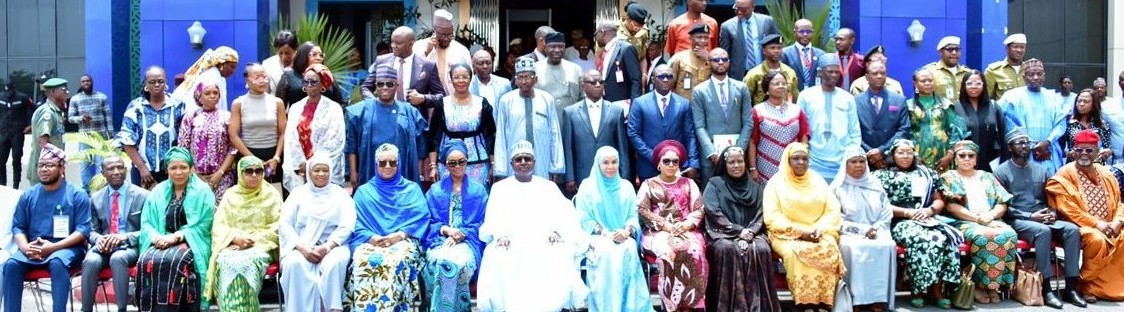
At a training workshop organised by the NDLEA for members of the Nigeria Governors’ Spouses Forum (NGSF) in Abuja, key stakeholders—including First Lady Senator Oluremi Tinubu, the United Nations Office on Drugs and Crime (UNODC), and the Economic Community of West African States (ECOWAS)—called for community-based interventions as outlined in the National Drug Control Master Plan (NDCMP).
First Lady, Senator Oluremi Tinubu, represented by Hajiya Laila Jibrin Barau, wife of the Deputy Senate President, praised the NDLEA for its bold approach to enforcement, noting that the pervasive spread of drugs had made the crisis a national emergency.
“The rising tide of drug and substance abuse amongst adolescents is a challenge we must no longer ignore or tackle in isolation,” she said. “This training testifies to our collective resolve to protect families and communities.”
NDLEA Chairman Brig Gen Mohamed Buba Marwa (Retd) highlighted the agency’s efforts under the current National Drug Control Master Plan (2021–2025), stating that in 51 months, the agency had:
▪️Arrested 62,595 suspects, including 68 drug barons
▪️Seized 10.3 million kilograms of various narcotics
▪️Secured 11,628 convictions
▪️Destroyed 1,330 hectares of cannabis farms
▪️Counseled and treated 24,375 drug users
▪️Conducted 10,501 sensitisation programmes reaching over 3.8 million participants
Marwa warned that drug abuse “dims prospects in an already beleaguered world,” urging state stakeholders to strengthen State Drug Control Committees (SDCCs) and adopt indigenous, pragmatic solutions.
“Your roles as mothers, changemakers, and SDCC drivers place upon you a sacred trust,” he said.
UNODC Country Representative Cheikh Ousmane Toure reinforced the call for state-level intervention.
“If the root of this crisis lies in our neighbourhoods, schools, and homes, then the solution must too,” he said. He urged governors’ spouses to push for:
▪️State-led resource mobilisation, including budgeted funding for prevention and treatment;
▪️Community-based care, with drop-in centres and accessible counselling;
▪️Culturally relevant programmes tailored to local needs.
Toure stressed that local influence matters: “When you act, local governments follow.”
Similarly, Dr. Daniel Amankwaah of ECOWAS encouraged state leaders to prioritise investments in both prevention and treatment, particularly at the community level.
The workshop featured presentations from a panel of Nigerian drug policy experts, including Dr. Martins Agwogie, Prof. Akintunde Oyedokun, Dr. Akanidomo Ibanga, Dr. Kunle Adeshina, Dr. Abubakar Salami, and Dr. Ngozi Madubauike.
They provided evidence-based strategies and encouraged the governors’ spouses to champion prevention campaigns, support recovery initiatives, and help reintegrate affected individuals into society.