By Jemimah Wellington, JKNewsMedia Correspondent
MAJOR SHIFT in Nigeria’s security leadership unfolded on Thursday as the Federal Government announced a reorganisation of the Armed Forces hierarchy to reinforce national defence and operational readiness.
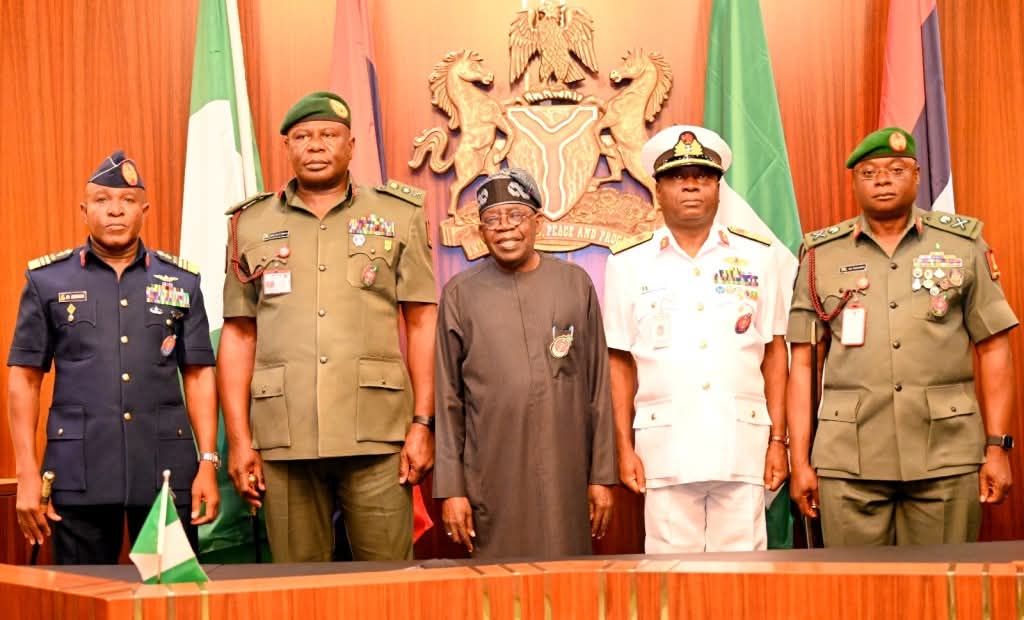
President Bola Tinubu approved the appointment of new Service Chiefs in what officials described as a move to strengthen the country’s security architecture.
The appointments according to the FG, which take immediate effect, mark a new phase in the administration’s ongoing efforts to ensure stability, unity, and efficiency within the Armed Forces of Nigeria.
General Olufemi Oluyede has been appointed Chief of Defence Staff, succeeding General Christopher Musa. The President also named Major-General W. Shaibu as the new Chief of Army Staff, Air Vice Marshal S.K. Aneke as Chief of Air Staff, and Rear Admiral I. Abbas as the Chief of Naval Staff. The Chief of Defence Intelligence, Major-General E.A.P. Undiendeye, retains his position in the new structure.
According to the official statement released by the Special Adviser to the President on Media and Public Communication, Sunday Dare, the changes form part of the administration’s strategic recalibration of Nigeria’s defence leadership to ensure a more agile and coordinated military response to emerging threats.
President Tinubu, in his directive, expressed profound appreciation to the outgoing Chief of Defence Staff, General Christopher Musa, and the other retired Service Chiefs for their patriotic service, commitment, and leadership during their tenure. He commended their efforts in sustaining operational efficiency and contributing to the protection of Nigeria’s territorial integrity.
The President charged the newly appointed Service Chiefs to justify the confidence reposed in them through renewed dedication, professionalism, and teamwork in the discharge of their duties. He emphasised that the Armed Forces of Nigeria must continue to reflect unity of purpose, discipline, and a shared sense of mission in defending the nation and ensuring public safety.
The appointments, as stated in the presidential release, are to take immediate effect. Each of the newly appointed Service Chiefs is expected to assume command and continue from where their predecessors left off, ensuring seamless transition and continuity in military operations.
The change comes amid heightened focus on strengthening internal security coordination, improving intelligence gathering, and modernising the operational capacity of the Armed Forces. The President reiterated his administration’s unwavering commitment to ensuring that the military remains well-equipped and fully supported to meet the evolving security challenges across the country.
This latest restructuring aligns with the Federal Government’s broader defence reform agenda, aimed at improving synergy among the services and reinforcing accountability within the top command structure. The leadership adjustments are intended to enhance responsiveness to national security priorities and foster greater collaboration across all arms of the military.
General Oluyede, the new Chief of Defence Staff, is expected to bring to the position his vast experience in strategic operations and inter-service coordination. Major-General Shaibu’s appointment as Chief of Army Staff places him at the centre of ground operations, while Air Vice Marshal Aneke assumes leadership of the Air Force at a time when aerial surveillance and precision response are critical to national security operations. Rear Admiral Abbas takes charge of the Navy with an expanded mandate to improve maritime security and safeguard Nigeria’s territorial waters.
The retention of Major-General Undiendeye as Chief of Defence Intelligence underscores continuity in intelligence oversight and the coordination of security information critical to ongoing counterterrorism and counterinsurgency efforts.
President Tinubu’s expression of gratitude to the outgoing Service Chiefs reflects his administration’s recognition of their service and leadership in steering the Armed Forces through challenging times. The transition marks both a symbolic and practical renewal of military command, signifying continuity of institutional stability within the defence establishment.
The newly appointed Service Chiefs are expected to begin briefings with the National Security Adviser and other top government officials to review current operational frameworks and national security priorities. Their immediate tasks include consolidating existing gains in the fight against terrorism, banditry, and oil theft while improving inter-agency cooperation.
By effecting this leadership realignment, the Federal Government reinforces its message that the Armed Forces remain a cornerstone of national sovereignty and internal cohesion. The appointments take immediate effect, ensuring that there is no gap in command or operational readiness across the defence structure.
The presidency emphasised that the administration’s overarching goal remains the preservation of peace, national unity, and the safety of citizens through a robust, professional, and disciplined military institution capable of responding decisively to all forms of security challenges.
The appointments were formally conveyed through the Office of the Special Adviser to the President on Media and Public Communication, confirming that all newly appointed Service Chiefs have assumed duty with immediate effect.
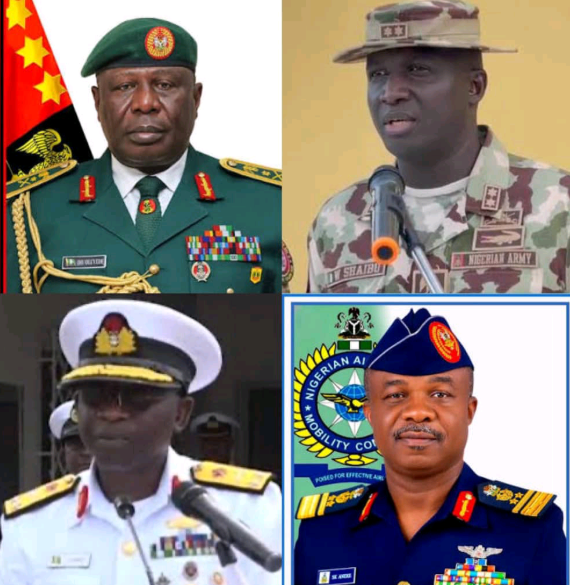 The newly appointed officers are:
Chief of Defence Staff: Lieutenant General Olufemi Oluyede
Chief of Army Staff: Major General W. Shaibu
Chief of Air Staff: Air Vice Marshal S.K. Aneke
Chief of Naval Staff: Rear Admiral I. Abbas
Chief of Defence Intelligence: Major General E.A.P. Undiendeye retain his position.