By Ajibola Olaide, JKNewsMedia Reporter
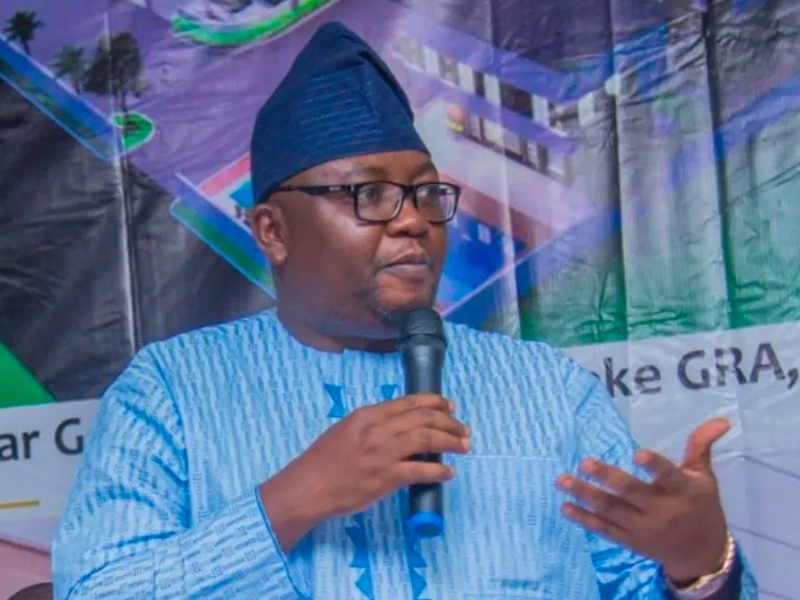
VANDALISM OF power infrastructure must be treated as a criminal offence, not a civil matter, Minister of Power Chief Adebayo Adelabu told lawmakers at a weekend retreat organised by the Senate Committee on Power.
He urged the National Assembly to pass stricter laws to protect national electricity assets, warning that acts of sabotage continue to undermine efforts to stabilise the grid and expand access.
Despite a marked improvement in grid stability this year, highlighted by zero collapses since January, Adelabu disclosed that vandals continue to destroy newly installed, high-capacity transformers.
The Transmission Company of Nigeria (TCN) has commissioned 61 transformers in 2024 and 13 more since January 2025, including units rated up to 300 megawatts.
Yet, these costly upgrades, valued in the hundreds of millions of dollars, remain targets of theft and sabotage.
He described other compounding issues such as illegal connections, meter tampering, and rampant power theft as critical concerns, demanding increased public vigilance and legal deterrence.
“We need more stringent legislation to tackle this problem,” he said, calling for national protection of infrastructure that belongs to every Nigerian.
The Minister made a case for including TCN in federal appropriations, warning that the agency’s reliance on dwindling internally generated revenue had rendered it unable to fund operations, pay salaries, or maintain infrastructure.
“They are short of funds. What they get monthly cannot even pay their salary, not to talk of maintaining ageing infrastructure or expanding transmission networks,” he said.
Adelabu identified chronic underinvestment in distribution networks as a fundamental barrier to sector progress.
He criticised many distribution companies (DisCos) for failing to deliver on performance benchmarks and frustrating gains made in generation.
The Minister revealed that the 2003 sector reforms had mandated technical partnerships for DisCos, but most partnerships collapsed after privatisation, leaving the networks in poor condition.
“The DisCos have disappointed us. They are the weakest link. No matter what we achieve in generation, it becomes meaningless if the distribution is dysfunctional,” he noted.
He warned that many DisCos borrowed heavily to acquire assets but have since prioritised debt repayment over infrastructure development.
While tariff adjustments in 2024 raised market liquidity by 70 percent and boosted revenue from ₦1 trillion to ₦1.7 trillion, Adelabu said revenue remittances remained dismal.
In Q4 2024, northern DisCos remitted only ₦124.4 billion of their ₦408.86 billion invoice.
Abuja DisCo accounted for 85 percent of these remittances, while Lagos-based southern DisCos accounted for 70 percent of the ₦254.6 billion sent from the region.
These disparities, he explained, stem from the stark contrast between well-funded urban networks and neglected rural systems. “Crumbled infrastructure outside economic hubs has made reliable distribution impossible,” he said.
On metering, Adelabu cited a ₦700 billion Presidential Metering Initiative and a World Bank-supported programme targeting 4.3-million-meter installations by 2025.
Though 75,000 were installed in April 2024 and another 200,000 are expected in May, he admitted that progress is slow.
“We are not there yet due to underinvestment and operational inefficiencies,” he said, adding that bridging the metering gap is essential to restoring consumer trust and financial sustainability.
The Minister highlighted the growing strain on the federal budget due to unsustainable subsidies.
The sector currently carries a ₦4 trillion subsidy backlog—₦1.94 trillion for 2024 alone, with monthly shortfalls reaching ₦200 billion.
He warned that maintaining current tariffs is no longer feasible.
To salvage reforms, the government plans to restructure underperforming DisCos and enforce tougher benchmarks.
Without capital injection into distribution, he said, gains in generation, including a record 6,003MW output in March 2025—and transmission upgrades will fail to improve supply to homes and businesses.
Looking forward, Adelabu confirmed new initiatives to attract private investment, regionalise transmission networks, and reduce system failures.
He cited Lagos DisCos’ 70 percent remittance rate as proof that sound infrastructure yields measurable returns.
The Minister also outlined efforts to expand generation capacity in northern Nigeria.
These include reviving the 215MW Kaduna thermal plant, 87 percent complete but idle for five years, and developing the 1,000MW Makurdi hydropower project.
Additionally, the Katsina State Government has shown interest in operating the abandoned 10MW wind farm in partnership with private investors, with a feasibility study already underway for its concession.