By Jemimah Wellington, JKNewsMedia Correspondent
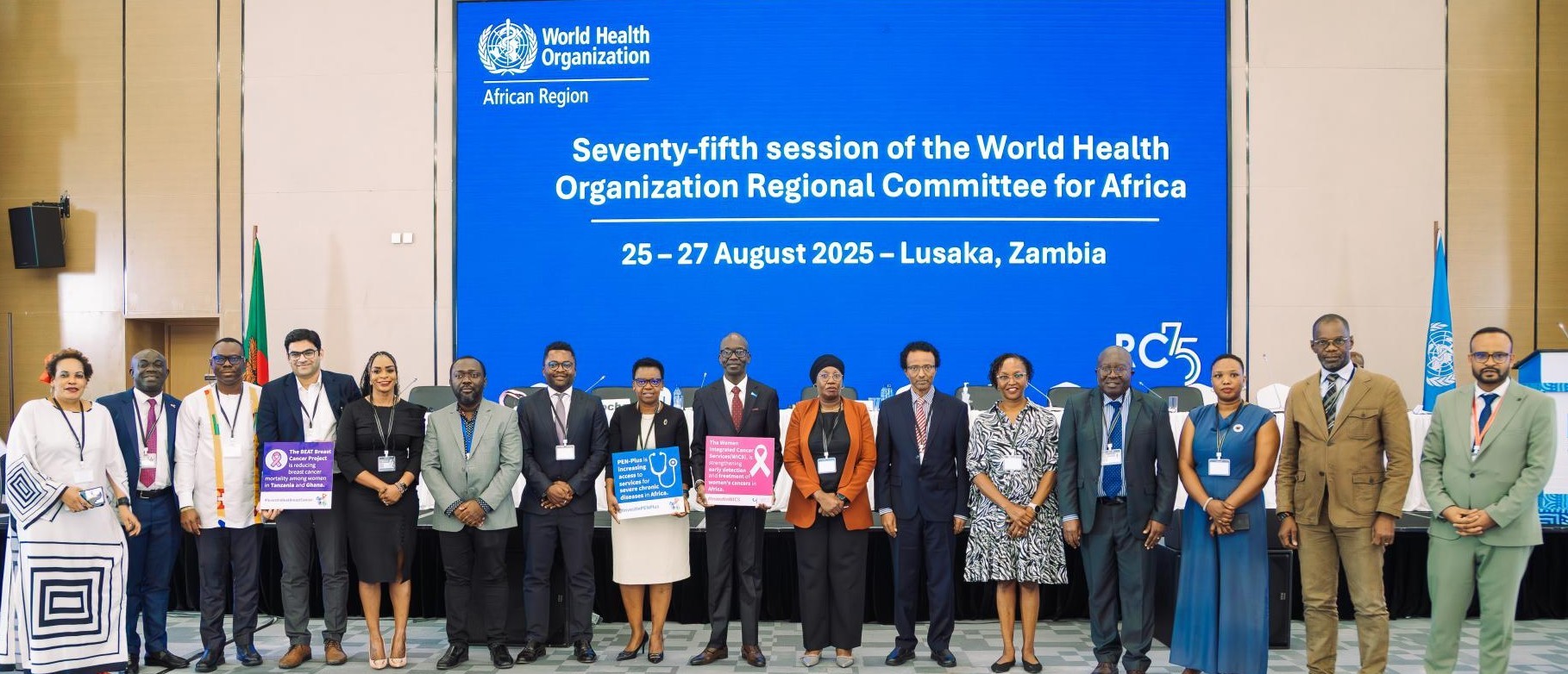
CALLS FOR increased investment in integrated health services to address the growing burden of severe noncommunicable diseases (NCDs) echoed across the 75th session of the World Health Organisation (WHO) Regional Committee for Africa, where ministers of health and partners gathered to discuss urgent strategies for tackling diseases that disproportionately affect women and underserved communities.
Delegates at the high-level side event underscored the need for equitable access to prevention, screening, treatment, and rehabilitation across the full continuum of care.
They highlighted that disparities remain most visible in rural areas where infrastructure and health services are inadequate, making it harder to reach populations most at risk.
Breast and cervical cancers were flagged as urgent priorities, with cervical cancer continuing to pose the most significant threat to women’s health in sub-Saharan Africa.
Despite being both preventable and treatable, cervical cancer remains the leading cause of cancer deaths among women in the region.
According to data cited, Africa accounted for 23% of the 76,000 global cervical cancer deaths in 2022.
Alongside women’s cancers, ministers drew attention to the heavy toll of severe NCDs such as Type 1 diabetes, sickle cell disease, and heart conditions.
These illnesses claim more than half a million lives every year, including among children, adolescents, and young adults in some of Africa’s poorest communities.
Unequal access to health services continues to limit progress in reducing mortality and improving outcomes for patients.
To strengthen care for cervical and breast cancers, the event called for urgent investment in leadership, governance, and financing.
Delegates noted that building stronger foundations in these areas remains critical in the current funding landscape.
The meeting further emphasised the importance of advancements in strategic planning, health infrastructure, workforce training, and widening access to diagnostic and treatment services to deliver equitable care.
Examples of successful models were highlighted by WHO and its partners.
The Women’s Integrated Care for Cancer Services (WICS) initiative, operating in Côte d’Ivoire, Kenya, and Zimbabwe, strengthens early detection, treatment, and integration of cancer care into primary health systems.
Also, the BEAT Breast Cancer Project, a multi-year initiative in Tanzania and Ghana, is designed to reduce mortality through early detection, timely diagnosis, and comprehensive treatment access.
“PEN-Plus, WICS and the BEAT Breast Cancer Initiative are models for a new standard of care, rooted in equity, access and health justice.
I urge countries to prioritise policies that embed these models into broader health system strengthening,” said Dr Mohamed Janabi, WHO Regional Director for Africa.
Côte d’Ivoire was presented as a notable example of progress, combining high HPV vaccination coverage—reaching over three million girls, equivalent to 91.4% – with WICS-supported community-based screening campaigns to reinforce cervical cancer prevention.
In Kenya, cervical cancer screening has been successfully integrated into national health services, showcasing another pathway for sustainable policy adoption.
“This gathering marks a pivotal moment to accelerate action for breast cancer prevention in Africa. We deeply value the leadership of the Ministries of Health of Ghana and Tanzania, and the steadfast support of the Pfizer Foundation in helping us achieve this milestone.
“The side event builds momentum for the policy prioritisation of women’s cancers, partnerships to strengthen the broader women’s cancer ecosystem, and advance a health-systems approach to breast cancer prevention and management,” said Dr Somesh Kumar, Senior Director at Jhpiego.
Attention was also turned to the PEN-Plus Strategy, which has been instrumental in extending care for severe NCDs at district hospital level.
Since its rollout, the group notes that 20 countries across Africa have expanded access to services for severe NCDs.
Also, more than 15,000 patients are now receiving treatment for chronic illnesses such as sickle cell disease and Type 1 diabetes through PEN-Plus-supported clinics.
Meanwhile, delegates concluded that sustained investment in integrated models like PEN-Plus, WICS, and BEAT is vital to building resilient health systems that address the pressing burden of NCDs across Africa, particularly for women and underserved populations.