By Joke Kujenya
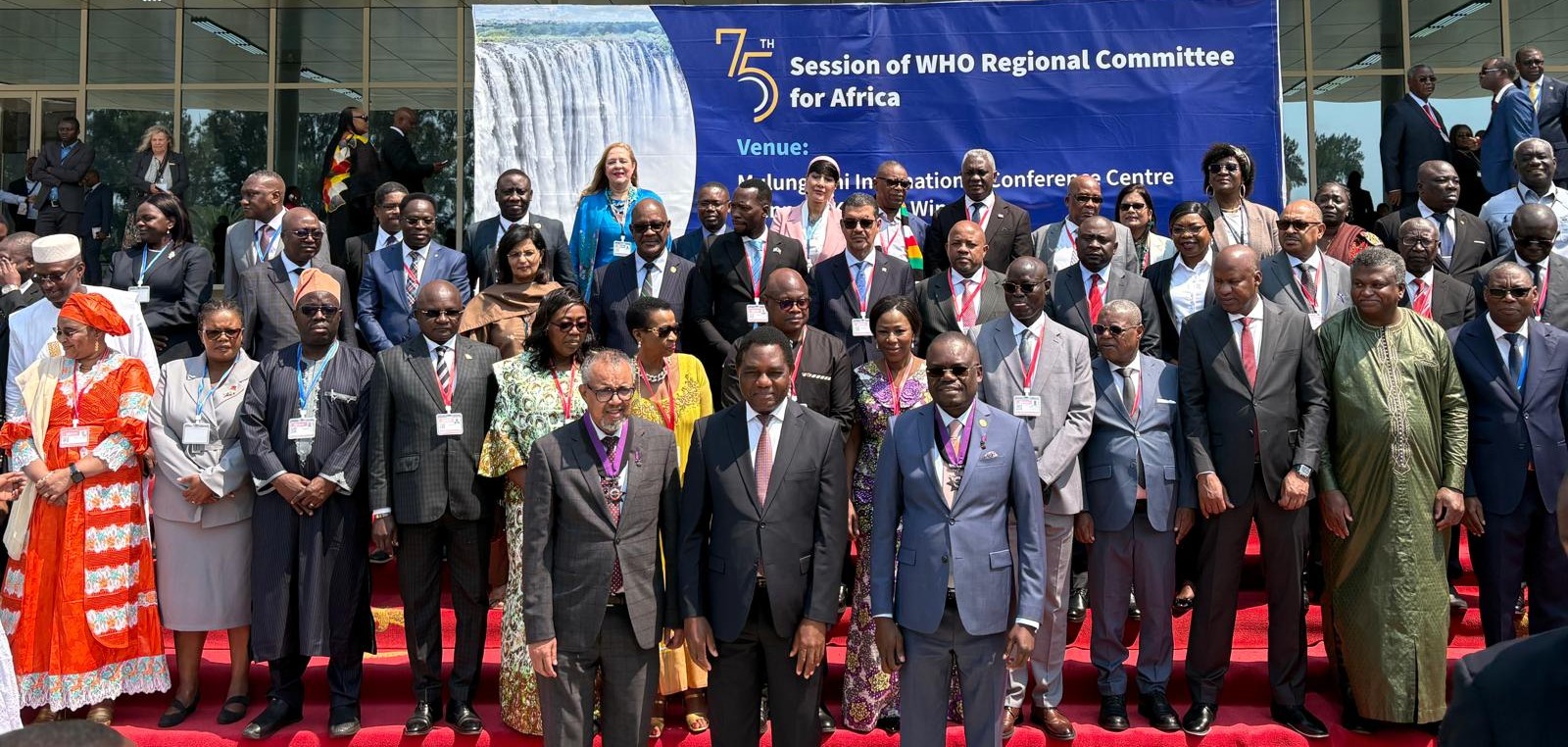
HEALTH MINISTERS from across Africa have converged on Lusaka for the 75th Session of the World Health Organization (WHO) Regional Committee for Africa, where the continent’s fragile health systems face a convergence of challenges threatening their foundations.
The three-day session, which runs from 25 to 27 August, is hosted by Zambia and brings together ministers from 47 African countries, over 500 delegates, and senior WHO leadership, including Director-General Dr Tedros Ghebreyesus and the recently appointed Regional Director for Africa, Professor Mohamed Janabi.
In a statement reflecting on the gathering, Chief Programme Officer at Reaching the Last Mile, Okereke, noted that Africa’s health infrastructure is under severe strain from a combination of systemic pressures.
She listed ballooning debt obligations, escalating climate-induced disasters, shrinking donor support, and an accelerating exodus of health professionals as converging threats that risk overwhelming national health systems.
Okereke argued that the meeting in Lusaka offers a vital platform for ministers and WHO officials to demonstrate their capacity to confront the underlying structural issues that determine whether technical resolutions can be implemented successfully.
She said that while the official agenda focuses on oral health, rehabilitation, malaria, and emergency preparedness, concentrating solely on technical items risks overlooking the wider systemic pressures undermining health outcomes.
According to her, African governments are currently entangled in a debt trap, with projections indicating more than $80 billion will be spent on debt servicing in 2025.
She said this financial burden dwarfs health allocations in many countries, undermining the continent’s capacity to respond to surging disease outbreaks. Cholera, Ebola, and mpox have risen by more than 40 percent since 2022, often worsened by climate-related disasters.
Okereke further highlighted that the retreat of donors and reductions in official development assistance are widening financing gaps, leaving ministries of health struggling to sustain essential services.
She stressed that these gaps coincide with a continuing workforce drain, as health professionals leave for opportunities abroad, further weakening already overstretched systems.
At the same time, the increasing burden of non-communicable diseases adds additional strain.
She acknowledged that WHO itself operates under shrinking funding and shifting global politics but insisted that the organisation still has a pivotal role to play.
“WHO can help countries navigate these realities by framing health as integral to debt sustainability and elevating climate resilience, workforce retention, and NCD prevention as urgent priorities,” she said.
Okereke referenced existing frameworks such as the New Public Health Order, the Lusaka Agenda, and the Accra Initiative, noting that they provide pathways for reform if effectively pursued.
She stressed that the challenge for ministers and WHO leadership is whether RC75 becomes a turning point in addressing the existential threats facing Africa’s health systems, or whether it remains a symbolic event with limited impact.
Her statement concluded that the future of Africa’s health is at stake and that the decisions taken in Lusaka will have far-reaching consequences for the continent.
The session comes at a time when maternal mortality, malaria, and emergency preparedness continue to pose significant challenges.
The outcomes of RC75 are expected to shape policy direction for years to come, with health leaders closely watched on how commitments translate into measurable action.