By Jemimah Wellington, JKNewsMedia Reporter
THE CONTINUED rising cost of living in Nigeria has prompted the Organised Labour to push for an annual review of the ₦70,000 minimum wage to reflect inflation.
Labour unions argue that workers’ earnings should align with economic realities rather than waiting years for adjustments.
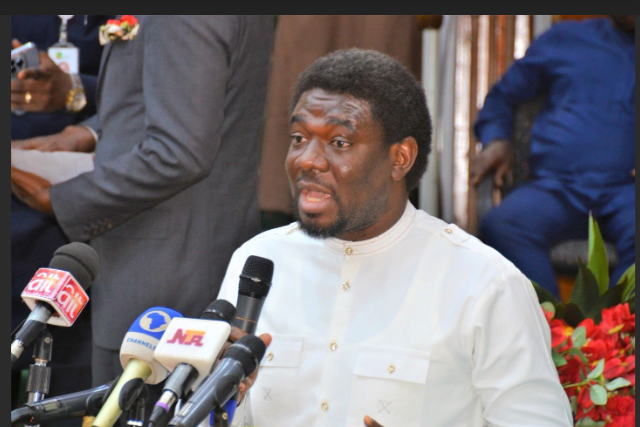
Festus Osifo, President of the Trade Union Congress (TUC), stated that the current system of revising wages every three or five years fails to account for the yearly inflationary trends.
Speaking on Channels Television’s Politics Today, Osifo said: “If the inflation figure for a year is, for example, 35%, that percentage should apply to the ₦70,000 minimum wage to maintain its value.”
The Nigeria Labour Congress (NLC) has also initiated discussions on adopting this annual adjustment mechanism.
Osifo highlighted that by mid-January 2025, the National Bureau of Statistics (NBS) would release inflation data for December 2024, which could guide such adjustments.
The current minimum wage, set in July 2024, marked a significant increase from the ₦30,000 fixed in 2019.
However, with skyrocketing living costs linked to subsidy removal and increased energy prices, labour unions insist the ₦70,000 wage no longer suffices.
Osifo noted that Labour leaders plan to continue advocating for inflation-based adjustments throughout 2025, describing it as a fair solution for both workers and the government.