
By Babafemi Ojudu
SOMETHING NEW is emerging in my country, Nigeria, so new that it resists easy definition. It is a phenomenon that should engage political scientists, philosophers, and thinkers across the world.
A man belongs to one party in the morning; by evening, he has shifted to another. By the next day, he is in a third, and shortly after, he returns—without explanation—to the first.
A presidential candidate arrives in a city to campaign, greeted by the full machinery of his party. Moments later, he is comfortably seated in the Government House of a state controlled by a rival party, untroubled by the signals this sends to his own followers.
Elsewhere, a prominent politician openly identifies with two parties at once, brandishing their banners side by side, pledging allegiance to both without hesitation. Another belongs to one party by day and another by night, as though political affiliation were a change of clothing.
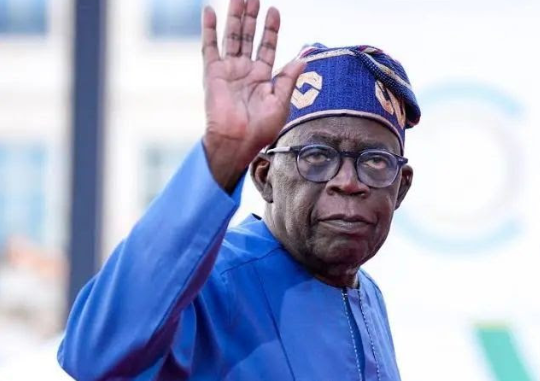
The other day, I saw a friend sitting comfortably at the national convention of the APC, even though I know, as a matter of fact, that he is one of the sponsors of the rival ADC. It is strange. Yet, it is real. It is happening. I could name names, but that would distract from the seriousness, and the danger, of what is unfolding before us. There comes a point when reality becomes so fluid that the language designed to describe it begins to fail. Nigeria may have arrived at that point.
In recent weeks, I have watched, with a mixture of disbelief and reluctant fascination, as this new political behavior takes shape. How does one even begin to describe a system in which a politician moves across three parties within a month? Where individuals openly identify with multiple parties at once—one by day, another by night—and others, without the slightest embarrassment, display the symbols of rival parties simultaneously?
This is not defection as we once understood it. It is not coalition-building.
It is certainly not ideological evolution. It is something else.
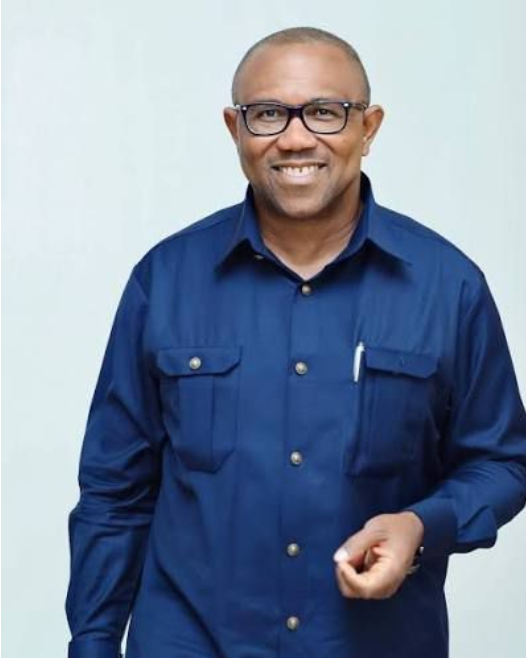
As a student of political science, I have searched for parallels across established democracies, fragile states, and transitional systems. Politicians have crossed party lines before. They have betrayed platforms, abandoned manifestos, and realigned with new interests. But even then, there was always a moment of rupture, a leaving before a joining. A recognition, however faint, that political identity demanded some form of singular commitment.
What we are witnessing in Nigeria today defies even that minimal expectation.
Let me attempt a definition.
Simultaneous Multi-Partisan Opportunism (SMPO):
A political condition in which actors fluidly and concurrently identify with multiple parties—publicly or covertly—treating party affiliation not as ideology or institutional commitment, but as a disposable instrument for immediate personal advantage.
In simpler terms, it is not crossing from one party to another. It is standing in several at once.
This phenomenon represents a profound shift. Traditionally, political parties—however flawed—serve as vessels of ideas, identity, and discipline. They offer voters a sense of direction, however imperfect. Even in societies where ideology is weak, there remains at least the pretense of alignment.
That pretense is now collapsing. What replaces it is a marketplace—fluid, unanchored, and deeply transactional. In this marketplace:
* Loyalty is no longer transferred; it is hedged.
* Affiliation is no longer declared; it is performed as needed.
* Politics is no longer about persuasion; it is about positioning.
The implications are far-reaching.
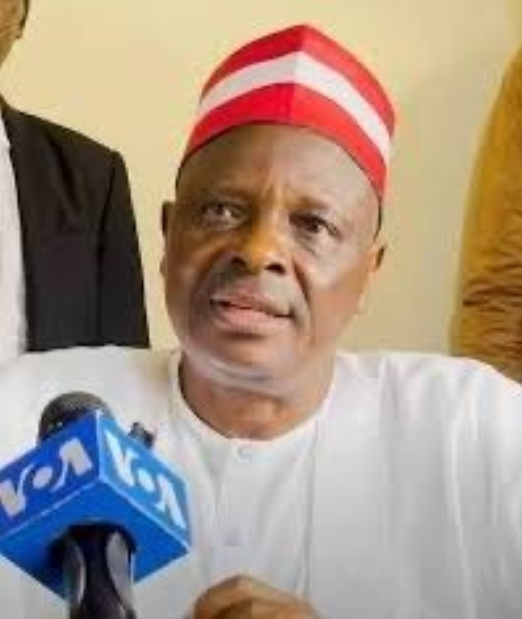
First, it erodes accountability. If a politician belongs everywhere, he belongs nowhere. If he can claim multiple platforms simultaneously, he can be held responsible by none.
Second, it confuses the electorate. Democracy depends, at its most basic level, on clarity—who stands for what, and where. When that clarity disappears, voting becomes less an act of choice and more an exercise in guesswork. It nudges voters toward transactional behavior, where conscience yields to calculation.
Third, it empties politics of meaning. When party identity becomes interchangeable, politics itself loses coherence. It ceases to be a contest of visions and becomes instead a choreography of ambition.
One is tempted to ask: how did we get here?
Part of the answer lies in the long erosion of ideology within our political space. Over time, parties became less about ideas and more about vehicles, convenient platforms for access to power. Once that transformation was complete, it was perhaps inevitable that even the vehicle itself would lose definition. But inevitability does not make it any less dangerous.
History teaches us that when institutions lose meaning, individuals rush in to fill the vacuum. And when individuals operate without constraint, the system becomes unpredictable—often at great cost to society.
What Nigeria is presenting to the world, therefore, is not merely a local curiosity. It is an extreme case of what happens when political structures are hollowed out completely. It is a glimpse into a post-ideological order—one in which affiliation is fluid, loyalty is fractional, and power is pursued without the burden of consistency.
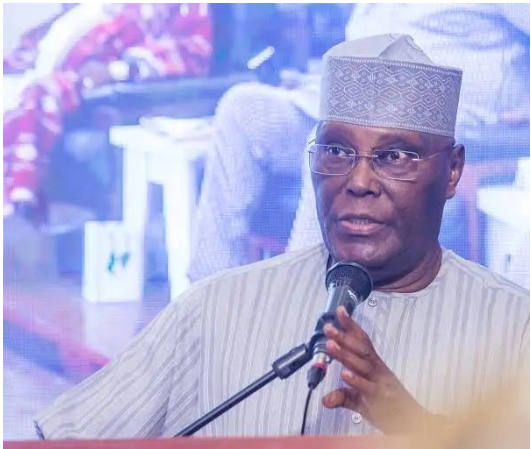
In such a system, the politician is no longer a representative of ideas. He becomes an entrepreneur of access. And the voter? A spectator in a game whose rules are constantly rewritten, a Kotangowa buyer looking from stall to stall in pursuit of a bargain of used clothings.
There is something profoundly unsettling about this moment. Not because it is chaotic—Nigeria has known chaos before—but because it is becoming normalized. What should provoke outrage now elicits shrugs. What should raise questions is dismissed as strategy.
Yet it is precisely at such moments that reflection becomes urgent.
For if politics can mean anything, it eventually means nothing.
And when it means nothing, it cannot serve anyone.
Nigeria, once again, stands at the edge of invention, though not necessarily the kind it should be proud of. Whether this “innovation” becomes a cautionary tale or a dangerous template will depend on how quickly we recognize it for what it is:
Not politics. But its absence, cleverly disguised.
—
Do you have a news tip for JKNewsMedia.com? Please copy and email us at jkmediapress@gmail.com.