By Olukorede Yishau
FOR SEVERAL years, clearly inching close to two decades, Nigeria has been wrestling with and boxing terrorism. It has been a bruising contest with no ringside bell to signal the end of a round and no referee to separate the fighters. The nation rises each morning hoping the worst is behind it, only to discover that violence has once again found another village, another highway, another family to injure.
Over the years, entire communities have been emptied by fear, farmlands have fallen silent, and classrooms have become ghostly reminders of dreams interrupted.
The tears of parents who have buried children, the anguish of children orphaned by bombs and bullets, and the quiet grief of soldiers who have watched comrades fall have become part of a painful national archive.
The fight has changed faces over the years, but its cruelty has remained constant. What started as an insurgency in the Northeast has morphed into a complex web of extremism, banditry, kidnappings, and criminal violence that has tested the resolve of Africa’s most populous nation. Yet, amid the despair, Nigeria has refused to surrender. Soldiers continue to march into dangerous terrain, intelligence officers pursue elusive networks, humanitarian workers rebuild shattered lives, and ordinary citizens, despite living under the shadow of uncertainty, continue to plant, trade, teach, worship, and dream. Their resilience is perhaps the country’s greatest weapon.
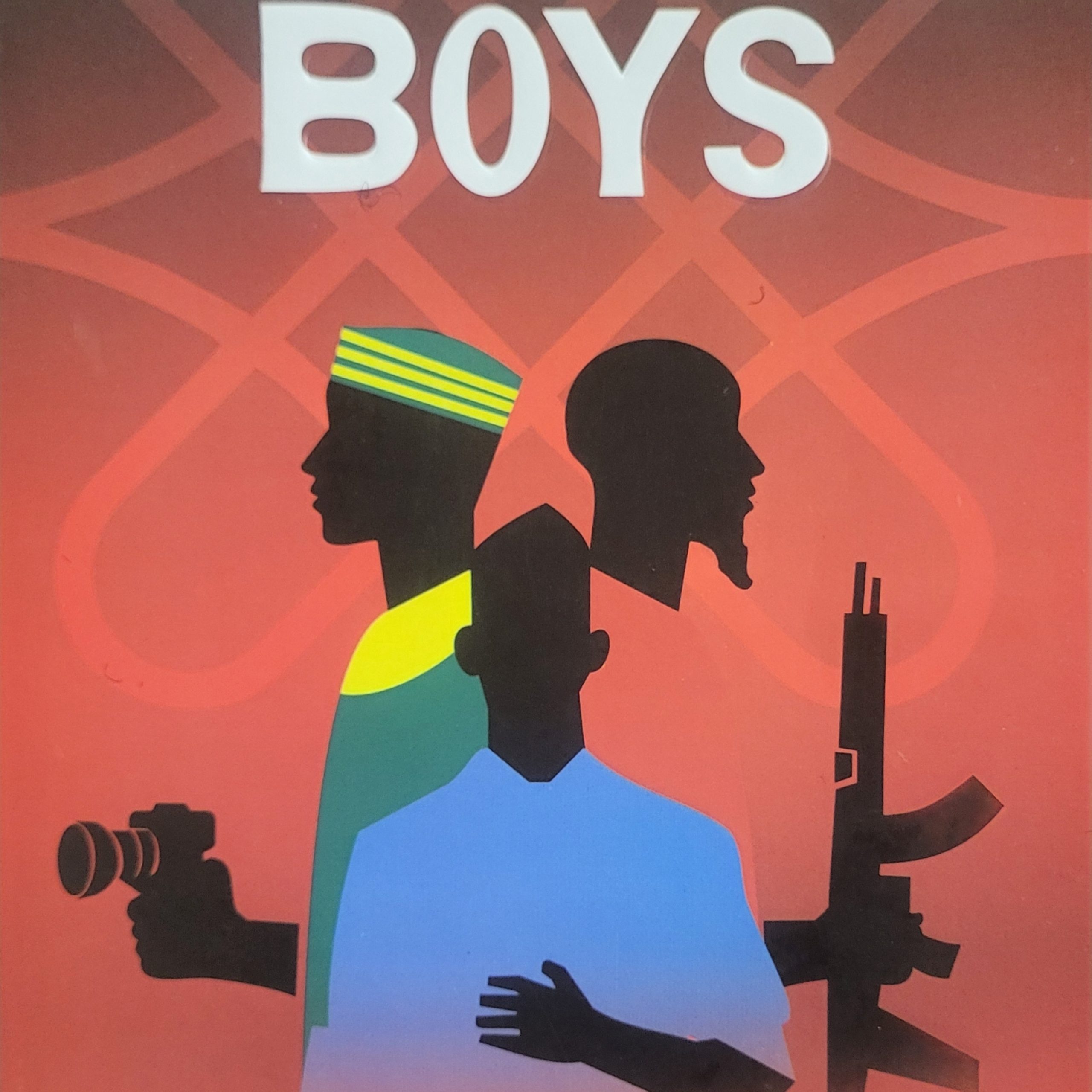
I had cause to think about our fate as a nation while reading Sola Owonibi’s latest novel, ‘The Bissau Boys’. It is an exploration of who or what the terrorists were before morphing into the monsters we all see. It is about the people who knew them when they were ‘human’ like us. It is about what fuels their activities. It is about how senselessness can replace sensibility, and it is about so many things on these enemies within who we have been battling and have absolutely no idea when we will defeat them.
The novel follows three boys, Nura, Bakir and Amisu who started out as ‘almajiri’, those young people who ordinarily should be early-form Islamic scholars but who are, however, feared on the streets because of their poverty-induced aggression.
This unconventional work told almost in fragments also follows the women in the lives and around these men. We meet Zainab, Laraba, Suliat and others.
Years after their almajiri years, Nura finds himself in America as a photojournalist who goes to different parts of the world taking great photographs and conducting unforgettable interviews. One day, while at home with his wife, he sees Amisu on the television screen. He has become a key figure in the terrorism network making mess of Nigeria and killing and maiming hundreds of fellow countrymen. Nura becomes restless and feels like being back in Nigeria. He convinces himself that he will be able to convince his childhood friend to abandon the reckless path he is following.
Owonibi explores friendship, fate, the roots of terrorism, the factors shaping our dear country’s place in the globe and the invisible line between hope and hopelessness.
The novel also examines faith, especially its roles in keeping us apart as much as in bringing us together. It probes the contradictions of religion, showing how the same beliefs that inspire compassion, forgiveness, and hope can also harden prejudice, deepen divisions, and justify exclusion. Through its characters, the story asks difficult questions about the boundaries people erect in the name of God, while reminding readers that genuine faith is measured less by loud professions than by quiet acts of humanity, empathy, and love.
With this text, Owonibi resurrects memories many Nigerians would rather leave buried. His words transport readers to Chibok where, on an April night in 2014, 276 schoolgirls were torn from their dormitories, transforming a quiet community into the epicentre of global outrage. They drift to Dapchi, where another set of schoolgirls discovered that the simple pursuit of education could come at a terrifying price. They linger in Kagara, Birnin Yauri, Greenfield University, and Kuriga, places whose names have become more than geographical markers, but metaphors for a nation where classrooms, once regarded as sanctuaries of hope, have been turned into hunting grounds for terror.
The recollections are painful because these tragedies are not mere entries in Nigeria’s security archives. They are stories of interrupted dreams, empty school desks, parents suspended between hope and despair, and children forced to exchange textbooks for captivity. Some returned bearing invisible wounds that no medical examination could diagnose. Others never returned at all. Those fortunate enough to regain their freedom came back to communities forever altered by grief, fear, and unanswered questions.
By invoking these haunting episodes, Owonibi does more than remind readers of a succession of notorious kidnappings. He compels them to confront the enormous human cost of insecurity and the devastating consequences of allowing fear to infiltrate places built to nurture curiosity, ambition, and possibility. His text is a reminder that every attack on a school is not merely an assault on children, but an assault on Nigeria’s future, for a nation that cannot guarantee the safety of its classrooms risk condemning generations to learn fear before they learn hope.
There are many other things that the novel has reminded me of. One, resilience alone cannot win a war of this nature. Two, terrorism feeds on poverty, ignorance, weak institutions, fractured communities, and hopelessness. Three, bullets may eliminate terrorists, but they cannot kill the ideas that recruit them. Four, lasting victory will depend not only on military strength but also on justice, free and compulsory education, economic opportunities, credible governance, and a society determined to deny extremism the oxygen it survives on.
And my final take: Nigeria’s battles against terrorism, banditry, kidnappings and other related criminalities are more than security campaigns; they are struggles for the soul of a nation that has hopefully decided that fear will not have the final word.
Quote
Nigeria’s battles against terrorism, banditry, kidnappings and other related criminalities are more than security campaigns; they are struggles for the soul of a nation that has hopefully decided that fear will not have the final word.
—