By Joke Kujenya
RYAN DECEMBRINO first sensed trouble when persistent abdominal pain drove him to seek medical help. At his doctor’s insistence, he underwent a colonoscopy that revealed multiple polyps.
Although one physician was unconcerned due to the absence of family history, the 29-year-old in Philadelphia was scheduled for a follow-up three years later, according to published reports.
Two years on, escalating pain led him back to the clinic, where a tumour was discovered in his colon. Immediate surgery and chemotherapy followed.
“If I had waited until my three-year follow-up, I wouldn’t be here today,” Decembrino said. He now advocates wider awareness, stressing that “cancer can happen to anyone.”
Age-long Complex Health Problem
Cancer has long been associated with older populations, with around 88 percent of cases in the United States of America (USA) alone, diagnosed in those over 50.
Fewer than 100,000 of the approximately two million annual diagnoses occur among people aged 15 to 39.
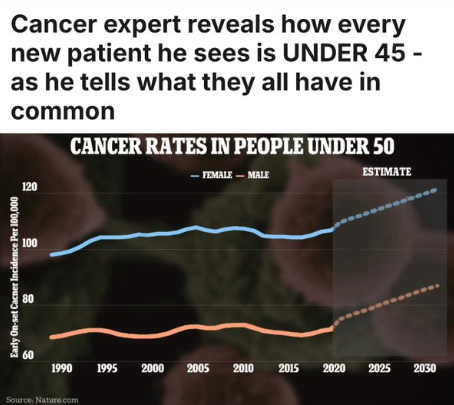
However, data show early-onset cancers – defined as those diagnosed before 50 – are increasing sharply across the globe.
A major analysis reported a 79 percent rise in global early-onset cancer incidence between 1990 and 2019, with related deaths up 28 per cent.
A 2023 study in The Lancet Public Health also confirmed a steady rise in 17 cancers among younger U.S. adults, particularly those born after 1990.
The steepest increases were observed in small intestine and pancreatic cancers.
“People born after the 1980s are four times more likely to be diagnosed with rectal cancer than those born around 1950,” said Hyuna Sung, cancer epidemiologist at the American Cancer Society.
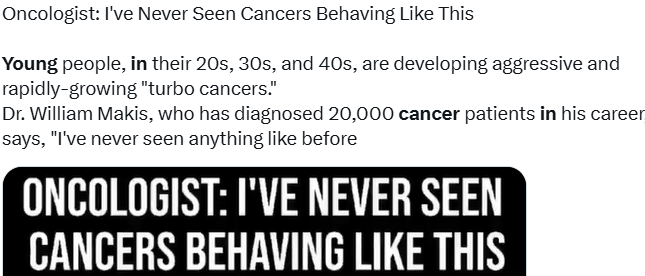
Researchers project global incidence of early-onset cancers will increase a further 31 percent by 2030, with deaths rising 21 percent.
Oncologist Alok Khorana of the Cleveland Clinic noted the growing number of otherwise healthy young people appearing in clinics without family histories of cancer. “It’s a question we’re all asking,” he said.
Studies suggest environmental and lifestyle factors may play a significant role.
While better screening partly accounts for the rise, Sung emphasised it does not explain the concentrated increases in younger populations.
Potential contributors include changes to gut microbiomes, rising antibiotic use, dietary shifts, exposure to “forever” chemicals known as PFAS, and the spread of microplastics.
Obesity has also been considered a factor. An analysis of 21 cancers in adults aged 25 to 49 found that rising rates of colon, rectal, pancreatic and kidney cancers could be partly linked to excess body weight.
Yet, a U.S. study covering 1995 to 2015 did not show an association between obesity trends and early-onset colorectal cancer.
“The more components of the Western diet, the greater the risk,” Khorana said, highlighting ultraprocessed foods, red meat and sugar as key concerns.
Microplastics and PFAS remain under scrutiny. Colorectal surgeon Frank Frizelle of the University of Otago noted plastic production has surged from 120 million metric tons in 1990 to over 460 million tons in 2023, coinciding with rising early-onset cancer cases.

While evidence remains inconclusive, studies show microplastics present in most human organs and at higher levels in tumour tissue.
Colorectal cancer is now the second leading cause of cancer deaths in U.S. women under 50 and the leading cause in men of the same age group.
A January 2024 study covering 27 countries confirmed a sharp rise in early-onset colorectal cancers, particularly among people under 40.
Research has linked certain gut bacteria, including colibactin-producing E. coli, with genetic mutations that trigger tumours.
A Nature study in April found that early life exposure to colibactin left a distinct mutational pattern in early-onset colorectal cancer cases.
Questions also remain about the pace of tumour growth. Evidence suggests typical colorectal cancers develop over five to 15 years, but some researchers, including Alberto Bardelli of the University of Torino, suggest early-onset tumours may advance within one to two years.
If confirmed, current screening intervals may be inadequate for younger populations.
Experts recommend younger adults remain vigilant for symptoms. Warning signs include unexplained anaemia, rectal bleeding and weight loss.
However, delays in diagnosis remain common.
A U.S. survey by the Colorectal Cancer Alliance found 54 per cent of patients with early-onset colorectal cancer were initially misdiagnosed, often with haemorrhoids.
Thirty-six per cent consulted three or more doctors before receiving the correct diagnosis.
Awareness campaigns are showing impact. The Alliance reported colonoscopy appointments rose 36 per cent within three weeks of launching its “LEAD FROM BEHIND” campaign featuring actor Ryan Reynolds.
The organisation also found that 57 per cent of Americans were unaware colonoscopies prevent colorectal cancer by removing precancerous polyps.
Medical experts stress that prevention strategies remain limited. Vaccinations against HPV and hepatitis B can help reduce risks of cervical, throat and liver cancers.
Otherwise, they advise healthy diets, exercise, and limiting alcohol, smoking and sun exposure.
For survivors like Decembrino and others, advocacy and support remain central. “The only way I got through it was by having great people around me,” he said.