By Jemimah Wellington, JKNewsMedia
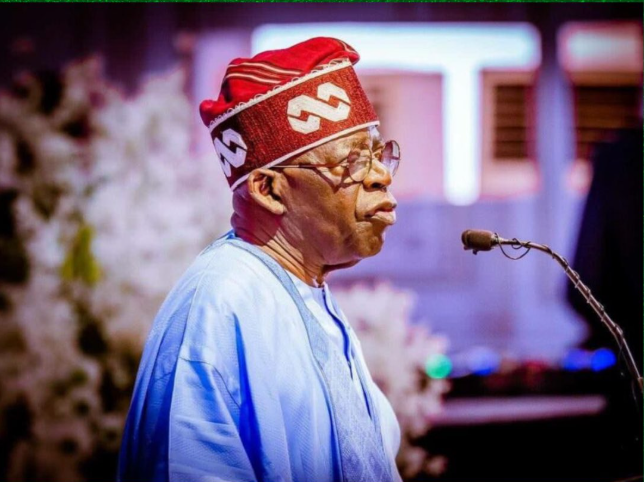
PRESIDENT BOLA Tinubu has urged global leaders to act with unity, courage and sustained resolve in confronting the intensifying climate emergency, declaring that climate action is not a developmental burden but a strategic imperative.
Speaking during a high-level virtual meeting hosted by United Nations (UN) Secretary-General António Guterres and Brazilian President Luiz Inácio Lula da Silva, Tinubu laid out Nigeria’s roadmap to achieving net-zero emissions by 2060 through a bold and financially ambitious energy transition strategy.
The virtual dialogue, convened to build momentum ahead of COP30 in Brazil this November, drew participation from leaders representing 17 countries, major blocs including the European Union and African Union, as well as representatives of vulnerable island states.
Tinubu reiterated Nigeria’s commitment to a climate-forward agenda centred on its Energy Transition Plan (ETP), which targets five critical sectors—power, cooking, transport, oil and gas, and industry.
The plan, he said, will require $410 billion in investments by 2060 to meet its net-zero targets.
“The global climate emergency demands our collective, courageous, and sustained leadership,” Tinubu said. “For Nigeria, the urgency of this moment is clear. We view climate action not as a cost to development, but as a strategic imperative.”
He outlined sweeping reforms to align regulatory, fiscal and institutional systems in order to deliver on climate goals while expanding energy access and competitiveness.
The president further disclosed that Nigeria’s newly finalised carbon market activation policy, introduced in March, is expected to unlock as much as $2.5 billion by 2030.
Tinubu also announced that Nigeria is currently revising its nationally determined contributions (NDCs) under the UN Framework Convention on Climate Change (UNFCCC), with a comprehensive update due by September.
Looking ahead, the president said Nigeria is developing a global climate change investment fund aimed at attracting both public and private capital.
The fund will support de-risking of green infrastructure and the financing of clean energy solutions at scale.
“These partnerships are a shining example of the value of multilateral cooperation in climate delivery. We are prepared to collaborate, lead, and deliver—because we understand that the time for climate action is not tomorrow; it is now,” Tinubu said.
Following the meeting, UN Secretary-General Guterres stressed that the climate crisis remains the defining challenge of the era, warning that despite fossil fuel resistance, the global transition to renewables is both unstoppable and economically essential.
“Renewables are the economic opportunity of the century,” Guterres said. “Dissenters and fossil fuel interests may try to stand in the way, but the world is moving forward. Full speed ahead.”
He called on all countries to submit more ambitious NDCs aligned with the 1.5°C temperature threshold and to lay out concrete roadmaps for a fossil-free future.
Guterres also pressed developed nations to double adaptation finance to $40 billion per year by 2025, and to mobilise $1.3 trillion annually by 2035 to bolster climate resilience in developing economies.
“Those least responsible for climate change are suffering from its worst effects,” he said. “The burden of inaction cannot be placed on them. This is a moment for leadership, for action, and for justice.”