By Rosheedat Akinkunle, JKNewsMedia Reporter
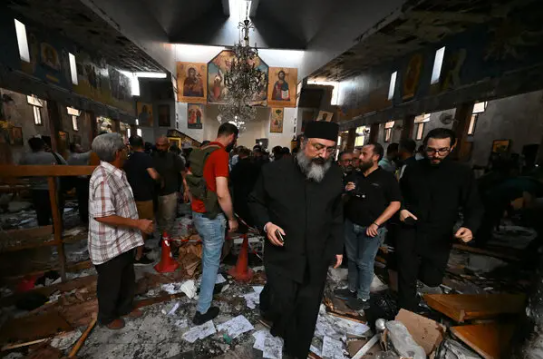
SMOKE AND screams filled the air as a powerful bomb exploded inside a church in central Damascus, leaving at least 20 people dead and 52 wounded in Syria’s first major suicide attack since the fall of the Assad regime.
The attack targeted the Saint Elias church in the Dwelaa district during Sunday worship, as a suicide bomber linked to the Islamic State group entered the building, opened fire on congregants, then detonated an explosive belt.
Witnesses described chaos and panic as worshippers, including children and the elderly, fled from falling debris and pools of blood amidst shattered pews and sacred icons.
Syria’s interior ministry confirmed the bomber was affiliated with the Daesh terrorist group. The government called the act a deliberate attempt to destabilise the country and incite sectarian strife, with Interior Minister Anas Khattab vowing that such “reprehensible crimes” would not derail Syria’s push for civil peace.
This marks the first such attack on a church in Damascus since the start of Syria’s civil war in 2011, and the first major strike on the capital since Islamist factions ousted longtime president Bashar al-Assad in December.
First responders transported the wounded under heavy security, while forensic teams swept the site for evidence. Eyewitness Lawrence Maamari described a lone gunman entering the church, shooting into the crowd, and then detonating himself when confronted by worshippers.
The UN’s special envoy to Syria, Geir Pedersen, condemned the bombing and urged authorities to conduct a full investigation. Western and regional powers, including the United States, Jordan, and France, echoed calls for stability and protection of minorities.
The Islamic State, which once controlled vast swathes of Syria and Iraq, has been largely defeated territorially but continues to wage asymmetric attacks. The interior minister noted a recent shift in IS tactics, with the group now focusing on targeting Christian and Shiite communities. Last month, Syrian authorities disrupted another planned attack and dismantled a sleeper cell near Damascus.
Authorities believe the bombing was part of a broader campaign by IS to exploit post-transition instability. Residents around the church reported hearing the explosion and witnessing the ensuing destruction. Ziad, a local shopkeeper, described shattered glass raining through the street and fire erupting from the building.
The health ministry revised the casualty figures to 20 dead and 52 wounded, following an earlier estimate by civil defence officials. Several worshippers remain unaccounted for as families search through emergency wards and morgues.
Officials have pledged to tighten security around religious sites and public gatherings, amid concerns that further attacks could follow. Investigations into the full extent of IS networks operating in the capital are ongoing.