By Ajibola Olaide, JKNewsMedia Reporter
FARMERS MAY need to rethink planting schedules, households could face tougher conditions during periods of intense heat, and communities vulnerable to flooding may have to strengthen their preparations as scientists warn of changing global weather patterns linked to a developing El Niño phenomenon.
JKNewsMedia.com reports that climate experts say the outlook has renewed attention on Nigeria’s readiness to manage potential disruptions to agriculture, water availability and livelihoods through early 2027.
In particular, the experts note that extreme heat, erratic rainfall and mounting risks to food production are emerging concerns for Nigeria as a strengthening El Niño raises the prospect of unusual weather conditions across affected regions of the world.
They also warn that, with the phenomenon forecast to remain strong and potentially become very strong through early 2027, farmers, households and public authorities face renewed pressure to prepare for possible disruptions to agriculture, water supplies and livelihoods.
An assessment issued by the United States National Oceanic and Atmospheric Administration (NOAA) on 8 October 2026 indicated that a strong to very strong El Niño was likely to persist through January to March 2027.
The development has renewed calls for Nigerians to follow weather forecasts and prepare for possible disruptions to agriculture, water supplies and daily activities.
Also, the World Meteorological Organisation (WMO) has warned that the developing phenomenon could increase the likelihood of unusual temperature and rainfall patterns, including extreme heat, drought and flooding in affected regions.
El Niño occurs when surface waters in the central and eastern tropical Pacific Ocean become unusually warm, triggering changes in atmospheric circulation that influence weather conditions across several continents.
Although the phenomenon originates far from Nigeria, its potential effects on global weather patterns have raised concerns about the country’s agricultural production, food supplies and livelihoods, particularly among communities that depend on rainfall for farming.
However, climate experts have cautioned against treating El Niño as an automatic prediction of nationwide drought, severe flooding or an impending food crisis. Its effects vary across regions and depend on other atmospheric and oceanic conditions.
For farmers who rely on rain-fed agriculture, experts cautioned that irregular rainfall could disrupt planting schedules, crop development and harvesting.
They also offered that prolonged dry spells and excessive heat could also increase production costs, while changes in water availability could affect livestock farming and rural incomes.
For farmers in particular, they have been urged to monitor seasonal forecasts and agricultural advisories rather than rely exclusively on established planting calendars that may no longer reflect changing weather conditions.
Those with limited access to irrigation and other protective measures could face particular difficulties if dry conditions persist, climate experts also advised.
They also announced that extreme heat presents another concern adding that, unusually high temperatures can increase the risk of dehydration and heat-related illnesses, with children, older people and outdoor workers among those particularly vulnerable.
Respectively, residents have been advised to drink sufficient safe water throughout the day, remain indoors or in shaded areas during the hottest periods where possible, wear light-coloured, loose-fitting clothing, and use fans, ventilation or air conditioning where available.
People should also avoid strenuous outdoor activities during periods of extreme heat and seek medical assistance if serious symptoms of heat-related illness develop.
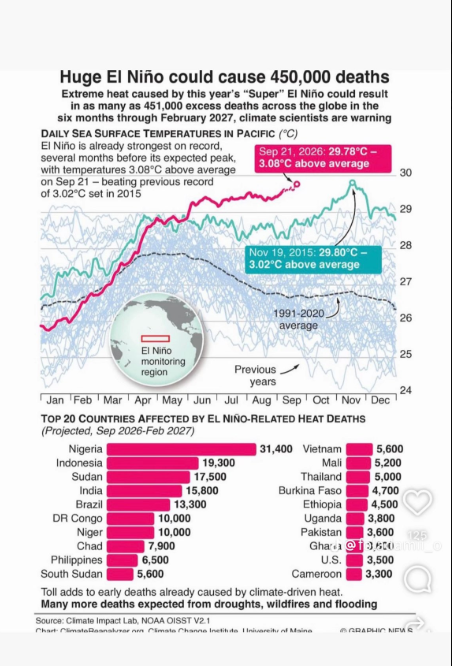
Likely Consequences of El Niño
The possible effects of El Niño also extend to rainfall and flooding, the WMO said.
It adds that although the phenomenon can contribute to drought in some parts of the world, other regions may experience excessive rainfall.
Therefore, Nigerians have been cautioned by the WMO against assuming that the developing climate event will necessarily produce either widespread flooding or reduced rainfall across the country.
They also caution residents of flood-prone communities to continue to monitor official weather warnings, avoid crossing flooded roads and waterways, and clear gutters and drainage channels where practical and safe.
Keeping emergency supplies, including clean drinking water, food, flashlights and power banks, could also help households prepare for flooding or power outages.
Urban centres such as Lagos require continued vigilance because intense rainfall can trigger flooding when drainage systems are inadequate or obstructed, regardless of the presence of El Niño.
WMO notes that potential consequences could also affect the movement and availability of food just as adverse weather can disrupt transportation, processing, storage and distribution, placing additional pressure on market prices and household spending.
Similarly, countries that depend on imported foods could also face indirect pressure if climate-related events interfere with international supplies and trade.
For Nigerian households already concerned about food affordability, monitoring agricultural output, rainfall conditions and food supply chains will remain important as the phenomenon develops.
However, rising food prices cannot be attributed solely to El Niño given the fact that transportation expenses, insecurity, exchange-rate movements, storage limitations, and wider domestic and international conditions also influence food costs.
NiMet On Top Of Its Game
The developing situation has renewed attention on early-warning systems, public awareness and preventive planning. as the Nigerian Meteorological Agency (NiMet) says it remains a key source of information on national and state-level weather conditions, seasonal rainfall expectations and temperature forecasts.
NiMet said farmers, transport operators, construction companies, emergency agencies and households have been encouraged to consult credible meteorological updates regularly and adopt precautions suited to conditions in their respective locations.
Government agencies also face the task of strengthening public awareness, supporting climate-resilient farming, improving water management and ensuring that communities vulnerable to flooding or drought receive timely warnings.
Farmers can reduce potential risks by planning ahead, monitoring seasonal forecasts and using water carefully during dry periods. Households can also protect vulnerable family members by ensuring they remain cool and hydrated during periods of intense heat.
At the same time, NiMet also warn Nigerians against unverified social media claims predicting inevitable nationwide droughts, catastrophic flooding or an imminent food crisis simply because El Niño is strengthening.
While the phenomenon presents legitimate climate concerns, its potential consequences require measured responses based on scientific evidence and reliable local forecasts rather than speculation or panic, NiMet affirms.
The agency also adds that as El Niño develops, sustained vigilance, public education and practical preparation will be important in limiting potential risks to agriculture, food supplies, public health and livelihoods; adding that, for most Nigerians, the warning is not a reason to panic but an opportunity to prepare by staying hydrated, keeping cool, monitoring local weather advisories and taking precautions against irregular rainfall and possible flooding.
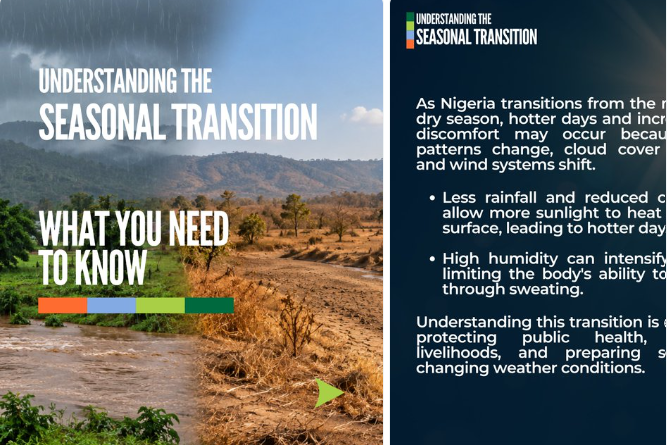
By NiMet
UNDERSTANDING THE SEASONAL TRANSITION
As Nigeria transitions from the rainy to the dry season, hotter days and increased heat discomfort may occur because rainfall patterns change, cloud cover decreases, and wind systems shift.
•Less rainfall and reduced cloud cover allow more sunlight to heat the Earth’s surface, leading to hotter days.
•High humidity can intensify the heat, limiting the body’s ability to cool itself through sweating.
Understanding this transition is essential to protecting public health, sustaining livelihoods, and preparing sectors for changing weather conditions.
HOW CAN THE TRANSITION AFFECT YOU?
•Dehydration: Excessive loss of body fluids, especially during prolonged exposure to heat.
•Heat exhaustion: Symptoms may include unusual weakness, dizziness, headaches, nausea, and heavy sweating.
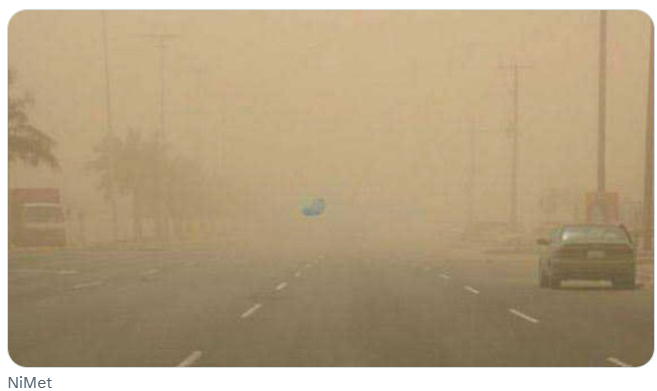
•Dust and Haze: May irritate the eyes and respiratory tract, causing coughing, sneezing, and breathing difficulties, especially among people with asthma or other respiratory conditions.
•Reduced productivity: Heat can affect concentration, physical performance, and work efficiency, particularly among farmers, outdoor workers, students, and commuters.
•Heatstroke: A life-threatening condition that requires immediate emergency medical attention.
•Water Scarcity: Declining rainfall in some areas may gradually affect water availability for households, agriculture, and livestock.
🌿 HOW CAN DIFFERENT SECTORS PREPARE?
As weather conditions change, appropriate measures can help reduce heat-related risks and protect lives and livelihoods.
✅ Individuals: Drink water regularly, wear lightweight, breathable clothing, and limit prolonged exposure to direct sunlight, especially during the hottest part of the day. Plan strenuous outdoor activities for cooler hours.
🌾 Agriculture and livestock: Adjust farm activities to cooler periods, conserve soil moisture with mulching, monitor crop water requirements, and ensure livestock have enough drinking water, shade, and ventilation.
🐟 Fisheries and aquaculture: Monitor Pond water temperature and dissolved oxygen levels, maintain adequate aeration, and take appropriate measures to reduce heat-related stress and fish mortality.
🌿 HOW CAN DIFFERENT SECTORS PREPARE?
🏫 Schools and workplaces: Ensure adequate ventilation, provide drinking water and shaded rest areas, and allow regular breaks during hot conditions.
🏥 Health sector: Strengthen heat-health awareness and prioritize protecting children, older adults, people with existing health vulnerabilities, and outdoor workers.
🌳 Communities: Promote tree planting, protect water sources and develop shaded public spaces to reduce exposure to excessive heat.
🏢 All sectors: Incorporate heat-risk management into operational planning to protect people, infrastructure, livelihoods and essential services.
🌍 UNDERSTAND THE CHANGE. PREPARE FOR THE HEAT. STAY SAFE.
📍 Follow the Nigerian Meteorological Agency (NiMet)’s official weather updates and advisories to stay informed and make weather-smart decisions throughout the seasonal transition.
#NiMet
#SeasonalTransition
—

Share Your Story with us!
Advertise with us!
Publicity for a product, service, or event!
Contact: WhatsApp Only: +2348039560647
Email: jkmediapress@gmail.com