By Koforoworola Fakeye, JKNewsMedia Reporter
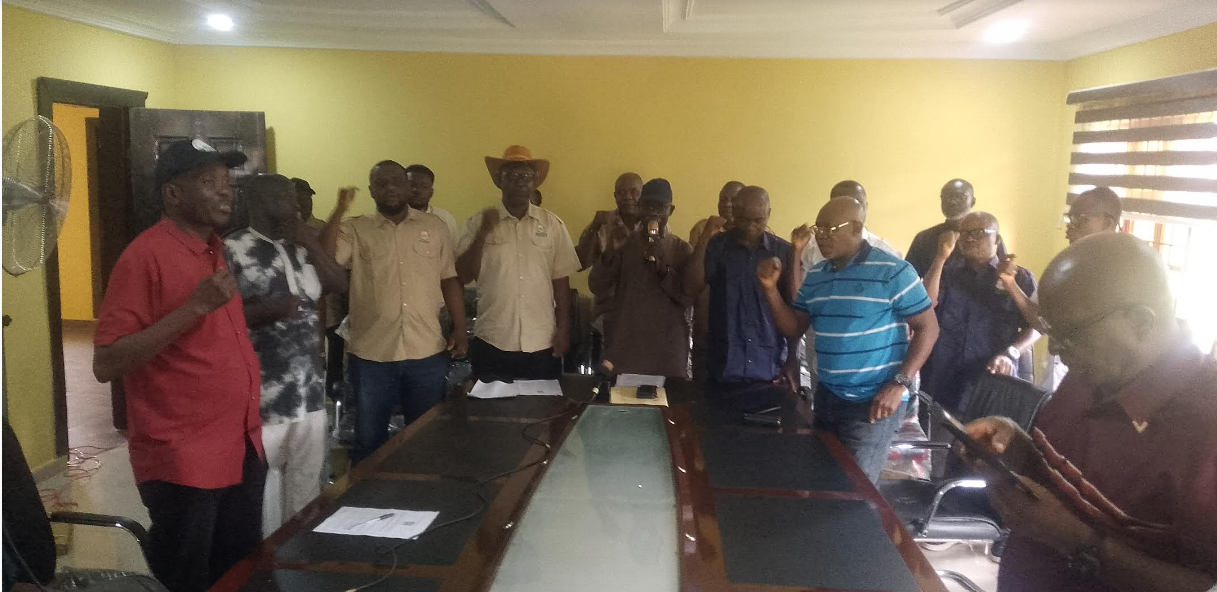
LONG RUNNING negotiations over university workers’ welfare reached a new stage on Monday as the Federal Government (FG) formalised the renegotiated 2009 agreement with the Senior Staff Association of Nigerian Universities (SANU) and the Non-Academic Staff Union of Educational (NASU) and Associated Institutions.
JKNewsMedia.com reports that the signing came five months after a comparable agreement was reached with the Academic Staff Union of Universities (ASUU).
NASU President, Peters Adeyemi briefly confirmed the development and said the union would issue a statement later.
Also, SSANU President, Mohammed Ibrahim and NASU General Secretary, Peters Adeyemi signed the agreement on behalf of their unions, while Yayale Ahmed represented the FG.
Mr. Ahmed serves as Chairman of the Federal Government Tertiary Institution Expanded Negotiation Committee (FGTIENC) , which the Minister of Education, Tunji Alausa, reconstituted in October 2025.
The non-academic staff unions had repeatedly complained about the pace of the renegotiation process, which began in October. Last month, the unions embarked on a strike to protest the pace of negotiations.
In May, the Joint Action Committee of SSANU and NASU also began a strike over delays in the renegotiation timeline.
The action was suspended after one week following government assurances that the process would be expedited.
At the time the strike was suspended, the union leadership warned that services would again be withdrawn if a definitive resolution was not reached within a two-week window.
Along the line, the unions had rejected a 30 percent increment proposed by government representatives led by Mr Ahmed, who is also the Pro-Chancellor of Ahmadu Bello University, Zaria.
SSANU and NASU insisted on a 40 percent increment, matching the increase granted to their academic counterparts in ASUU.
The FG also signed separate agreements with university unions, including ASUU, SSANU and NASU, in 2009 to cover workers’ pay and conditions of service and were expected to be renegotiated every three years.
But the renegotiation process had stalled for several years and resulted in multiple industrial actions across public universities.
Thereafter, the government concluded the renegotiation with ASUU after the sixth renegotiation committee completed the harmonisation of negotiations.
SSANU and NASU had maintained that they were treated less favourably than their academic counterparts during the negotiations, noting that their agreement was concluded six months after that of ASUU despite being handled by the same committee led by Mr Ahmed.
Officials familiar with the proceedings said the new agreement covers revised salary structures, increased allowances and enhanced conditions of service for non-academic staff.
Reports say the agreement also covers matters relating to university governance, implementation of collective bargaining outcomes and the settlement of outstanding arrears and allowances.
Union representatives had previously rejected unilateral wage offers and maintained that negotiations should provide a long term framework for workers’ welfare.
—