By Joke Kujenya
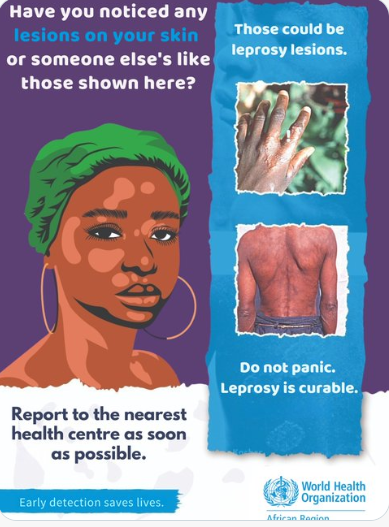
ACCESS TO free treatment has transformed the fight against leprosy, the World Health Organization (WHO) has said, as millions of people continue to rely on multidrug therapy to prevent disability and stop the spread of the disease.
WHO also disclosed its renewed commitment to a leprosy-free world, highlighting the importance of partnerships and progress.
JKNewsMedia.com reports that leprosy, caused by the bacterium Mycobacterium leprae, primarily affects the skin and peripheral nerves.
If untreated, it can cause lasting disabilities, social isolation, and stigma. However, the disease can be cured with multidrug therapy, a treatment that has transformed millions of lives, WHO now asserts.
Data from 2024 show progress in some regions. Of 188 countries, areas, and territories reporting, 55 recorded zero new cases. Globally, 172 717 new cases were still detected and reported to WHO.
In another progress report, pharmaceutical partners, including Novartis, have been pivotal.
Since 2000, WHO and Novartis have provided multidrug therapy and clofazimine free of charge to all leprosy patients as their collaboration is one of the longest-running pharmaceutical donation programmes in global health.
To mark 25 years of partnership, WHO and Novartis also extended their Memorandum of Understanding (MoU) for a further five years, covering 2026 to 2030.
The agreement ensures continued supply of multidrug therapy and funding for single-dose rifampicin for post-exposure prophylaxis.
Dr Jeremy Farrar, WHO Assistant Director-General for Health Promotion, Disease Prevention and Care, said, “The unwavering commitment of partners like Novartis over the past quarter-century has been foundational to the progress made against leprosy.
Their steadfast support in ensuring free access to treatment has helped transform millions of lives and moved us closer to a world free from this ancient disease.”
Free access to treatment has allowed people to work, live normally, and avoid permanent disabilities.
Clofazimine has also been crucial in treating lepra reactions, sudden inflammatory episodes that can leave lasting damage if untreated.
Dr Lutz Hegemann, President of Global Health at Novartis, said, “Over the last 25 years, we have reached millions of patients together with WHO, and we are committed to going further to pursue our vision of a world free of leprosy.”
Sustaining progress requires political commitment, community engagement, and continued collaboration.
2026 World Leprosy Day theme is “Leprosy is curable, the real challenge is stigma.”
It also marks 25 years of Mr. Yohei Sasakawa’s work as WHO Goodwill Ambassador for Leprosy Elimination.
He said, “One of the most stubborn challenges that I encounter on my travels is the social stigma attached to leprosy, which can be more problematic than the disease itself… Even after being cured, they endure the unending pain of social exclusion.”
He adds that stigma can make people lose jobs, leave their homes, be turned away from family life, and keep children from attending school. Many hide symptoms to avoid discrimination, delaying treatment and risking complications.
Also, one person affected by leprosy said, “This happens not because people are mean, but because they don’t understand.”
WHO then stresses that leprosy is curable with free antibiotics, and early treatment can stop transmission and prevent disability and added that the World Leprosy Day honours resilience, raises awareness, and calls for an end to discrimination, reports JKNewsMedia.com.