By Joke Kujenya
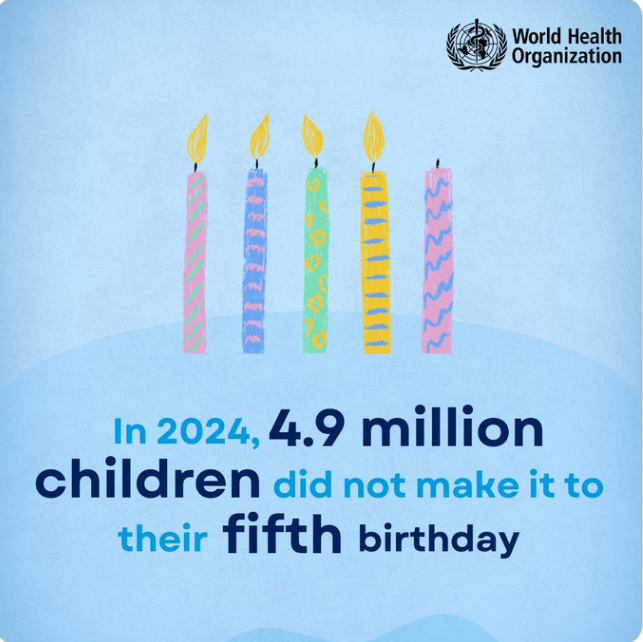
MILLIONS OF preventable child deaths continue despite decades of progress, with new estimates showing 4.9 million children died before their fifth birthday in 2024, including 2.3 million newborns.
JKNewsMedia.com reports that the figures, released in a new report titled Levels and Trends in Child Mortality, show most of these deaths could be avoided through proven, low cost interventions and access to quality health care.
The report states that under-5 deaths globally have fallen by more than half since 2000. However, since 2015, the pace of reduction in child mortality has slowed by more than 60 per cent.
It provides what it describes as the clearest and most detailed picture yet of how many children, adolescents and youth are dying, where they are dying, and for the first time, fully integrates estimates on the causes of death.
Also, the report estimates for the first time that more than 100,000 children aged one to 59 months, or 5 percent, died directly from severe acute malnutrition in 2024.
It notes the toll is far greater when indirect effects are considered, as malnutrition weakens immunity and increases the risk of dying from common childhood diseases.
It also states that mortality data frequently fail to capture severe acute malnutrition as an underlying cause of death, suggesting the burden is likely substantially underestimated.
It states that countries with the highest numbers of direct deaths include Pakistan, Somalia and Sudan.
Moreover, newborn deaths account for nearly half of all under-5 deaths, attributing this to slower progress in preventing deaths around the time of birth, with leading causes identified as complications from preterm birth at 36 percent and complications during labour and delivery at 21 per cent.
It adds that infections, including neonatal sepsis and congenital anomalies, were also significant causes.
Beyond the first month of life, the report identifies infectious diseases such as malaria, diarrhoea and pneumonia as major causes of death.
Malaria remained the single largest killer in this age group at 17 per cent, with most deaths occurring in endemic areas of sub- Saharan Africa.

It states that after steep declines between 2000 and 2015, progress towards reducing malaria mortality has slowed in recent years.
Meanwhile, deaths remain concentrated in endemic countries including Chad, Democratic Republic of Congo, Niger and Nigeria, where conflict, climate shocks, invasive mosquitos, drug resistance and other biological threats continue to affect access to prevention and treatment.
Child deaths also remain concentrated in a small number of regions. In 2024, sub-Saharan Africa accounted for 58 percent of all under-5 deaths.
In the region, leading infectious diseases were responsible for 54 percent of these deaths as the proportion drops to 9 percent in Europe and Northern America and 6 percent in Australia and New Zealand, reflecting unequal access to life saving interventions.
Southern Asia accounted for 25 percent of all under-5 deaths, with mortality largely driven by complications in the first month of life, including preterm delivery, birth asphyxia or trauma, congenital anomalies and neonatal infections.
The report states these conditions are largely preventable and highlight the need for investment in quality antenatal care, skilled health care personnel at birth and essential newborn services.
Fragile and conflict affected countries continue to carry a disproportionate burden.
The report further states children born in these settings are nearly three times more likely to die before their fifth birthday than those elsewhere.
It also estimates that 2.1 million children, adolescents and youth aged 5 to 24 died in 2024 while infectious diseases and injuries remain leading causes among younger children, while risks shift in adolescence, with self-harm identified as the leading cause of death among girls aged 15 to 19 and road traffic injuries among boys.
The report states that shift in global development financing are placing maternal, newborn and child health programmes under growing pressure.
It adds that surveys, health information systems and core functions that support effective care require sustained funding to protect and accelerate progress.
JKNewsMedia.com notes that the report states that investments in child health remain among the most cost-effective development measures, noting that interventions such as vaccines, treatment for severe acute malnutrition and skilled care at birth deliver high returns.
Every $1 invested in child survival can generate up to $20 in social and economic benefits, the report asserts.
It then calls on governments, donors and partners to prioritise child survival through political commitment and financing, focus on high risk populations, strengthen accountability through transparent data systems and invest in primary health care systems to prevent, diagnose and treat leading causes of child deaths.