By Jemimah Wellington, JKNewsMedia Reporter
NIGERIA’s ELECTRICITY consumers face higher bills as the federal government prepares to implement a cost-reflective tariff regime aimed at phasing out blanket subsidies.
The move, Minister of Power Adebayo Adelabu, says, is necessary to clear a ₦4 trillion debt owed to power generation companies and ensure financial stability across the sector.
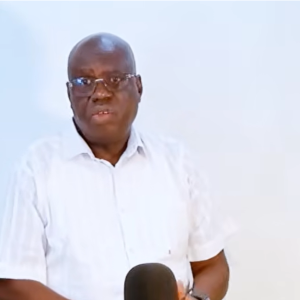
Speaking at the Mission 300 Stakeholders Engagement Forum in Abuja, he confirmed that Nigerians will begin paying more for electricity as subsidies are withdrawn in phases.
He stressed that only vulnerable and low-income households will receive targeted support under the new structure.
Adelabu also disclosed that the initiative marks a critical policy shift aimed at addressing longstanding liquidity challenges and sector inefficiencies.
The proposed reform will gradually eliminate blanket electricity subsidies, replacing them with targeted support mechanisms for low-income and vulnerable households.
While the plan seeks to restore financial stability across the value chain, it is expected to raise electricity costs for many consumers as subsidies are withdrawn in phases.
According to Adelabu, the power sector’s current structure has created unsustainable financial obligations.
“There’s a huge outstanding debt to the power generation companies in the form of unpaid government subsidies, which stands at about ₦4 trillion as of December 2024,” he stated.
The FG, he said, is actively developing strategies to defray these liabilities and prevent further accumulation by introducing a tariff system that reflects actual production and distribution costs.
Beyond tariff reform, he said the government is prioritising liquidity resolution and grid stability.
A central component, he disclosed, involves recovering idle generation capacity and broadening Nigeria’s energy portfolio to incorporate more affordable and cleaner sources.
These measures are intended to attract private investment while enhancing the sector’s operational reliability.
Ongoing infrastructure upgrades are also in focus, particularly in the distribution segment.
The Presidential Metering Initiative and the World Bank-supported Distribution Sector Recovery Programme (DISREP) are being implemented to address metering gaps and improve service delivery.
Grid coordination and frequent collapse issues are also under review, with stability initiatives in motion to optimise national transmission efficiency.
Adelabu stressed that the overarching aim is to make Nigeria’s electricity market financially viable and investment-friendly.
“Our aim is to set the power sector on a path of sustainability and bankability, ensuring long-term viability for investors and stability for consumers,” he said.
The Minister also tied the reform agenda to broader continental goals, particularly under Mission 300—an initiative targeting electrification for 300 million people across Africa.
Achieving this will require a projected $32.8 billion in investment, of which $15.5 billion is anticipated from private sources.
The remainder is expected to come through multilateral institutions, government-backed financing structures, and public-private partnerships, Adelabu said.