By Joke Kujenya
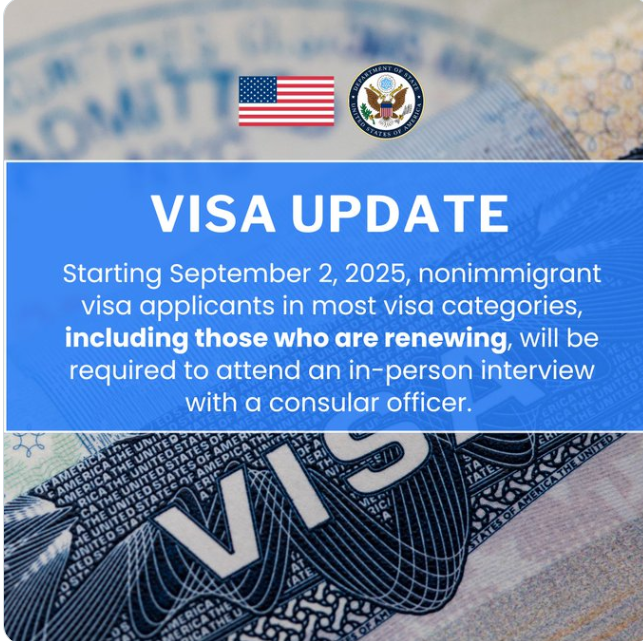
SWEEPING REVISIONS to the United States of America (USA) visa process will soon require most non-immigrant applicants, including those seeking H-1B visas, to attend in-person interviews.
The US Department of State confirmed that effective 2 September 2025, exemptions introduced during the COVID-19 pandemic will be rescinded, returning the system to stricter, pre-pandemic standards.
The revised policy, announced on 25 July, affects nearly all categories that previously qualified for waivers. Children under 14, seniors over 79, and individuals renewing H-1B visas are now required to appear before a consular officer for interview screening, regardless of prior approval status.
The Department attributed the decision to a renewed focus on national security, fraud prevention, and rigorous vetting.
This move overturns the 18 February 2025 directive that had expanded eligibility for waivers—particularly benefiting students and professionals applying for temporary work visas.
H-1B applicants, who form a large portion of the US-bound workforce from countries like India and Nigeria, are expected to experience longer processing timelines and increased scrutiny.
Applicants must now schedule interviews at US embassies or consulates in their home countries. The mandatory screening will assess educational credentials, job qualifications, and immigration compliance.
Immigration advisers urge applicants to prepare thoroughly, emphasising the need for consistent documentation and clarity in verbal responses.
Proficiency in English and knowledge of job roles and employer details will be key during the interview.
Nigerian professionals, especially those in technology and healthcare sectors, are likely to be significantly impacted. With demand for H-1B visas remaining high, delays are anticipated, according to the update.
Applicants are also encouraged to book appointments early and consult regularly with the US Embassy in Abuja or Consulate in Lagos for country-specific instructions.
The Department says its decision signals a full departure from pandemic-era flexibilities, raising concerns over processing bottlenecks and fairness.
Immigration stakeholders continue to call for transparent implementation to ensure that legitimate candidates are not unfairly disadvantaged under the new framework.