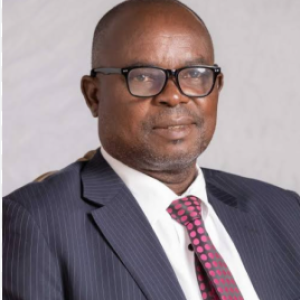
By Emeka Monye
NIGERIA’s DEMOCRACY is not a comedy show. Yet as we edge closer to the 2027 general elections, the conduct of many political gladiators suggests otherwise.
The stage is filling up fast. As of the last count, over ten presidential aspirants have already emerged across major and fringe political parties. On paper, this should signal vibrancy, choice, and democratic maturity. In reality, it exposes a deeper rot: politics as performance, ambition without ideology, and a democracy being reduced to a mockery.
The list of contenders reads like a roll call of familiar names, recycled ambitions, and new entrants testing the waters. From the incumbent President Bola Ahmed Tinubu of the All Progressives Congress (APC), to former Vice President Atiku Abubakar, who appears set to run again under the African Democratic Congress (ADC).
There is Peter Obi of the Nigerian Democratic Congress (NDC), who shook the 2023 cycle with his “Obidient” movement. There is Omoyele Sowore of the African Action Congress (AAC), returning with his revolutionary rhetoric. Governor Seyi Makinde of Oyo State is also being touted for the Action Peoples Movement (APM) ticket.
Former President Goodluck Jonathan, who left office in 2015, is rumored to be eyeing a comeback on the Peoples Democratic Party (PDP) platform. Chris Uba is reportedly on the ballot of a factional ADC led by Nafiu Bala Gombe, while Wole Adebayo is flying the flag of the Social Democratic Party (SDP).
That is just the presidential lane. Add gubernatorial and legislative ambitions, and you have a political market flooded with aspirants.
The problem is not that many people want to lead. In a democracy, ambition should be encouraged. The problem is _why_ they want to lead, and _what_ they plan to do with power.
Most of these candidates have entered the race with promises that sound like echoes from 1999, 2007, 2015, and 2023: “We will fight corruption,” “We will fix the economy,” “We will improve security,” “We will lift the masses out of poverty.” These are not promises anymore. They are scripts. And Nigerians have heard them too many times.
A democracy thrives on ideas. It dies when elections become auctions where the highest bidder or the most recognizable face wins.
Very few of the current aspirants can point to a coherent ideological base. What does the ADC stand for today that it did not stand for yesterday? What separates the NDC’s vision from the SDP’s? Beyond slogans, where are the policy blueprints, the white papers, the measurable plans to fix Nigeria’s structural flaws?
Nigeria’s fundamentals remain broken: epileptic power, collapsing education, a healthcare system that exports patients abroad, unemployment that turns graduates into hawkers, and insecurity that makes farming a gamble. These are not problems you solve with vibes and slogans. They require ideology, conviction, and long-term planning.
Yet many aspirants are running as if the presidency is a trophy to be added to their CV. Some are running because “it is their turn.” Others are running because their godfathers pushed them. A few are running because they believe the incumbent is vulnerable and the field is open. But how many are running because they have studied the data, consulted experts, and built a government-in-waiting?
Politics in Nigeria is also about numbers, permutations, and zoning. As it stands, the presidency is widely regarded as the South’s turn, following President Tinubu’s emergence in 2023. Yet Atiku Abubakar, a northern gladiator, is still in the race under the ADC. This creates tension within the unwritten zoning arrangement that has helped manage Nigeria’s delicate regional balance.
This is where democracy becomes theater. If the South must complete its term, then northern candidates running now are either testing the waters for 2031 or hoping to fracture the southern vote. If zoning no longer matters, then let us have that conversation openly instead of pretending.
The point is simple: Nigerians deserve honesty. If you are running against your party’s zoning principle, say so. If you are running to negotiate a vice-presidential slot or ministerial appointment, say so. Stop pretending that every candidacy is born from a divine calling to rescue Nigeria.
“Politics is all about numbers,” they say. True. It is built on permutations, calculations, alignments, and coalitions. But when numbers replace service, democracy suffers.
Many of these candidates understand the game of coalition-building better than they understand governance. They know which ward chairman to settle, which delegate to bribe, which headline to buy. But ask them how they will restructure Nigeria’s fiscal federalism, reform the police, or fix the naira, and you get vague answers.
This is the mockery: a system where you can understand the game of winning elections but understand nothing about the game of governing 230 million people. It is like a pilot who knows how to taxi a plane but has never studied how to fly it.
For many aspirants, their entry into the race makes one wonder if they understand what they are getting into, or if they are only pretending to run. Pretending to run is dangerous. It distracts voters, wastes INEC’s resources, and clogs the political space. It turns serious national decisions into a reality show.
President Tinubu is not an accidental president. He is a master strategist, a product of decades of political calculations. He understands Lagos politics, national coalitions, and the economics of power. Anyone hoping to wrest power from him in 2027 must come with more than slogans and nostalgia.
Yet many opposition candidates are behaving as if name recognition alone can defeat an incumbent with state resources and a tested political machine. That is wishful thinking, not strategy.
If the opposition is serious, it must do three things: present a united front, offer a superior ideology, and field candidates with clean records and competence. Scattered ambitions and personal vendettas will only hand the APC another term.
Democracy is not the problem. Our practice of democracy is. When politicians treat elections like personal businesses, when parties become platforms for auction, when citizens are reduced to voters-for-hire, democracy becomes a mockery.
Nigerians are tired of recycling leaders with expired ideas. We are tired of candidates who appear every four years with empty promises and disappear after elections. We are tired of a system where “it is my turn” matters more than “this is my plan.”
The 2027 election must be different. It must be about issues, not insults. About policies, not personalities. About the future, not the past.
To every aspirant reading this: Nigeria does not need another presidential candidate. Nigeria needs a presidential solution.
If you do not have a roadmap for power, education, health, security, and the economy, step aside. If you are running for personal relevance, step aside. If you are running to negotiate, step aside.
Democracy is not a game. It is the contract between leaders and citizens. When politicians make a mockery of it, they mock the dreams of millions of Nigerians who still believe that a better country is possible.
2027 must not be another cycle of noise. It must be a referendum on competence. Anything less is an insult to our democracy.
Emeka Monye, a journalist is also a public affairs analyst.
—