By Jadesola Isaac, JKNewsMedia Reporter
THE INDEPENDENT National Electoral Commission (INEC) has unveiled a new intelligence led security framework for the 2027 general election, pledging to track down and prosecute anyone who threatens electoral workers as preparations intensify across the country.
JKNewsMedia.com reports that INEC Chairman, Prof. Joash Amupitan, SAN, announced the initiative in Gombe on Tuesday, 27 October 2026, during the North-East Zonal Interactive Meeting with Staff and Readiness Assessment for the 2027 General Election.
He said the commission had moved away from relying on security deployments on election day towards identifying threats and preventing attacks before they occur.
He noted that the framework, known as the Interagency Consultative Committee On Elections Security (ICCES) Tentacle, is initiated to strengthen coordination among the Nigeria Police Force (NPF), Nigeria Security and Civil Defence Corps (NSCDC), Department of State Services (DSS), Armed Forces (AF), and other paramilitary agencies.
Amupitan said the arrangement would also extend security coordination beyond national and state headquarters to local government areas and Registration Area Centres, including communities in remote locations.
He stressed that elections could not be considered credible if voters, electoral officials and observers faced intimidation, violence or threats to their safety.
The chairman outlined three pillars underpinning the security strategy: Map and Mitigate, Ensure Safety and Guarantee Access.
For Under Map and Mitigate, he explained that INEC will use Electoral Risk Management tools to identify security flashpoints, seasonal threats and local vulnerabilities early enough for security agencies to respond before sensitive election materials arrive.
To Ensure Safety focuses on protecting electoral personnel, he said the Commission will deploy technological infrastructure, including Bimodal Voter Accreditation System devices and servers, as well as voters.
As for the third pillar, Guarantee Access, Amupitan said this seeks to ensure that all 176,846 polling units nationwide provide safe and peaceful environments for citizens to exercise their democratic rights, regardless of their location or security challenges.
Furthermore, INEC umpire disclosed that security collaboration had already yielded results, citing a recent operation in which the Department of State Services uncovered an alleged plot by criminal kingpins to target INEC ad hoc staff and National Youth Service Corps (NYSC) members.
He said intelligence led intervention neutralised the threat, with the principal suspects arrested and undergoing prosecution.
The chairman issued a stern warning to anyone considering attacks against electoral personnel.
“Let me send a clear message from Gombe,” he said, warning that anyone who threatens, intimidates or harms ad hoc staff, NYSC members or permanent INEC personnel would be tracked down and brought to justice.
He also announced plans to convene a National Election Security Conference in Abuja, where authorities will finalise security protocols tailored to high risk areas across the country.
Amupitan acknowledged that the North-East posed distinct operational challenges, including extensive desert terrain, riverine stretches along the Benue trough, remote farming communities and large geographical expanses.
However, he praised the region’s resilience and determination to participate in the democratic process.
INEC figures presented at the meeting put the North-East’s registered voter population at 13,965,475, representing 13.51 per cent of the national register of more than 103 million voters.
He also said that Bauchi has the highest number of registered voters in the zone, with 3,012,547, followed by Borno with 2,765,165, Adamawa with 2,431,146, Taraba with 2,254,380, Gombe with 1,768,566 and Yobe with 1,733,671.
He noted that the commission has scheduled the presidential and National Assembly elections for Saturday, 16 January 2027, while governorship and State Houses of Assembly elections will take place on Saturday, 6 February 2027.
Amupitan assured electoral officials and stakeholders that INEC was working with security agencies to address threats to the process, describing security as “the bedrock of electoral integrity”.
“Insecurity may pose a challenge, but our collective constitutional resolve is far stronger,” he said.
Earlier, Gombe State Resident Electoral Commissioner, Alhaji Umar Muktar Gajiram, welcomed the chairman, national commissioners and electoral officers from Bauchi, Borno, Adamawa, Taraba, Gombe and Yobe on behalf of the region’s electoral commissioners.
Gajiram described the visit as historic and timely, saying it would boost the morale of officials responsible for delivering credible elections.
He noted that Gombe, with 1,768,566 registered voters, 11 local government areas and 3,311 polling units, occupied a strategic position in the region.
He pledged that the North-East would work to prevent the disenfranchisement of any of its 13.96 million registered voters, adding that officials would implement directives on voter register display, logistics audits and technology testing.
The security announcement followed Amupitan’s engagement with traditional leaders and electoral officials during his readiness assessment visit to Gombe.
On Monday, 26 October 2026, the INEC chairman visited the Emir of Gombe, HRH Dr Abubakar Shehu Abubakar III, CFR, and called for collective efforts to ensure that the 2027 elections strengthen national unity.
He said Nigeria’s position as Africa’s largest democracy placed a responsibility on the country to deliver a successful election, adding that other African countries and traditional institutions were watching the process.
“The weight of election is heavy,” Amupitan said. “We want this 2027 election to be very unique, an election that will further unite Nigeria.”
He said INEC had conducted readiness assessments in the South-West, North-West and South-East before moving to the North-East, adding that the commission sought the support and blessings of traditional rulers in each zone before commencing its activities.
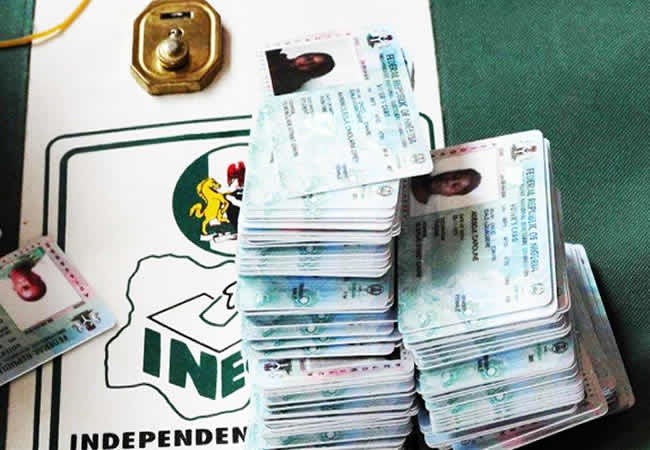
Amupitan urged the Emir to encourage residents to collect their Permanent Voter Cards, stressing that possession of the card was a requirement for voting.
He said INEC had concluded work on the voters’ register and continued to distribute PVCs. The commission had also opened an online recruitment portal for qualified Nigerians seeking ad hoc election duties.
The chairman further called on the Emir to encourage political leaders to conduct peaceful campaigns and help educate residents about misinformation and disinformation.
He urged citizens to verify information before sharing it to prevent confusion and panic before, during and after the elections.
Amupitan assured the traditional ruler that INEC would remain impartial throughout the process.
“We are no candidate of our own, but we will do everything possible to conduct a free, fair, inclusive and credible election come 2027,” he said.
The Emir welcomed the delegation and pledged the support of the traditional institution in Gombe and the wider North-East, emphasising the need for non-partisan participation.
He said credible elections required careful planning, professionalism, impartiality, transparency and public cooperation. He also pledged support for efforts to discourage electoral violence, inflammatory rhetoric and misinformation.
During his visit to the INEC state office, Amupitan urged staff to intensify preparations, warning that the time available before the elections was limited.
“The readiness assessment is to assess what we have on ground,” he said.
He explained that renovations in Gombe and other local government areas formed part of efforts to strengthen operational capacity and improve election logistics.
JKNewsMedia.com also reports that the chairman directed electoral officers to carry out their responsibilities in line with the Constitution, the Electoral Act and the commission’s regulations.
He also stressed the importance of public enlightenment at the local government level to encourage eligible voters to collect their PVCs and participate in the elections.
Amupitan disclosed that INEC had received some non-sensitive election materials and ordered additional BVAS machines, with delivery expected within the week.
He said the commission was working on storage facilities for the equipment and had audited existing BVAS machines nationwide following challenges encountered during the 2023 general election.
Technology, he added, would remain central to voter accreditation and results transmission, with the commission working to strengthen its operational procedures.
“This period, nobody goes on leave again,” he told staff, urging them to commit their time to supporting resident electoral commissioners, administrative secretaries, department heads and electoral officers to ensure a successful election.
The delegation also inspected the INEC office in Gombe Local Government Area and the commission’s zonal store to assess facilities, equipment storage and logistical preparations.
In a separate development, INEC has published the Preliminary Register of Voters for the 2027 general election on its online platform, expanding access beyond the physical display conducted nationwide.
The commission announced the development in a statement issued on Monday, 26 October 2026, and signed by Mohammed Kudu Haruna, chairman of its Information and Voter Education Committee.
Registered voters can access the preliminary register through the commission’s online platform at https://display.inecnigeria.org.
INEC said it conducted the physical display of the register at Registration Areas nationwide from 9 to 15 October 2026, in accordance with Section 19 of the Electoral Act, 2026. The exercise allowed voters to inspect their details and submit claims and objections as provided by law.
The commission said it had considered concerns raised by Nigerians and other stakeholders about making the register available online, adding that the additional access channel reflected its commitment to transparency and public confidence in the electoral process.
Concluding, INEC said it was processing claims and objections arising from the exercise ahead of the certification and publication of the Final Register of Voters on 15 December 2026, further reaffirming its commitment to transparency, accountability and implementation of the Electoral Act, 2026, as preparations continue for the 2027 general election.
—

Share Your Story with us!
Advertise with us!
Publicity for a product, service, or event!
Contact: WhatsApp Only: +2348039560647
Email: jkmediapress@gmail.com