By Joke Kujenya
ETHICS TAKE centre stage when professional challenges strike at personal convictions, revealing either integrity or hypocrisy at the core of journalistic identity.
This issue formed the heart of a paper titled ‘The Question of Ethical Dilemmas in Journalism Teaching and Practices: Where Ideal Contradicts Realities’ presented by Dr. Muhammed J. Mustapha, executive director, Center for Research on Development of African Media, Governance and Society, during a high-level academic conference hosted by the Department of Journalism at Cairo University’s Faculty of Mass Communication.
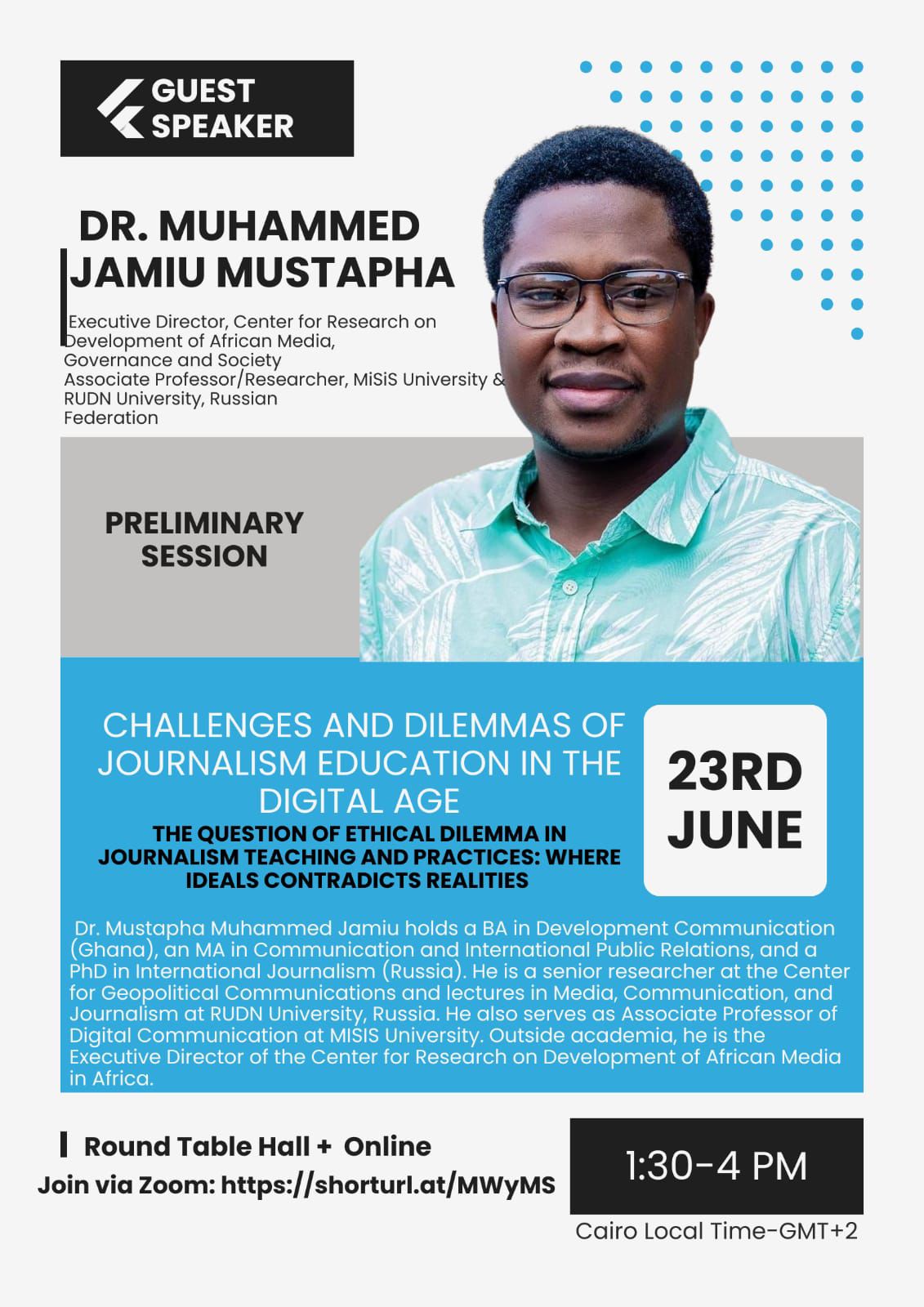
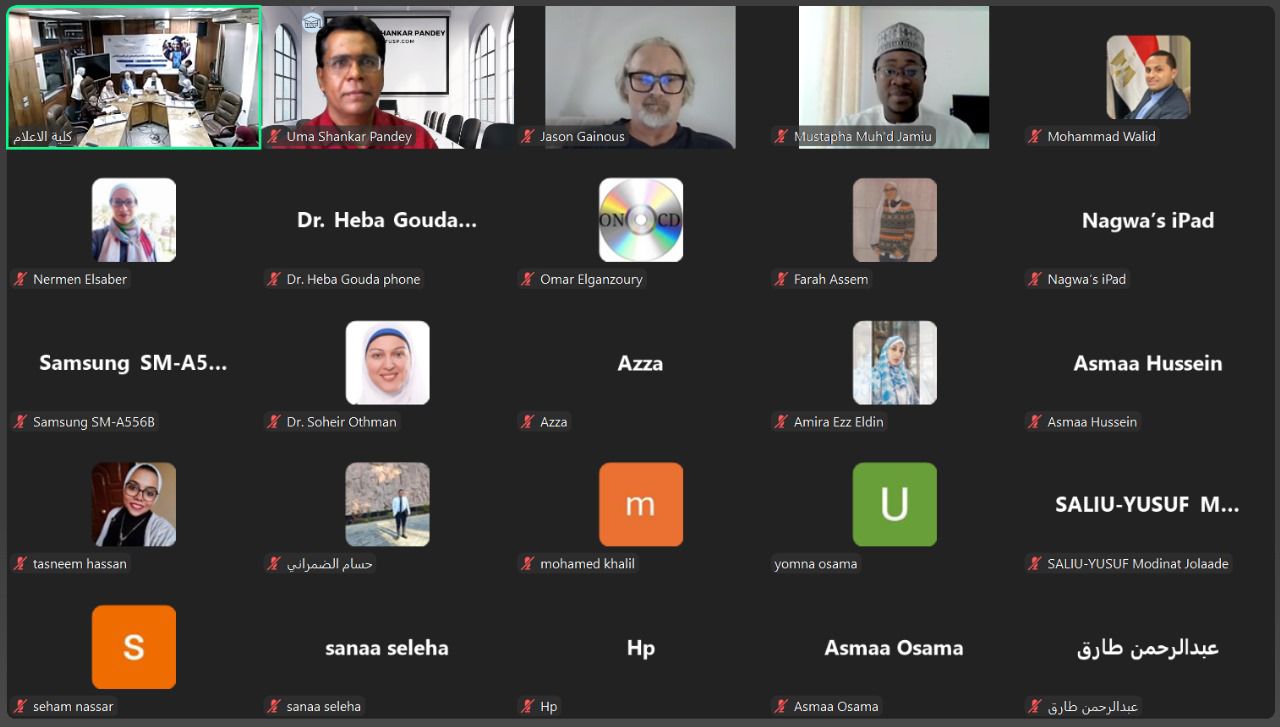
The event explored ‘Challenges and Dilemmas of Journalism Education in the Digital Age’, as digital transformation continues to redefine global newsrooms.
Against the backdrop of rapidly evolving digital journalism, Mustapha, who also doubles as the Associate Professor/Researcher, MiSiS University, RUDN, Russian Federation, speaking as a Guest Lecturer, reaffirmed how ethics in both teaching and practice have grown more precarious.
He stressed that the proliferation of fake news, misinformation, algorithmic bias, deepfakes, and the rise of artificial intelligence now raise increasingly complex questions for journalism educators and field practitioners alike.
His paper examined these dilemmas by referencing the Potter Box ethical decision-making model, developed by Professor Ralph B. Potter in 1965, as well as through a modified version.
The model proposes four structured dimensions that help journalists and students navigate conflicting ethical concerns vis clearly defining the facts of the issue, identifying core values such as truth and transparency, applying recognised moral philosophies like utilitarianism or Kantian ethics, as well as determining the loyalties that must guide the journalist’s final action.
He said the model, originally created to examine the ethics of nuclear weapons, has since been widely adapted across communication fields.
Yet it has faced criticism over time, prompting scholars like Watley, L. D. (2014) to propose refinements, including stakeholder identification, duty specification, and universality checks.
In addition to ethical decision-making models, Dr. Mustapha’s presentation highlighted the urgent need for Media and Information Literacy in journalism education.
Emphasised as a vital skillset for modern critical thinking, he adds that media literacy equips individuals to analyse, evaluate, and ethically create content within today’s information-saturated and algorithmically influenced media environment.
Wrapping up, Dr. Mustapha’s paper reiterated that ethical journalism must remain a non-negotiable pillar of both education and practice.
He pinpointed that in an age where AI generates headlines and misinformation travels faster than the truth, both the Potter Box and media literacy offer indispensable guidance.
Far beyond theoretical frameworks, they provide journalists and media students alike with essential tools for navigating a deeply mediated world with clarity and responsibility, Dr. Mustapha recommended.