By Jemimah Wellington, JKNewsMedia Correspondent
NIGERIA’s FEDERAL Government on Thursday confirmed that former President Goodluck Ebele Jonathan had finally left Guinea-Bissau safely after being trapped in the country when military officers launched a coup, closed its borders, and plunged the nation into uncertainty, raising global concern for international observers.
Spokesperson for the Ministry of Foreign Affairs, Kimiebi Ebienfa, told journalists in Abuja that Jonathan departed aboard a special flight with members of his delegation, including Mohamed Chambas.
“Former President Goodluck Ebele Jonathan is very safe and out of Guinea-Bissau,” Ebienfa said, noting that all evacuation procedures followed diplomatic protocol.
Jonathan had been in the country leading the West African Elders Forum Election Observation Mission for last Sunday’s presidential and legislative elections.
The military takeover occurred while ballots were still being tallied, leaving his team unable to exit until borders were reopened on Thursday.
In a joint statement on Wednesday, Filipe Nyusi, former president of Mozambique and leader of the African Union Election Observation Mission; Issifu Kamara, head of the Economic Community of West African States (ECOWAS) Election Observation Mission; and Jonathan condemned the coup as a “direct attempt to disrupt Guinea-Bissau’s democratic process.”
They urged calm and reaffirmed their commitment to supporting the country during what they called a “sensitive period,” stressing the need to protect peace and stability.
Nigeria’s FG Condemns Coup
The Federal Government of Nigeria also released a statement denouncing the coup “with profound dismay and deep concern,” describing it as an unconstitutional seizure of power and a breach of the ECOWAS Protocol on Democracy and Good Governance.
The ministry warned that the developments in Bissau posed significant risks to regional stability.
Coup In Guinea Bissau
Tensions escalated on Wednesday when military officers declared they had taken “total control” of the country, shut national borders, and ordered the suspension of electoral activities.
Gunfire was reported around the presidential palace as soldiers blocked major roads across the capital.
General Denis N’Canha, head of the presidential military office, announced that a joint military command “composed of all branches of the armed forces was taking over the leadership of the country until further notice.”
President Umaro Sissoco Embalo later told France24 by phone that he had been deposed and was being held along with his chief of staff and minister of the interior, according to AFP.
The coup unfolded amid a disputed election in which both Embalo and opposition candidate Fernando Dias had claimed victory. Provisional results had been expected Thursday before the military intervened.
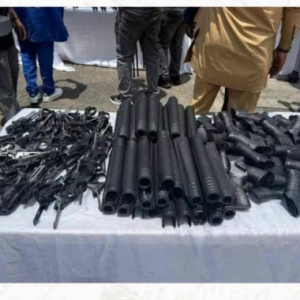
The command alleged a plot involving “national drug lords” and the importation of weapons “to alter the constitutional order.”
General Lansana Mansali, Inspector General of the Armed Forces, later announced that “all borders are now open,” clearing the way for stranded delegations, including Jonathan’s, to depart.
Authorities had earlier deployed more than 6,700 security personnel, including ECOWAS Stabilisation Force members, to safeguard the polls.
Guinea-Bissau, one of the world’s poorest countries, has a long history of coups and attempted takeovers, reflecting decades of instability and fragile governance, media reports note.
Meanwhile, former President Jonathan’s safe exit followed the reopening of Guinea-Bissau’s borders on Thursday, which allowed the West African Elders Forum delegation to depart after being unable to leave during the military lockdown.
Nigeria’s FG confirmed that all evacuation arrangements were carried out through diplomatic channels.
ECOWAS, the African Union, and other international observation missions have also acknowledged the situation in Guinea-Bissau, with their earlier statements emphasising adherence to constitutional order and the need for calm. Further official reactions are expected as the political situation develops.