By JKNewsMedia
A FORCEFUL campaign against plastic pollution is reshaping the environmental future of one of Africa’s largest megacities, shifting from grim statistics to bold reforms.
To commemorate June 5 World Environment Day, Lagos says it is rewriting its environmental legacy with its forceful campaign against plastic pollution, moving from alarming statistics to bold reforms aimed at securing the city’s future.
In a metropolis generating more than 13,000 tonnes of waste daily, plastic has become an existential threat—clogging drains, choking waterways, and deepening flood risks.
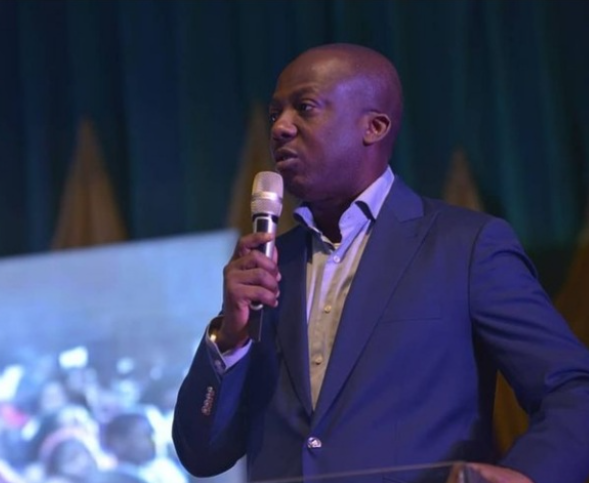
The Lagos State Government, under the watch of Environment and Water Resources Commissioner, Tokunbo Wahab, says it is turning this crisis into a moment of sweeping policy transformation.
A landmark audit by the Lagos State Government in collaboration with the United Nations Environment Programme (UNEP) and UN-Habitat in 2023 revealed that each resident leaks an average of 34 kilograms of plastic into the environment annually.
That equates to roughly ten plastic water bottles per person per day, the audit reveals.
The data also triggered a shift from passive concern to aggressive action.
At the forefront is the 2024 ban on styrofoam – a non-biodegradable blight across Lagos’s streets and canals.
That ban marked the opening salvo of a phased crackdown on single-use plastics, with full enforcement set to begin on July 1, 2025. Items on the chopping block include plastic straws, cutlery, certain nylon bags, and polystyrene cups.
PET bottles and sachet water packaging will be subject to Extended Producer Responsibility schemes, placing accountability on manufacturers to manage the life cycle of their products.
These policy shifts did not arise in isolation. Over 18 months of consultations with stakeholders like the Food and Beverage Recycling Alliance (FBRA) and Tetra Pak West Africa helped shape a model built not just on restriction, but on regulatory partnership.
The focus is clear: evidence-led change, not expedient populism.
On infrastructure, Lagos has pivoted from fragmented waste collection to a structured overhaul.
The state says it has also sealed a strategic alliance with ZoomLion Nigeria, a subsidiary of Ghana’s Jospong Group, to develop key logistics including Transfer Loading Stations and Material Recovery Facilities in Ikorodu and Badagry.
This will ease pressure on overstretched dumpsites like Olusosun while creating over 5,000 new jobs across recycling and logistics.
The Lagos Waste Management Authority (LAWMA) has expanded its fleet of evacuation trucks, cleared black spots notorious for illegal dumping, and boosted enforcement through collaboration with the Kick Against Indiscipline (KAI) unit.
From January to May 2025 alone, over 6,700 individuals were apprehended for offences ranging from highway crossing to open defecation and unauthorised trading.
Public education has proved equally vital. Wahab’s campaigns blend town halls with digital outreach, deploying social media influencers like Taooma to connect with younger demographics.
Community buy-in is essential, and Lagos is investing in behaviour change alongside penalties.
Flood control is being addressed head-on. More than 600 kilometres of drainage channels have been cleared to counteract blockages caused by plastic waste.
Simultaneously, the government has delivered 1,710 public toilets through Public-Private Partnerships, with 250 more in progress. Surveillance of private wastewater facilities has also intensified, overseen by the Lagos Wastewater Management Office (LASWMO).
Long-term resilience is being engineered through projects like the Ilubirin pumping station and new river-gauging systems. Urban renewal efforts have seen 54,000 trees planted by LASPARK, with a further 50,000 expected by 2026.
Idle spaces across Lagos are being converted into green parks to boost urban air quality and provide public leisure zones.
These interventions are drawing global attention with UNEP citing Lagos as a model for data-driven policy reform, while the city’s inclusion in the Global Plastics Hub keeps it aligned with best international practices.
Despite persistent hurdles—ranging from illegal trade practices to industry non-compliance and public resistance—Lagos is building momentum.
The environmental future of Nigeria’s economic capital is no longer being left to chance, the UNEP indicates.
Also, with Governor Babajide Sanwo-Olu at the helm and Wahab driving implementation, Lagos is noted to be crafting an African model for environmental reform grounded in strategy, science, and civic responsibility.
Already, the state’s experience is noted to have reflected a powerful truth: in which political will meets sustained planning and public engagement, environmental transformation becomes not just possible—but replicable.