By Olukorede Yishau
“Òkú ń sunkún òkú, àkàsó lórí ń sunkún ara wọn!” (“The dead are mourning the dead, while the vultures above are mourning one another!”)
SOMETIMES IN 2008, there was a tsunami at The Nation office, and it looked like the newspaper would not survive it. A group of senior, middle and junior career journalists left the newspaper to start another newspaper called The Nigerian Compass. The Deputy Editor of
The Nation at the time, Mr Bayo Oguntimehin, and its then Political Editor, Gabriel Akinadewo, were at the heart of the movement.
Oguntimehin edited the daily edition of the newspaper for some time while Akinadewo was in charge of the weekend title before later taking over the daily edition.
The exit of Oguntimehin, Akinadewo and their army created a huge crater in The Nation.
To fill this crater, the Managing Director and Editor-in-chief of The Nation, Mr Victor Ifijeh, and the then, Editor, Mr Gbenga Omotoso, combed other newsrooms for talents they felt could help reduce or eliminate the effect of The Nigerian Compass onslaught.
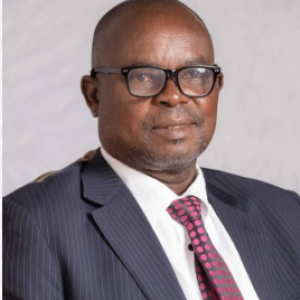
One of the experienced hands poached was the Ilesa-born Mr Mobolade Adeboyejo Omonijo, better known as Bolade Omonijo.
He was Deputy Political Editor at the Vanguard at the time, a post that was somehow below other positions he had held elsewhere.
Not long after Omonijo was poached, I also left Tell for The Nation and was a Senior Correspondent under Omonijo, with the brilliant Emmanuel Oladesu, now a doctorate degree holder, as Deputy Political Editor.
That was when my path crossed with this amiable soul who died on October 15, a day after I was involved in a ghastly accident that left the car I was driving a scrap.
I would have met him earlier when Mr Yemi Olowolabi, as Governor Olusegun Agagu’s Chief Press Secretary, once asked me to deliver a message to him. I didn’t meet him at home and just dropped the message.
On my first day under him, I didn’t know what to expect. I thought my role was to just write my reports because that was largely the tradition in the magazine I was coming from, but he soon made me realise he was going to involve me in the production of the political section.
Together with Oladesu and with Mr Ifijeh’s input, we started Midweek Politics and I wrote the preface to cover many a time. Mr Omonijo was in love with each one and he never shied away from telling me how pleased he was.
At a point, he started writing a column in the Sunday edition and he would often pass it to me to read and suggest headlines and, almost all the time, he accepted my suggestions.
He would later tell me he felt I was good with headline casting. Aside his columns, he also let me give headlines for some of his interviews and reports.
His trust in my ability made me want to deliver more. When I felt my promotion was taking too long and complained to his hearing, he spoke with the management without me asking him to, and when it came and I still felt it wasn’t enough, I expressed my displeasure.
Days later, I got what I wanted, but it meant moving to the news desk. In the presence of Mr Ifijeh, who came to him in the newsroom to break the news, he said he would have loved me to continue to work with him, but he would not express reservation since the movement came with a promotion, a promotion that led to me working closely with another fantastic human, Mr Niyi Adesina, (now Editor, Daily) who was Deputy Editor (News).
Mr Omonijo was very jovial. He gave a number of our colleagues nicknames, one of which was Kemolegelege for our sub-editor, Kemi.
When he was going to turn fifty, I sold him the idea of compiling his articles as a book. He bought it and the book was later launched to mark that special day.
On his volition, after my movement to the news desk, he opted to step down as Political Editor. He wanted a place on the editorial board.
He wanted to prepare for retirement from active journalism, but his plans didn’t work out and he would eventually combine the Editorial Board assignment with his work for God till he breathed his last.
Moving away from the political desk didn’t severe our relationship. There was a personal matter of mine he wasn’t pleased with the way I handled and was always expressing his fears about a boomerang, and he gave me one or two examples of people he knew who did what I did and it didn’t end well.
So, when I eventually told him I was toeing the path he wanted, he was very happy, but I was not bold enough to tell him that it was because his fears were coming true.
For years after leaving Nigeria, I planned to call him and confess, but I kept postponing it. Now, I will never get to tell him.
However, there is a big lesson he taught me that has stayed with me over the years and will stay with me for as long as God decides I will live.
And that lesson is embedded in his reaction whenever we lost anyone at The Nation. Mr Omonijo’s permanent response was: “Òkú ń sunkún òkú, àkàsó lórí ń sunkún ara wọn!”
The English Language is so impotent in properly explaining this deep Yoruba adage, but the meat of it is that anytime someone dies and we cry over the death, we are actually crying for our own inevitable end.
I have found myself always referring to it when anyone dies to cushion the effect of the loss and to also tell myself it was a matter of time before I would also be gone and become nothing but memory.
I’m glad he devoted the last years of his life to serving God, I’m glad he got over those rebellious years in the university when he, from what he told me, didn’t enter any church in Nsukka because he felt freed from years of his life revolving around church with his priest father, and I’m glad his children are all graduates.
It was one of them who sent me a WhatsApp message using Mr Omonijo’s phone to say he passed. I initially thought Mr Omonijo was telling me his own father died, and I sent a message condoling with him, which I deleted after noticing the messenger addressed me as Sir.
I also remembered we were in Ilesa many years ago to inter his father’s remains.
That was when fear gripped me and I started searching for something that would debunk it, but his son and Idris Akinpelu confirmed it and the vanity of this life hit me again. A few days back, he was still giving thumbs up for a YouTube interview on ‘Black Market’, my next novel.
A significant milestone in his career was his coverage of the Liberian war alongside other Nigerian journalists, including Tayo Awotunsin of The Daily Champion and Krees Imodibe of The Guardian, who were captured and killed by members of the National Patriotic Front of Liberia (NPFL), the rebel movement led by Charles Taylor.
Omonijo survived and wrote a book titled ‘Doe: The Liberian Tragedy’, published in 1990 by Sahel Publishing, a work that has been cited in ‘The African Guerillas’ edited by Christopher Clapman, and in another academic work by scholar Stephen Ellis.
I once encouraged him to reproduce the work, but it never happened. Aniete Usen of Newswatch, who escaped into Sierra Leone, recounted in a book, ‘Audacious Journalism’, how he unsuccessfully tried to get the late journalists and Frank Nwabueze of the National Concord, who was saved by a sudden bout with cholera, to depart with him.
During his time as Political Editor, he closed late from work once and, on his way home on the Lagos-Ibadan Expressway, armed robbers attacked him and bundled him away in his official car. He was later abandoned by the roadside when they were sure the car would not be immobilised by its security system.
That was the last time he lived in that house.
My final take: This life is not worth the weight many attach to it. They accumulate wealth, they cut corners, they back-bite and behave as if tomorrow is promised, as if without them, this world will cease to exist. It will not and the things they acquire greedily will remain here. They will not come with them to the hereafter.
Adieu, Mr Omonijo, one of the class of special people I am glad to have called oga.
If people see in the hereafter, I will see you when the owner of life says my time is over and maybe I will have the opportunity to tell you what I kept procrastinating about.
Sleep well, boss and if you see Toluwanisings, who passed a day before you, tell him we miss him but his work will keep us company till we too sign off this mysterious world!
Quote:
This life is not worth the weight many attach to it. They accumulate wealth, they cut corners, they back-bite and behave as if tomorrow is promised, as if without them, this world will cease to exist. It will not and the things they acquire greedily will remain here. They will not come with them to the hereafter.
—

Share Your Story with us!
Advertise with us!
Publicity for a product, service, or event!
Contact: WhatsApp Only: +2348039560647
Email: jkmediapress@gmail.com