THE BRITISH Raj ruled India for slightly above 300 years and they used the famous indirect rule system with the traditional rulers – Maharajahs playing a significant role in the administration.
When independence came on August 15th 1947 the new government led by Pandit Jawaharlal Nehru decided to scrap the traditional rulers as they were seen as enablers of colonial rule.
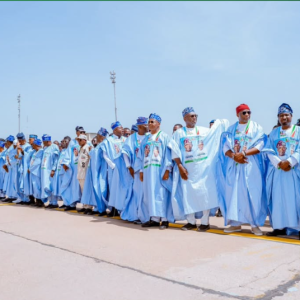
In Nigeria, which was also colonized by the British, the traditional rulers helped the British in the course of their indirect rule. The British gave them clear cut roles in their administration. They ended up clashing with the nationalists as the latter saw them as saboteurs of their people who aided the oppressive rule by the then colonial overlords.
A middle ground between the nationalists and traditional rulers was reached on 27th July 1953 during the London Constitutional Conference when some traditional rulers like the then Ooni of Ife, Sir Tadeniawo Adesoji Aderemi, Olowo of Owo, Sir Olateru Olagbegi, Obi of Idumuje Ugboko Obi Justin Nkezie Nwoko, and the Emir of Katsina, Sir Usman Nagogo Dan Muhammadu Dikki.
When Independence came on October 1st 1960, the nationalists and politicians surprisingly didn’t scrap the traditional institutions. They even gave them roles in the government unlike what happened in India.
The first Governor of the then Western Region was the Ooni of Ife, Sir Adesoji Aderemi. During the emergency rule in the then Western Region in 1962 under the leadership of Dr. Moses Adekoyejo Majekodunmi, some traditional rulers were appointed into the cabinet.
They included the then Awujale of Ijebuland, Oba Sikiru Kayode Awotona, The Oba of Benin, Oba Akenzua II, The Osemawe of Ondo, Oba Tewogboye II, the Olubadan of Ibadan, Oba Akinyele, the Olu of Warri, Erejuwa II, and the Oluwo of Iwo, Oba Samuel Omotosho Abimbola.
The 1979 Constitution provided a little role for traditional rulers under Section 140 when it mentioned them as constituting members of the Council of State.
The 1999 Constitution provides absolutely no role for the traditional rulers. A school of thought even believes that the institution which is closest to the grassroots should be scrapped as it has outlived its usefulness and has no place in modern times.
A most cited example is the fact that most of the so-called traditional rulers are sturdy adherents of foreign faiths like Christianity and Islam. The current Ooni of Ife, Oba Adeyeye Enitan Babatunde Ogunwusi was once quoted as saying that Jesus Christ was his Lord and Master in public. His critics contend that King Charles III will never refer to the Pope as his Spiritual Master for instance.
Also, traditional rulers have been greatly demystified. The then Premier of the Western Region, Chief Obafemi Awolowo deposed the then Alaafin of Oyo, Oba Adeniran Adeyemi the father of Oba Lamidi Adeyemi III in 1955, the Olowo of Owo was deposed at some point in the 1960s, Emir Muhammadu Sanusi was deposed as the Emir of Kano in 1963 by the Premier of the Northern Region and the Sardauna of Sokoto, Alhaji Sir Ahmadu Bello.
The passports of the then Ooni of Ife, Okunade Sijuade Olubuse II and the Emir of Kano, Ado Bayero were seized after an unauthorized trip to Israel. The Deji of Akure, Oba Oluwadamilare Adesina was deposed by the then Ondo State Governor, Olusegun Rahman Mimiko for assaulting his wife in public.
The Eze of Akaeze, Joseph Okor was dethroned in 2022 by the Ebonyi State Government for drunkenness, The Onojie of Uromi, Anslem Aidenojie was removed for abusing a woman and showing disrespect to constituted authorities, Baabe Kingdom Chief, Monday Frank Noryea was removed by the Rivers State Governor for alleged cult activities.
I humbly advocate that our legislators make a specific provision for our traditional rulers in our constitution as they play a key role in the advancement of our democracy.
Their constant harassment and disrespect by state governors is as a result of their absence from the constitution. They are used and mercilessly dumped by politicians who use them to canvass for votes during elections.
The 1999 Constitution lacks autochthony as it was hurriedly drafted and cobbled together by the military junta led by General Abdulsalami Abubakar. It didn’t have the input of the generality of the Nigerian people.
The National Assembly and the various State Houses of Assemblies should throw the constitutional amendment process open and make a sturdy provision for traditional rulers so that they can function effectively and their stools would not be made a mockery of.
Despite the lack of a constitutional provision, many successful people still find the stools very attractive. For instance, Alfred Diette-Spiff after leaving office as the Governor of Old Rivers State has been a traditional ruler in the present day Bayelsa State since the 1970s.
Ebitinmi Banigo the founder of the now defunct All States Trust Bank is now a traditional ruler in Bayelsa State. Oba Frederick Akinrutan, the Olugbo of Ugbo in Ondo State was a successful oil and gas entrepreneur before he ascended the throne of his ancestors. I can go on and on to list names.
Our traditional rulers need a solid constitutional backing and the 1999 constitution amendment committee should critically look into this for the preservation of the ancient thrones across the country.
They should get Nigerians heavily involved in the process and the last link to the grassroots should finally have a loud voice backed by the constitution for ease of legal gymnastics.
Enough of the ridicule of our traditional rulers! The time to give them their much desired and cherished self-respect is now!
Over to you our lawmakers as this is your golden opportunity to write your name in gold.