By Olurotimi Olubodede, Contributor
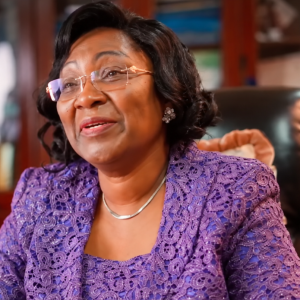
MARYAM NDIDI Babangida (née Okogwu) was a transformative figure in Nigeria’s history, widely recognized for redefining the role of the First Lady and championing women’s empowerment, especially in rural communities.
Born on November 1, 1948, in Asaba, present-day Delta State, Maryam was the daughter of Leonard Nwanonye Okogwu, an Igbo from Asaba, and Hajiya Asabe Halima Mohammed, a Hausa from Niger State. She began her education in Asaba and later attended Queen Amina College in Kaduna for her secondary schooling.
Maryam furthered her studies by obtaining a diploma in secretarial studies from La Salle Extension University in Chicago and a certificate in computer science from the NCR Institute in Lagos.
At the age of 20, Maryam married Major Ibrahim Badamasi Babangida on September 6, 1969. The couple had four children: Mohammed, Aminu, Aisha, and Halima.
Her husband’s rise to Chief of Army Staff in 1983 saw Maryam take on the role of President of the Nigerian Army Officers Wives Association (NAOWA), where she initiated the establishment of schools, clinics, vocational training centers, and daycare facilities for military families.
As First Lady of Nigeria from 1985 to 1993, when her husband, General Ibrahim Babangida became Nigeria’s Head of State in 1985, Maryam Babangida transformed that traditionally ceremonial role into a dynamic platform for social change.
She became a national icon, celebrated for her elegance and style, and used her position to advocate for women’s rights and development.
With her ‘Better Life Programme (BLP) for Rural Women’ initiated in 1987, Maryam aimed to uplift the socio-economic status of women in rural areas.
The programme facilitated the creation of:
▪️9,492 women’s cooperatives
▪️1,435 cottage industries
▪️1,784 farms and gardens
▪️495 shops and markets
▪️1,094 multipurpose women’s centers
▪️135 fish and livestock farms
These initiatives provided not a few women with access to credit, vocational training, healthcare, and educational resources, significantly improving their quality of life and contributing to national development.
On the long run, Maryam Babangida’s impact extended beyond her tenure as First Lady.
She authored a book The Home Front: Nigerian Army Officers and Their Wives in 1988, highlighting the supportive roles of military spouses.
In recognition of her contributions, the National Centre for Women Development in Abuja was renamed the Maryam Babangida National Centre for Women Development in 2023.
Her daughter, Aisha Babangida, continues her mother’s legacy by leading the Better Life Programme, ensuring the sustained empowerment of women across Nigeria.
Maryam Babangida passed away on December 27, 2009, in Los Angeles, California, after battling ovarian cancer.
Her death was mourned nationwide, with many remembering her as a trailblazer for women’s rights and a symbol of grace and resilience.
In 2020, a major road in Asaba was named Maryam Babangida Way in her honour.
Till date, the indelible mark Maryam Babangida’s life and work left an on Nigeria are still remembered as setting a precedent for the active involvement of First Ladies in national development and the empowerment of women.