

By Jemimah Wellington, JKNewsMedia Correspondent
NIGERIA’s NATIONAL Assembly has approved President Bola Tinubu’s request to raise a total of $2.847 billion from the international capital market to support the 2025 fiscal plan and key infrastructure projects.
The approval, granted on Wednesday, covers a $2.347 billion loan and a $500 million debut sovereign sukuk to diversify the country’s external financing sources.
The decision followed the consideration of reports from the Senate and House Committees on Aids, Loans, and Debt Management.
The committees jointly reviewed the President’s request, which sought legislative endorsement in line with sections 21(1) and 27(1) of the Debt Management Office (Establishment) Act, 2003.
These provisions mandate parliamentary consent before the federal government undertakes any new borrowing or refinancing of existing obligations.
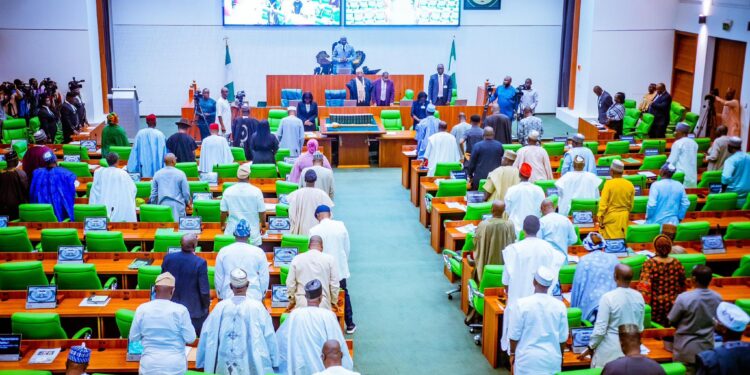
In the House of Representatives, lawmakers adopted the report presented by Hon. Abubakar Hassan Nalaraba, Chairman of the Committee on Aids, Loans, and Debt Management.
The motion, taken during plenary presided over by Speaker Tajudeen Abbas, endorsed the implementation of a new external borrowing plan amounting to N1,843,669,786,987.16, approximately $1.229 billion at the budget exchange rate of N1,500 to $1.
This borrowing forms part of the external funding provided for under the 2025 Appropriation Act to help close Nigeria’s projected fiscal deficit of N9.27 trillion.
According to the approved plan, the funds will be sourced through a combination of instruments, including Eurobonds, loan syndications, or bridge financing facilities, depending on market conditions and the country’s borrowing capacity.
The Debt Management Office (DMO) is expected to coordinate the issuance in line with established legal and fiscal frameworks.
The additional $500 million debut sovereign sukuk, also authorised by the National Assembly, will be issued in the international capital market to finance infrastructure development projects.
Government officials said the sukuk offering marks Nigeria’s first sovereign issuance abroad and is intended to attract Sharia-compliant investors while expanding the nation’s financing options.
The sukuk, structured in accordance with Islamic finance principles, will support capital projects in critical sectors, including transport, energy, and housing, while aligning with the administration’s objective of diversifying the country’s revenue and funding base.
The Debt Management Office is expected to collaborate with financial advisers, arrangers, and regulatory agencies to finalise documentation and ensure compliance with global standards for sovereign sukuk issuance.
President Tinubu had earlier communicated his request to the National Assembly, outlining the strategic rationale behind the borrowing plan.
In his communication, he stated that the proposed borrowing would be used to part-finance the 2025 budget deficit and refinance maturing Eurobonds, thereby reducing rollover risks and maintaining debt sustainability.
The President emphasised that Nigeria’s debt portfolio remained within acceptable thresholds and that the external borrowing would be utilised prudently to stimulate growth and safeguard macroeconomic stability.
Lawmakers also took note of the government’s commitment to prioritising concessional and semi-concessional loans, with lower interest rates and longer repayment periods, as part of efforts to manage debt servicing costs.
The committees advised that borrowing must be tied strictly to revenue-generating and growth-supporting projects capable of enhancing productivity and fiscal sustainability.
The National Assembly’s approval now gives the federal government the legal mandate to proceed with the proposed transactions on the international capital market.
The Ministry of Finance and the Debt Management Office are expected to work closely with international investors and financial institutions to structure and execute the debt instruments.
Officials from the finance ministry reaffirmed that the borrowing plan aligns with the government’s medium-term debt strategy and fiscal responsibility framework.
The administration maintained that accessing global markets was necessary to bridge the resource gap in the national budget while maintaining Nigeria’s credibility among international lenders.
The approved borrowing plan forms part of broader fiscal measures contained in the 2025 Appropriation Act, which aims to finance priority projects and sustain ongoing infrastructure programmes across the country.
The government has also pledged to strengthen domestic revenue mobilisation through tax reforms and the rationalisation of public expenditure to reduce reliance on borrowing in the medium term.
President Tinubu’s administration continues to emphasise that external borrowing remains a critical instrument for addressing funding gaps in the face of limited domestic revenue and rising public spending needs.
The government has maintained that all loan proceeds will be directed toward productive ventures, with clear monitoring frameworks to ensure transparency and accountability.
The National Assembly further urged the executive arm to comply strictly with all statutory provisions governing debt acquisition and management, ensuring that future borrowing remains sustainable.
Moreover, legislators reaffirmed their commitment to ongoing oversight to guarantee that every facility obtained under the approved plan is utilised for its intended purpose and in the best interest of the country.



One would’ve thought after the subsidy removal, there’ll be a minimal need to borrow.
Exactly, that was our collective expectations as I can only say GOD help Nigeria.