By JKNewsMedia
ENERGY TRANSFORMATION framed key deliberations as the Federal Government reaffirmed its drive to reposition Nigeria’s power sector for sustainability, efficiency, and inclusive growth.
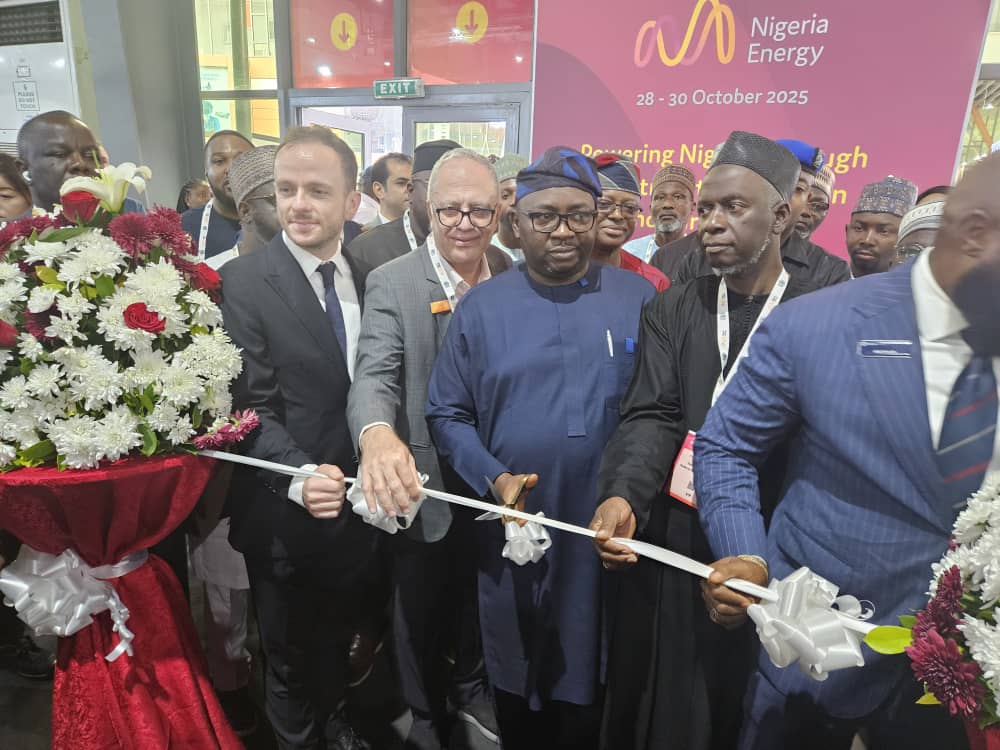
Addressing participants at the 2025 OTL Africa Energy Forum in Lagos, the Honourable Minister of Power outlined wide-ranging policy actions, legislative milestones, and infrastructure investments aimed at delivering affordable and reliable electricity to Nigerians under the Renewed Hope Agenda of President Bola Tinubu.
The Minister commended Informa Market for its consistency in hosting the annual energy forum, describing it as a credible platform that continues to attract global investors, industry leaders, and policymakers committed to shaping Nigeria’s energy future.
He said the event’s theme, “Powering Nigeria Through Investment, Innovation, and Partnership,” captures the essence of the country’s collective ambition to build a resilient, inclusive, and sustainable energy system driven by enterprise, innovation, and shared prosperity.
He stressed that the Federal Government’s strategy is rooted in a comprehensive and multi-pronged approach spanning legislation, policy reforms, infrastructure modernisation, energy transition, and local content development, all aimed at unlocking private capital and improving efficiency across the electricity value chain.
Speaking on recent legislative developments, the Minister highlighted the enactment of the Electricity Act 2023 as a turning point for the Nigerian Electricity Supply Industry (NESI).
The law, he explained, devolves regulatory powers to the states, promotes competition, and empowers private-sector participation.
According to him, fifteen states have already received regulatory autonomy to establish subnational electricity markets, with one now fully operational.
The Ministry, he said, is working closely with these states to ensure synergy between wholesale and retail markets, while the Rural Electrification Agency (REA) continues to hold roundtables with governors to advance off-grid initiatives.
On policy reforms, Adelabu announced that the Integrated National Electricity Policy, approved by the Federal Executive Council in February, will soon be accompanied by a Strategic Implementation Plan that harmonises existing energy policies into a coherent framework for long-term sector growth.
He described the document as the first comprehensive electricity policy framework in nearly two decades and praised development partners and industry experts for their contributions.
On sector commercialisation, the minister explained that ongoing tariff reforms had significantly improved liquidity and investor confidence.
Cost-reflective tariffs for select consumer categories, he said, had improved supply reliability, reduced energy costs for industries, and raised total sector revenue by 70 percent to N1.7 trillion in 2024.
He projected revenues to exceed N2 trillion in 2025.
He also confirmed that President Tinubu had approved a N4 trillion bond to settle verified debts owed to generation companies (GenCos) and gas suppliers, with a targeted subsidy framework being developed to protect vulnerable households while ensuring commercial viability.
Discussing utility regulation, the minister said the FG intends to introduce minimum capital adequacy requirements as part of the operational licence renewal process for Distribution Companies (DisCos).
This measure, he said, is designed to strengthen financial health, improve service delivery, and address long-standing liquidity challenges in the power sector.
Turning to infrastructure, he disclosed that the government had achieved significant progress under the Presidential Power Initiative (PPI).
Phase Zero, implemented in partnership with Siemens Energy and other global contractors, has added more than 700MW of new transmission capacity, improving grid stability and reliability.
Contracts under Phase One have been signed with Siemens Energy, CMEC, Elswedy Electric, and Power China, with financing arrangements currently being finalised to deliver an additional 7,000MW of operational capacity.
The minister stated that the government is also rehabilitating existing National Integrated Power Projects (NIPPs) to unlock about 345MW of stranded generation capacity while fully integrating the 700MW Zungeru Hydropower Plant into the national grid.
These interventions, he said, have collectively raised Nigeria’s available generation to an average of 5,300MW in 2024, compared with 4,200MW in 2023.
He announced the structural unbundling of the Transmission Company of Nigeria (TCN) into two distinct entities, the Nigerian Independent System Operator (NISO), responsible for grid operations and market coordination, and the Transmission Service Provider (TSP), responsible for infrastructure ownership and expansion.
According to him, this reform represents one of the most significant structural shifts in the history of Nigeria’s electricity industry.
He also added that the government has operationalised the Presidential Metering Initiative (PMI), backed by N700 billion from the Federation Account Allocation Committee (FAAC) to deploy 1.1 million meters by the end of 2025 and 2 million annually over the next five years.
This effort complements the 3.2 million meters being procured through the World Bank-supported DISREP programme, ensuring that Nigeria can close its metering gap within five years and enhance transparency across the electricity value chain.
Highlighting Nigeria’s energy transition agenda, Adelabu said the FG had mobilised more than $2 billion through international partnerships to de-risk investments and expand power access in underserved communities, educational institutions, and health facilities.
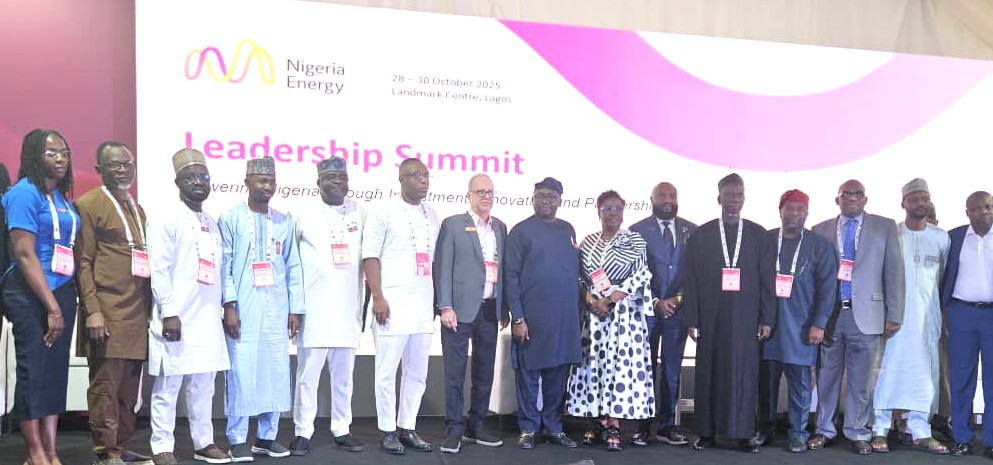
Key funding includes the $750 million World Bank DARES programme for off-grid and mini-grid expansion, the $500 million NSIA RIPLE platform for renewable investments, and the $190 million JICA fund to complement the DARES initiative.
These facilities, he said, are accelerating renewable energy deployment nationwide.
Furthermore, he revealed that the National Power Training Institute of Nigeria (NAPTIN) recently commissioned new technical training and hostel facilities, developed in partnership with international agencies, to strengthen human capacity in the sector.
Additionally, agreements signed at the 2025 Nigerian Renewable Energy Innovation Forum (NREIF) are set to bring on stream 4 gigawatts of solar manufacturing capacity per annum, equivalent to nearly 80 percent of Nigeria’s current generation output.
He noted that Nigeria has already commenced exporting locally manufactured solar panels to Ghana, marking a major stride toward regional energy integration.
As the forum progressed, the Minister reiterated that Nigeria’s power sector remains open and ready for investment.
He referenced South Africa’s $25 billion transmission grid expansion project, which targets 14,000 kilometres of new lines and 59GW of capacity in 14 years, as a benchmark for ambitious energy infrastructure goals.
He said Nigeria’s Presidential Power Initiative, valued at $2.3 billion, represents an equally bold commitment to transforming its grid.
He noted that the country currently has 10GW of stranded generation capacity, energy that could power industries, create jobs, and support electricity exports through the regional power pool.
He encouraged private investors to seize this opportunity to partner with the government in unlocking Nigeria’s vast potential.
Concluding his remarks, the Minister urged participants to think boldly and invest strategically, saying that the discussions at the two-day forum should focus on building partnerships capable of driving Nigeria’s transition towards industrial growth, technological innovation, and shared prosperity.
“Together, through sustained investment, forward-thinking innovation, and strong partnerships, we can power Nigeria’s journey toward a brighter, more resilient, and energy-secure future,” he stated.