By Ajibola Olaide, JKNewsMedia Reporter
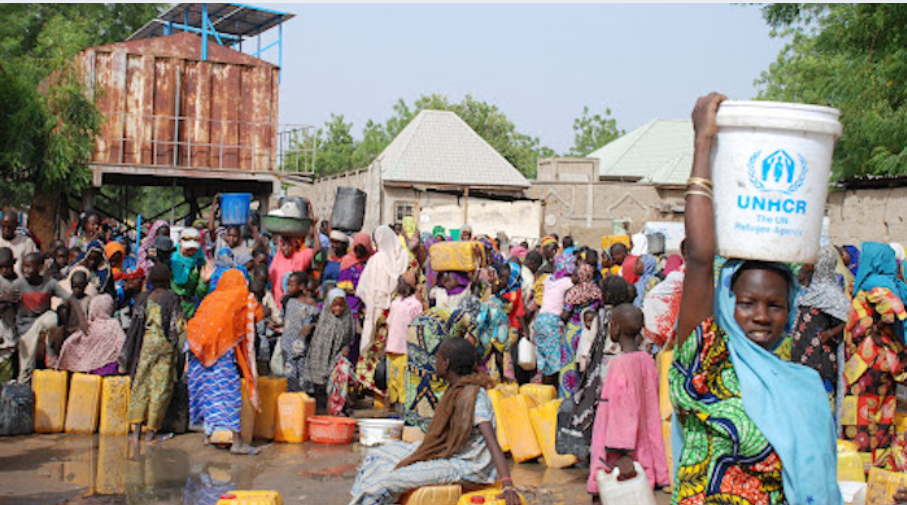
ESCALATING INSECURITY and conflict have driven the number of Nigerian refugees abroad up by 36 per cent in six years to 478,150, with the sharpest increase recorded in 2025 despite increasingly restrictive immigration policies in major destination countries.
JKNewsMedia.com reports that the latest report from the United Nations High Commissioner for Refugees (UNHCR) shows that the number of Nigerian refugees increased from 352,960 in 2020 to 383,660 in 2021, representing an 8.7 per cent rise.
The figure climbed to 391,120 in 2022 and reached 410,308 in 2024 before surging by 17 per cent to 478,150 in 2025.
The sharp increase in 2025 marked the steepest annual rise during the period under review, highlighting the growing scale of forced displacement from Nigeria.
Neighbouring African countries account for most Nigerian refugees abroad.
Niger hosts 258,402, followed by Cameroon with 127,858, Canada with 34,125, Chad with 22,811 and Italy with 22,186. Niger, Cameroon and Chad collectively host about 85 per cent of the recorded Nigerian refugee population, indicating that most people fleeing the country remain within the region.
While refugee numbers have increased, the number of Nigerians seeking asylum abroad has declined as UNHCR data show that pending asylum claims fell by 35.6 per cent, from 87,289 in 2020 to 56,176 in 2025.
UNHCR Nigeria attributed much of the decline to a reduction in pending claims in the United States (US), where the number dropped from 33,414 in 2020 to 3,033 during the period.
The agency cautioned against interpreting the decrease as evidence that fewer Nigerians are fleeing the country. It explained that asylum figures represent people whose claims are awaiting decisions, rather than everyone who has left their country of origin.
“The figure falls when claims are decided or closed, not because fewer people are fleeing,” the agency said.
UNHCR attributed the rising refugee population to escalating conflict and insecurity across Nigeria, stressing that although economic hardship increases people’s vulnerability, violence remains the primary driver of forced flight.
The agency also explained that neighbouring countries generally recognise Nigerians fleeing conflict as refugees on a group basis. Consequently, those recognised are counted as refugees rather than asylum seekers.
The displacement crisis extends beyond Nigeria’s borders.
The International Organisation for Migration (IOM) estimates that more than 3.6 million Nigerians are internally displaced, forming a population from which some people across international borders in search of safety.
The scale of Nigeria’s refugee population places the country among those experiencing substantial forced displacement, alongside Myanmar, the Democratic Republic of Congo, Afghanistan, Sudan, South Sudan, Syria and Ukraine.
UNHCR figures show that refugee populations have changed considerably across these countries between 2020 and 2025, reflecting differing conflict and displacement patterns.
Myanmar’s refugee population increased from 1.103 million in 2020 to 1.52 million in 2025, while asylum seekers rose from 40,207 to 67,825.
The Democratic Republic of Congo (DRC) recorded an increase from 840,392 refugees in 2020 to 1.78 million in 2025. Its asylum seeker population also rose, from 145,372 to 168,421.
Afghanistan, which already had 2.59 million refugees in 2020, recorded 2.67 million in 2025 as the number of asylum seekers increased from 238,791 to 270,007.
Sudan experienced one of the sharpest deteriorations over the period.
Its refugee population rose from 787,823 in 2020 to 2.39 million in 2025, while asylum seekers increased from 70,049 to 940,297 following the outbreak of civil war in 2023.
South Sudan’s refugee population increased from 2.18 million to 2.39 million, while its asylum seeker numbers climbed from 4,858 to 123,984.
Syria recorded a decline in refugees, from 6.703 million in 2020 to 4.87 million in 2025.
However, the number of asylum seekers rose from 107,085 to 154,355.
Ukraine experienced the most dramatic increase in refugee numbers among the countries listed as its refugee population rose from 35,156 in 2020 to 5.22 million in 2025, following Russia’s full-scale invasion, while asylum seekers increased from 21,426 to 26,583.
Nigeria’s displacement pattern differs from those of countries where open warfare has been the dominant driver. Humanitarian workers identify a combination of insecurity, economic hardship, communal violence and climate-related displacement as factors contributing to the country’s growing refugee population.
UNHCR has also identified conflict, insecurity, adverse weather events, including floods, and economic fragility as key factors pushing people to cross borders.
The increase in Nigerian refugees has coincided with tighter immigration and asylum policies in several major destination countries, including the United States, the United Kingdom and Canada.
In the US, the Biden administration introduced restrictions on asylum access in June 2024 through its “Securing the Border” proclamation.
The measures capped crossings at 2,500 daily and required appointments through the CBP One application, alongside a higher credible fear standard.
Following President Donald Trump’s return to office in January 2025, the United States suspended refugee admissions and cancelled faith-based resettlement funding, including support for the United States Conference of Catholic Bishops.
The administration also reduced the fiscal year 2026 refugee admissions ceiling by 94 per cent, from 125,000 to 7,500, reserving places for white South African Afrikaners.
In December 2025, the US Citizenship and Immigration Services (USCIS) placed an indefinite pause on asylum decisions. In March 2026, it maintained a blanket block on approvals for nationals of 39 high-risk countries, despite a court ruling in June 2026 declaring the blackout illegal.
The United Kingdom (UK) also introduced changes affecting refugee protection. Home Secretary Shabana Mahmood reduced refugee leave to a temporary 30-month cycle subject to regular reviews and extended the period for settlement to 20 years.
The changes require individuals to return when their home countries are deemed safe, while statutory housing and allowances have become discretionary.
Canada tightened its immigration framework through Bill C-12, the Strengthening Canada Immigration System and Borders Act, which received royal assent on 26 March 2026.
The legislation bars asylum claims made more than a year after entry for people who entered Canada after 24 June 2020. It also requires people who cross the US land border irregularly to claim asylum within 14 days and gives authorities powers to suspend visas and pause immigration streams.
Despite these restrictions, UNHCR’s figures show that Nigeria’s refugee population continued to grow, with the sharpest increase recorded in 2025.
—

Share Your Story with us!
Advertise with us!
Publicity for a product, service, or event!
Contact: WhatsApp Only: +2348039560647
Email: jkmediapress@gmail.com