By Jemimah Wellington, JKNewsMedia Correspondent
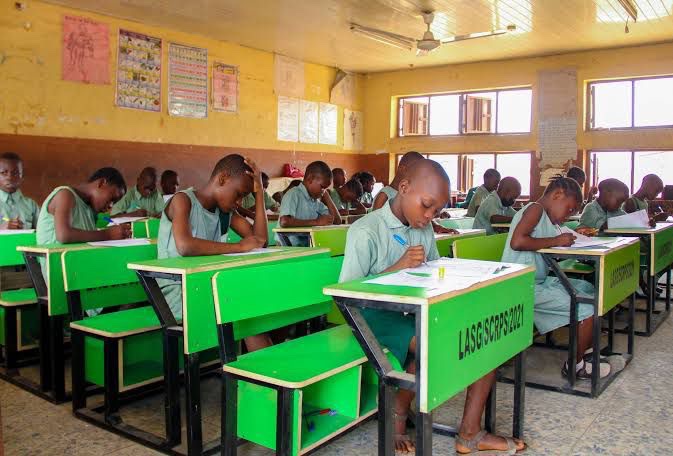
FEDERAL GOVERNMENT has approved a comprehensive new curriculum for Junior and Senior Secondary Schools across Nigeria, introducing compulsory digital literacy, entrepreneurship, and advanced technology courses in a major step to modernise education and equip students with globally relevant skills.
The reform, announced under the administration of President Bola Ahmed Tinubu, signals a decisive shift towards knowledge-based learning.
By embedding computer science, artificial intelligence, and innovation at the core of secondary education, authorities aim to strengthen the nation’s human capital and prepare young Nigerians for emerging opportunities in the global economy.
For Junior Secondary Schools (JSS1-3), the framework builds on existing core subjects such as mathematics, English, integrated science, and social studies, but places new emphasis on practical and digital learning.
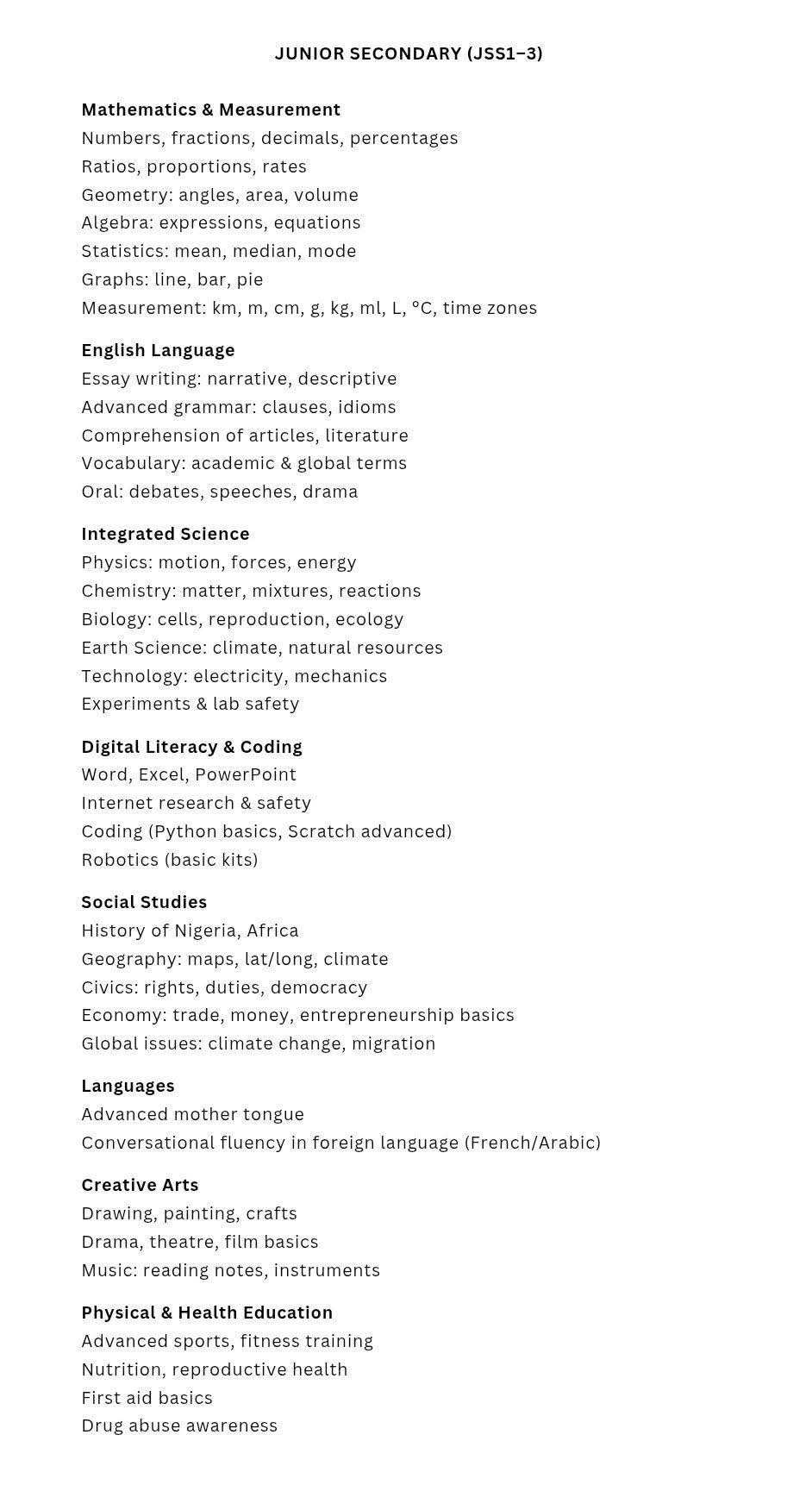
Mathematics continues with fractions, ratios, geometry, algebra, and statistics, while English develops essay writing, advanced grammar, vocabulary, and oral communication through debates and speeches.
Integrated science retains physics, chemistry, biology, and earth sciences but now adds laboratory safety and hands-on experiments.
The most notable changes at the junior level are the introduction of digital literacy and coding, covering Word, Excel, PowerPoint, internet safety, Python basics, and advanced Scratch.
Students will also work with basic robotics kits. Social studies has been expanded to address trade, entrepreneurship, democracy, and global issues such as climate change and migration.
Physical and health education introduces reproductive health, nutrition, first aid, and drug abuse awareness. Creative arts and languages remain integral, with drama, music, and conversational fluency in French or Arabic included.
At the Senior Secondary School (SS1-3) level, the curriculum deepens both academic rigour and vocational preparation. Mathematics progresses into trigonometry, vectors, calculus, probability, and financial mathematics, with applications in economics and engineering. English shifts towards academic writing, literary analysis, and media studies, with new focus on fact-checking, journalism, and critical research skills.
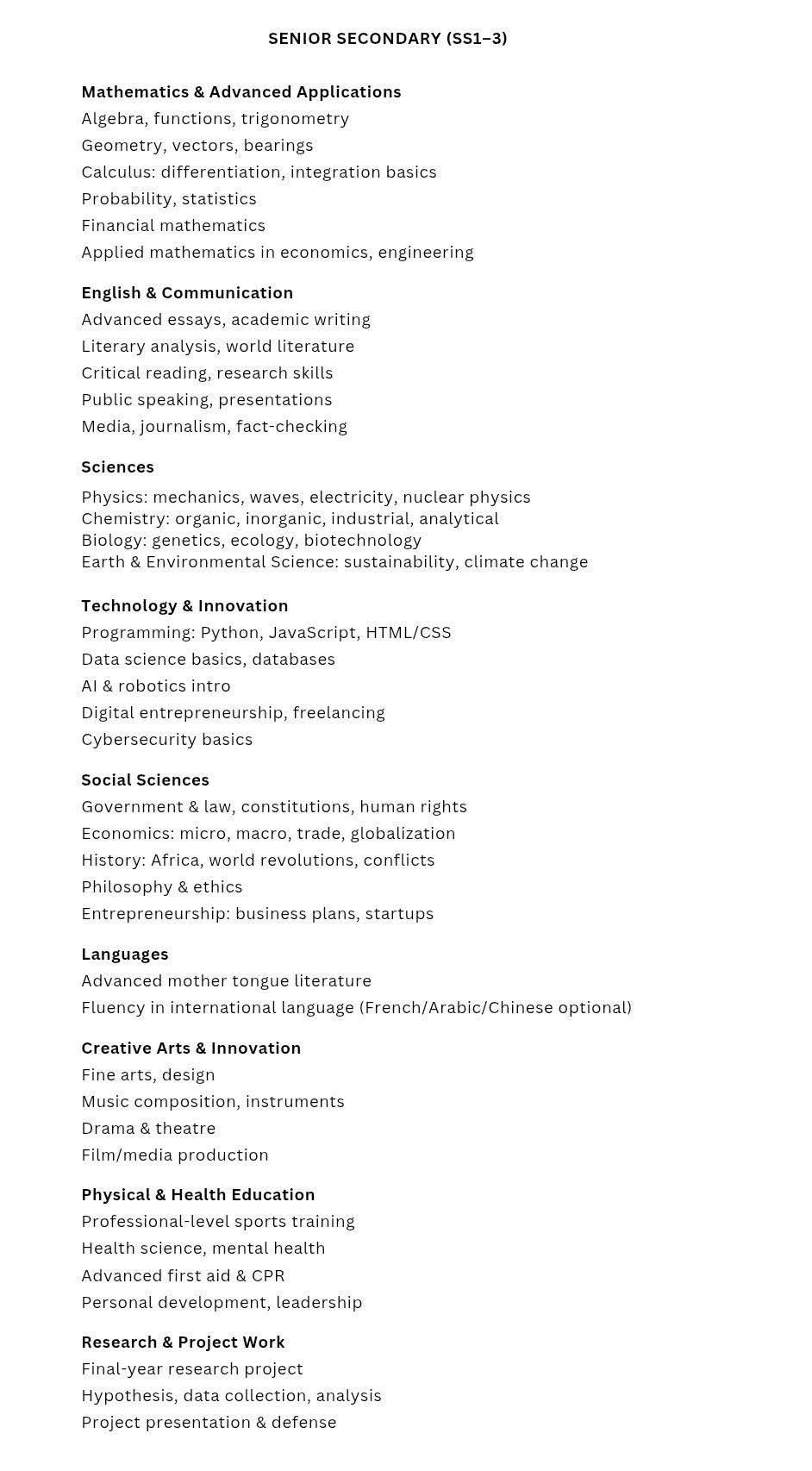
Science courses expand into advanced physics, organic and industrial chemistry, biotechnology, genetics, and environmental sustainability.
Technology and innovation subjects bring some of the most significant changes, with programming in Python, JavaScript, and HTML/CSS now compulsory.
Students will also be introduced to artificial intelligence, robotics, data science, databases, and cybersecurity.
Authorities explained that these additions are designed to prepare graduates for fields where global demand for skilled professionals is rising rapidly.
Beyond technical skills, the framework emphasises entrepreneurship, requiring senior students to design business plans and startup models.
Social sciences include government, law, economics, history of Africa and global revolutions, and philosophy.
Language learning advances to mother tongue literature and fluency in international languages, with French, Arabic, or Chinese offered as options.
Creative arts are also broadened to cover fine arts, design, music composition, theatre, and film and media production.
Physical and health education now incorporates professional sports training, advanced first aid and CPR, mental health, and leadership development.
A major new feature is the requirement for every senior student to undertake a final-year research project, involving hypothesis formulation, data collection, analysis, and formal defence.
Also, education officials highlighted that the changes are structured to deliver both foundational literacy and future-oriented competencies.
“By giving junior students digital exposure early and progressing to artificial intelligence and robotics at senior level, the curriculum seeks to build a pipeline of talent capable of innovation, problem-solving, and entrepreneurship.”
The authorities also noted that this overhaul represents one of the most extensive curriculum reforms since the adoption of the 9-3-4 system, ensuring that Nigerian education keeps pace with global standards.
The FG also said that the integration of digital and entrepreneurial learning is expected to bridge skill gaps and reduce reliance on foreign expertise in technology-driven industries.
It noted that the reform reflects President Tinubu’s commitment to human capital development and economic transformation.
Government officials described it as part of a broader strategy to align education with Nigeria’s development priorities, including youth employment, digital economy growth, and international competitiveness.
Other stakeholders across the sector welcomed the new structure, observing that the curriculum now places equal importance on academic learning, technical skills, and civic responsibility.
They also noted that the combination of mathematics, sciences, and technology with social studies, languages, and creative arts was presented as a balanced model to develop students into well-rounded citizens ready for higher education and employment.