By Jemimah Wellington, JKNewsMedia Reporter
The mounting challenge of vehicle waste in Nigeria is now a national priority, as the Federal Government formally launches the End-of-Life Vehicle (ELV) Regulation.
Designed to curb environmental hazards while unlocking economic opportunities, the initiative marks a crucial step in managing automotive waste and fostering industrial growth.
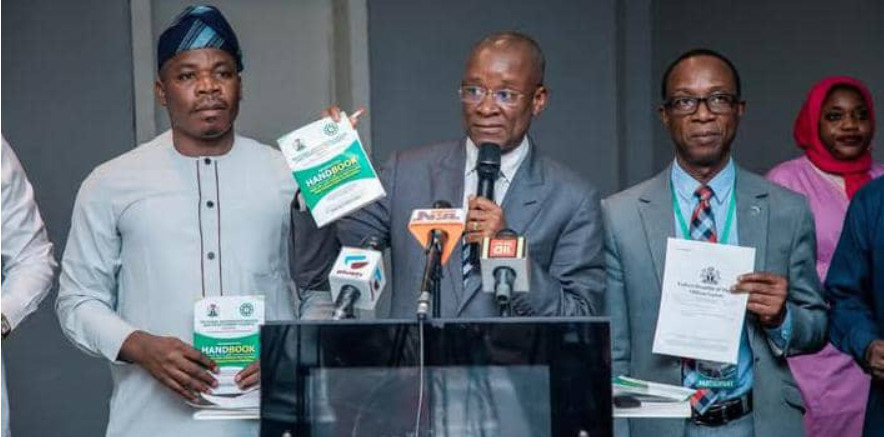
Speaking at a stakeholders’ forum in Lagos, Minister of State for Industry, Trade and Investment, Senator John Enoh, reaffirmed the government’s commitment to making the ELV framework a success.
Organised by the National Automotive Design and Development Council (NADDC), the engagement brought together key industry players, regulatory bodies, and environmental experts to discuss the roadmap for implementation.
On transforming waste into economic value, Senator Enoh emphasised that Nigeria has the potential to develop a multi-billion-dollar industry from vehicle waste, aligning with global trends in sustainable resource management.
“Of the 500,000 vehicles imported annually, approximately 400,000 are used cars, leaving the country vulnerable to increasing environmental risks.
“This waste is inevitable, but with this regulation, we can transform discarded vehicles into valuable resources,” he said.
The Minister highlighted that the global ELV industry is worth around $60 billion, stressing that Nigeria must not be left behind in leveraging automotive waste for economic gain.
Then, looking at immediate action for long-term impact, Enoh acknowledged NADDC’s efforts and commended Director-General Joseph Osanipin for spearheading the initiative, stating that it was time to move beyond discussions and implement tangible solutions.
“The implementation of this regulation begins today. Industry stakeholders, government agencies, and the public must collaborate to ensure its success. This initiative will not only enhance public health but also improve road safety and economic well-being,” Enoh declared.
Experts at the event, including Dr Fyneray Mbata, Mr Idowu Oresanya, Dr Chimere May, and Dr Kemjika Ajoku, presented research on the environmental and economic impacts of ELV recycling.
Their insights underscored the need for Nigeria to modernise its waste management strategies and integrate circular economy principles into industrial policies.
In the area of job creation and sustainable development, NADDC Director-General Osanipin detailed how the ELV regulation would generate employment and drive technological innovation in the automotive sector.
“This initiative fosters a circular economy, ensuring that vehicle waste is recycled and repurposed effectively. We anticipate the creation of over 40,000 direct and indirect jobs, while also generating substantial revenue through material recovery and sustainable manufacturing,” Osanipin stated.
He added that beyond economic benefits, the regulation would play a vital role in improving road safety by eliminating hazardous, unroadworthy vehicles from circulation.
Mooting collaborative effort for national progress, stakeholders, including representatives from the Association of Motor Dealers of Nigeria (AMDON), the Federal Road Safety Corps (FRSC), the Standards Organisation of Nigeria (SON), and the United Nations Industrial Development Organization (UNIDO), lauded the initiative.
They pledged their support in ensuring the policy’s effective rollout and long-term success.