By Olaide Ajibola, JKNewsMedia Reporter
NIGERIA SHOULD prepare for higher electricity tariffs as the federal government moves to implement cost-reflective pricing in the coming months.
The move is expected to address longstanding financial challenges in the power sector, attract private investment, and improve service reliability.
President Bola Tinubu’s Special Adviser on Energy, Olu Verheijen, confirmed the development while speaking at a World Bank-backed energy conference in Dar es Salaam, Tanzania.
Nigeria presented a $32 billion plan at the summit aimed at expanding electricity access by 2030, with $15.5 billion expected from private investors and the rest from public sources, including the World Bank and the African Development Bank.
Verheijen emphasised that electricity tariffs need to increase by about two-thirds to reflect the actual cost of supply.
She noted that while higher prices are necessary, subsidies will be implemented to protect less-affluent consumers.
“One of the key challenges we’re looking to resolve over the next few months is transitioning to a cost-efficient but cost-reflective tariff,” she said.
“This will enable the sector to generate the revenue required to attract private capital while also protecting the poor and vulnerable.”
The push for cost-reflective tariffs comes amid growing pressure from Nigeria’s electricity distribution companies, which have struggled financially due to government-controlled pricing.
Despite the privatisation of the power sector in 2013, the tariffs set by the Nigeria Electricity Regulatory Commission (NERC) do not fully cover the cost of electricity supply.
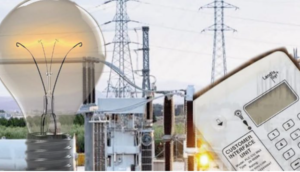
Government subsidies bridge some of the shortfall, but profitability remains elusive, hampering investment and maintenance efforts.
Nigeria’s power industry requires substantial investment to meet its developmental goals.
Of the country’s 14-gigawatt installed capacity, only 8 gigawatts can be transmitted across the national grid, with just 4 to 5 gigawatts reaching homes and businesses.
The situation has left millions without stable power, limiting economic growth and industrial productivity.
Efforts are underway to improve the country’s energy infrastructure. Siemens AG is collaborating with the government on a $2.3 billion initiative to enhance transmission and distribution networks.
Additionally, over 7 million Nigerians in rural areas have gained access to electricity through decentralised renewable energy projects.
Verheijen linked Nigeria’s energy reforms to broader economic goals, stating, “Your energy policies have to be closely linked with your ambition for your country.
“Our ambition is to be a $1 trillion economy in five years and to move to an upper-middle-income country in 25 years.”
Nigeria’s gross domestic product currently stands at just under $200 billion, according to the International Monetary Fund (IMF).
To achieve the projected economic transformation, the country must significantly increase its power generation and distribution capacity while ensuring tariffs reflect market realities.
The announcement signals a critical shift in Nigeria’s power sector, with policymakers and stakeholders facing the challenge of balancing financial sustainability with affordability for consumers.
As discussions continue, the government is expected to outline a phased approach to tariff adjustments while implementing targeted subsidies for vulnerable groups.