By Ajibola Olaide, JKNewsMedia Reporter
WEATHER CONDITIONS across Nigeria are expected to fluctuate over the next few days as the Nigerian Meteorological Agency (NiMet) issues a comprehensive forecast warning of dust haze, sunshine, and thunderstorms across several regions of the country.
The advisory urges residents, commuters, and businesses to remain alert to the risk of flash floods, poor visibility, and potential health concerns.
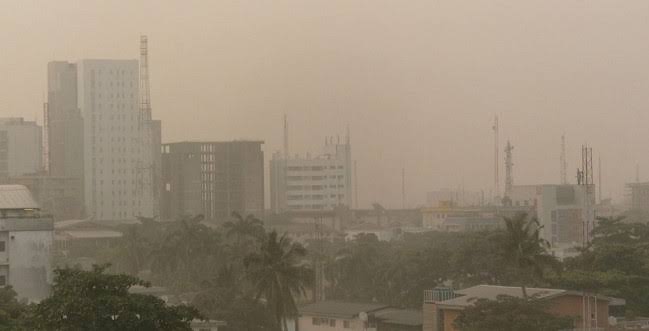
The agency’s latest weather outlook, released in Abuja, predicts slight dust haze with good visibility in Borno, Zamfara, northern Kaduna, Yobe, Jigawa, Kano, and Katsina.
NiMet advised individuals with asthma or respiratory ailments to limit outdoor exposure due to the dusty conditions expected to persist in parts of the northern region.
According to the forecast, the central region will experience mostly sunny skies with patches of cloud cover, accompanied by early morning thunderstorms over parts of Benue.
Moderate rainfall is also projected in the Federal Capital Territory (FCT), Nasarawa, and Kogi as the day progresses. NiMet explained that these patterns reflect the influence of seasonal moisture inflow and shifting wind dynamics typical of this time of year.
Southern states will remain under cloudy conditions, with morning light showers and thunderstorms expected in Cross River, Rivers, and Akwa Ibom.
The rains are forecast to intensify in the afternoon and evening, spreading across parts of Ondo, Osun, Oyo, Lagos, Ekiti, Ogun, Imo, Abia, Ebonyi, Enugu, Anambra, Edo, Bayelsa, Delta, Rivers, and Akwa Ibom.
NiMet has also released a three-day forecast covering Wednesday through Friday, highlighting continued variability in weather patterns nationwide.
For Wednesday, the northern states are expected to experience bright sunshine during the morning hours, while isolated thunderstorms are likely later in the day, particularly over Taraba and Adamawa.
The central region will have morning sunshine interspersed with patches of clouds, followed by light to moderate thunderstorms in Benue, Kogi, Nasarawa, and the FCT in the afternoon and evening.
The southern region will experience cloudy conditions with morning thunderstorms and light rains over Cross River, Rivers, and Akwa Ibom.
NiMet predicts more intense thunderstorms and moderate rainfall later in the day across parts of Ondo, Osun, Oyo, Lagos, Ekiti, Ogun, Imo, Abia, Ebonyi, Enugu, Anambra, Edo, Bayelsa, Delta, Rivers, Cross River, and Akwa Ibom.
By Thursday, sunshine will dominate the northern region, with isolated thunderstorms and light rains possible in Taraba during the morning.
The central states will experience partly cloudy skies, with thunderstorms forecast in Benue during the early hours and moderate rainfall across Benue and Kogi later in the day.
NiMet noted that the southern states will remain mostly cloudy, with early morning showers in Rivers, Cross River, Bayelsa, and Akwa Ibom, followed by widespread thunderstorms and moderate rainfall in Lagos, Imo, Enugu, Osun, Ondo, Edo, Ogun, Bayelsa, Delta, Rivers, Cross River, and Akwa Ibom.
On Friday, NiMet expects stable weather conditions in the northern part of the country, with mostly sunny skies throughout the day. The central region will record partly cloudy conditions, while light afternoon thunderstorms are likely over Benue and Kogi.
The southern region is projected to remain cloudy, with morning isolated thunderstorms over Delta, Cross River, and Akwa Ibom, before moderate rains spread across most parts of the region in the afternoon and evening.
NiMet advised airline operators to obtain updated, airport-specific weather reports before each flight for effective planning and safety.
The agency stressed that aviation stakeholders should stay in constant communication with NiMet’s Aeronautical Meteorology offices nationwide for real-time weather information to minimise disruptions caused by adverse conditions.
Motorists have been cautioned to drive carefully during periods of rainfall or reduced visibility, especially in areas prone to flooding or slippery roads.
NiMet reiterated that flash floods are more likely during prolonged or intense rainfall, urging local authorities and residents to remain vigilant and to take necessary safety measures.
The agency also encouraged the public to make use of its official communication channels, including the NiMet website www.nimet.gov.ng and social media platforms, for regular updates.
It said consistent monitoring of weather information is vital for planning agricultural activities, commercial operations, and daily routines across the country.
NiMet’s advisory underlines the diverse weather conditions associated with Nigeria’s transitional period between dry and rainy seasons, where northern states begin to experience dry, dusty air, while southern and central regions face intermittent thunderstorms.
The pattern, according to the agency, demands preparedness among citizens to mitigate weather-related disruptions to transportation, farming, and public health.
The forecast also underscores the growing need for accurate meteorological data to support decision-making in critical sectors such as agriculture, aviation, energy, and infrastructure.
NiMet reiterated its commitment to providing reliable, timely, and location-specific forecasts to safeguard lives and property.
Residents are reminded to keep personal safety in mind during periods of heavy rainfall or poor visibility and to plan outdoor activities carefully around weather forecasts.
The agency’s latest update reinforces the importance of proactive responses to weather changes, especially in flood-prone communities, where proper drainage maintenance and adherence to safety warnings remain crucial.
The outlook points to a period of mixed weather nationwide, combining sunshine, haze, and thunderstorms. While the northern region experiences clearer skies, the central and southern zones will continue to see recurring thunderstorms and rainfall patterns typical of late-season transitions.
NiMet affirmed that continued public awareness and compliance with meteorological guidance remain key to reducing risks associated with weather extremes.