By Joke Kujenya with agency reports
SHATTERED STOREFRONTS, gutted buildings, and smoke-stained skies marked the aftermath of Kenya’s most violent protests in a year, as the government accused demonstrators of seeking regime change and rights groups reported a mounting death toll.
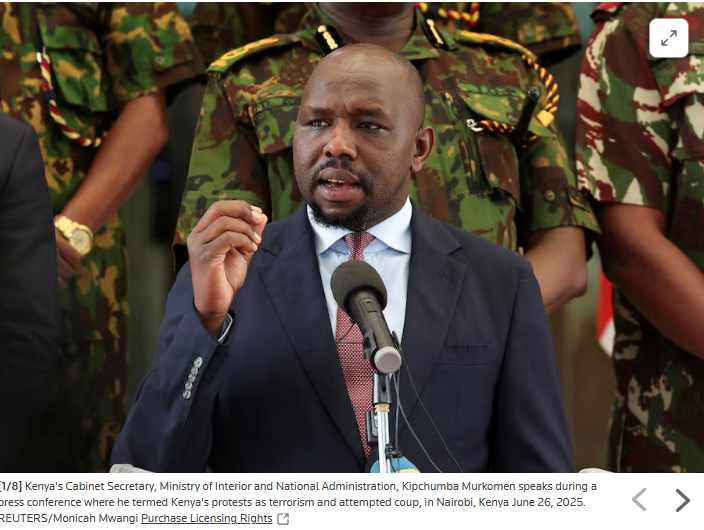
Interior Minister Kipchumba Murkomen claimed protesters aimed to overthrow the government during Wednesday’s unrest that erupted in Nairobi and across at least 23 counties.
Amnesty International Kenya has reported that 16 people had been killed, all from gunshot wounds, suspected to have been inflicted by police.
Emergency services also said over 400 were injured with 83 in very critical conditions.
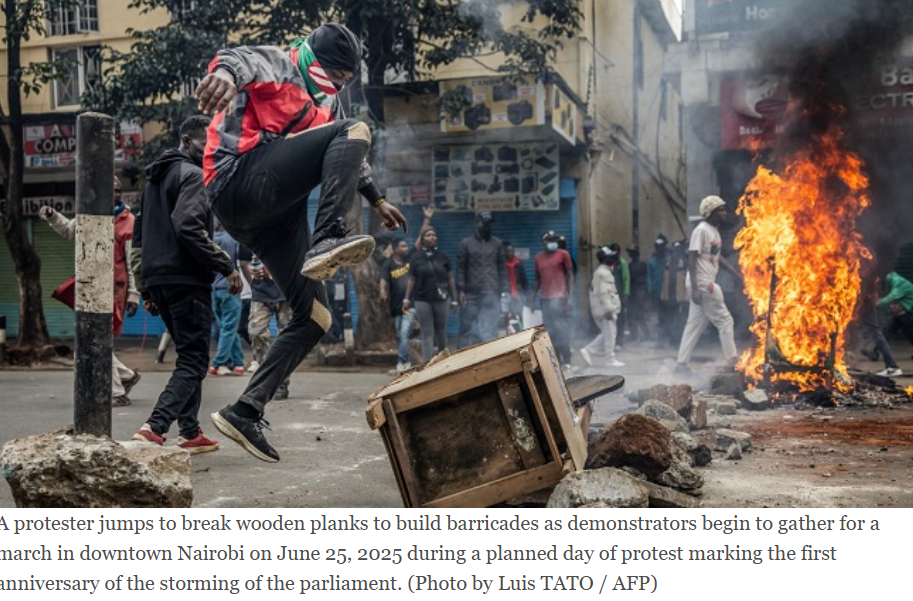
What began as an anniversary march to commemorate last year’s anti-tax demonstrations turned chaotic by afternoon.
Young men were seen clashing with police as lit fires and hurled torn-up pavement stones.
The protests had also gained momentum following the death of a jailed blogger, Albert Ojwang, whose case sparked fresh outrage.
Also, prosecutors have since filed murder charges against six suspects, including three police officers.
By Thursday morning, scenes of destruction dominated downtown Nairobi.
AFP reporters documented widespread looting and arson, with shops selling electronics, perfumes, and clothing either burned to the ground or stripped bare.
Shopkeepers like Josephine Apondi returned to find millions of shillings worth of merchandise stolen.
According to witnesses, the looting escalated after the government cut off live TV and radio broadcasts from protest zones.
At least ten buildings were torched, and plumes of smoke hovered over parts of the capital as residents attempted to clean up.
Murkomen alleged protesters were incited to approach State House and parliament with the intent to trigger a change in government, a statement critics said aimed to deflect from public discontent.
Boniface Mwangi, a high-profile voice within the protest movement, dismissed the minister’s remarks as an effort to “shift attention from the real issue.”
Ibrahim Hamisi, a business owner whose premises were destroyed, called for urgent dialogue between the government and Gen Z protesters.
“Look: everything they burnt. So please, government, try talking to the Gen Z,” he pleaded. “So, the Gen Z, try to sit down and talk with the government.”
Mwangi cautioned that anger over economic hardship has surged since President William Ruto took office in 2022 on a promise of rapid development.
He adds that the current wave of demonstrations, intensified by Ojwang’s death in police custody, reflects a deepening mistrust in state institutions and growing frustration over stalled reforms.