By Jemimah Wellington, JKNewsMedia Correspondent
LATEST CHANGES to the Senate Standing Orders have reversed a controversial amendment that required senators elect to take their oath before participating in the election of presiding officers.
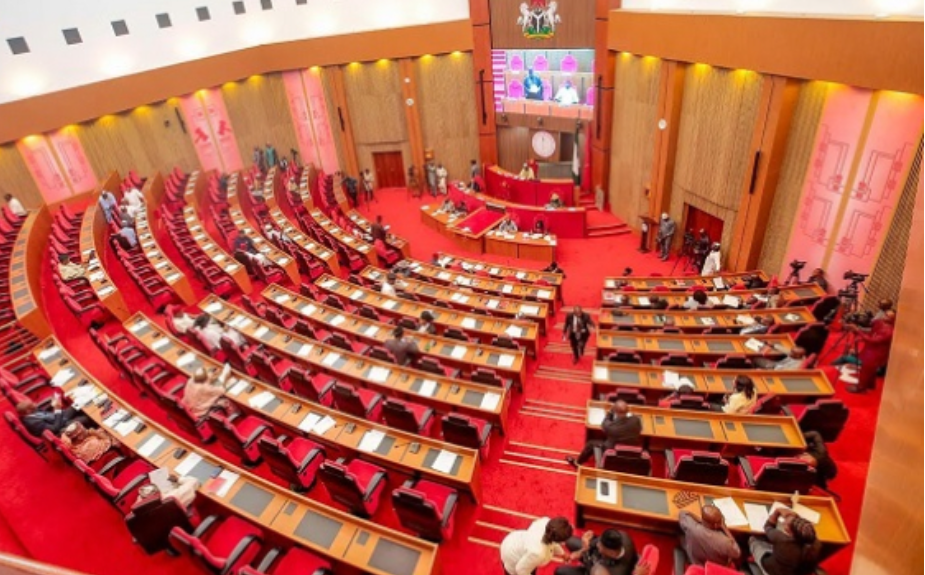
JKNewsMedia.com reports that the senate adopted the reversal on Thursday during plenary presided over by Deputy Senate President Jubril Barau following a motion sponsored by Senate Leader Opeyemi Bamidele.
Bamidele said the amendment introduced on May 5, 2026, could create constitutional inconsistencies and tensions with the provisions of the Constitution of the Federal Republic of Nigeria.
“The Senate Standing Order was amended on 5th May 2026.
“Upon further legislative and constitutional review, certain conditions introduced under Order 2 Subsection 2, Order 3 subsection 1, may give rise to constitutional inconsistency and bring tension with the provision of the Constitution.
“The Standing Order should remain consistent with constitutional provision,” Bamidele said.
Lawmakers unanimously adopted the motion after the point of order raised by the senate leader.
The rescinded clause had altered parliamentary procedure by requiring newly elected senators in the 11th senate to elect a senate president only after taking the oath of allegiance and oath of membership.
Under the amended Order 2(2), the clerk to the national assembly was to administer the oath after roll call and confirmation of writs of election.
Order 3(1) further stated that a senator elect “shall not participate in any proceedings of the Senate, including voting for the election of the President and Deputy President of the Senate, unless and until he has taken the Oaths”.
The amendment made oath-taking a mandatory condition before senators-elect could participate in the election of presiding officers.
With the reversal, the senate returned to the previous parliamentary procedure allowing senators-elect to vote for presiding officers before taking their oath of office.
The senate said the provisions introduced under Orders 2(2) and 3(1) of the amended standing orders could create “constitutional inconsistencies and unintended tensions” with Section 52 of the 1999 Constitution.
The red chamber said the decision became necessary to ensure that its rules remain consistent with constitutional provisions, parliamentary conventions and legislative practice.
The earlier amendment also restricted eligibility for presiding and principal offices to senators who had served at least two consecutive terms immediately preceding nomination.
Moreover, the revised rules stipulated that only senators with at least eight years of continuous service in the chamber could contest for the positions of senate president and deputy senate president.
The amendment was adopted on Wednesday following a voice vote presided over by Senate President Godswill Akpabio after a closed-door session that lasted about three hours.
Order 4 provided that nomination of senators for presiding offices must strictly follow ranking, including former senate presidents, former deputy senate presidents, former principal officers, senators who had served at least one term, former members of the house of representatives and first-time senators where others were unavailable.
Order 5 introduced an additional requirement for principal offices, stating that no senator would be eligible to contest unless he had served at least two consecutive terms immediately preceding nomination.
The amendment effectively excluded incoming senators in the 11th national assembly who were not members of the 9th and 10th senates.
Adams Oshiomhole, senator representing Edo north, reacted to Thursday’s reversal during plenary.
“This shows that when there are amendments, the next time, we should allow debate. That’s it,” Oshiomhole said after raising a point of order.
Oshiomhole had clashed with Akpabio over the amendments on Wednesday after attempts to raise a point of order were rebuffed.
“This was not what we agreed at the closed door session,” Oshiomhole had said as Akpabio read the resolutions.
Responding on Thursday, Bamidele accused the Edo north senator of causing “unnecessary drama” on the floor of the senate.
“We are not going to allow this to continue,” the senate leader said.
Citing Order 52(6) of the senate standing rules, Bamidele said any senator dissatisfied with decisions taken on the amendment was expected to bring a substantive motion before the chamber.
“So, if His Excellency Distinguished Senator Adams Aliyu Oshiomhole, CON, had any problem with the decisions that were taken with respect to the amendment two days ago, what he was expected to do was to bring the substantive motion for the session to be debated on the floor of this parliament.
“We cannot allow this kind of drama to go on every time on the floor of this senate we must put a stop to it,” Bamidele said.
Before Thursday’s reversal, the senate had also amended Order 8(1) to fix committee meetings between 3 pm and 6 pm from Monday to Friday except on the second and fourth Fridays of each month.
Order 8(2) now provides that plenary sessions shall hold on Tuesdays, Wednesdays and Thursdays from 11 am to 3 pm unless extended by the senate leader.
Section 55(11) was amended to allow presiding officers and nominees undergoing screening to drink water during plenary.
Section 66(8) was revised to require suspended senators to withdraw from plenary as directed by the senate president, while Section 94(1) stipulates that committees shall have between seven and 25 members.
The senate also amended Section 96 to include oversight of regional development commissions across the six geopolitical zones and created a new committee on reparation and repatriation.
Senate President Akpabio subsequently directed Emmanuel Odo, clerk of the senate, to update the standing rules accordingly.
—
Do you have a news tip for JKNewsMedia.com? Please copy and email us at jkmediapress@gmail.com.