By Babafemi Ojudu
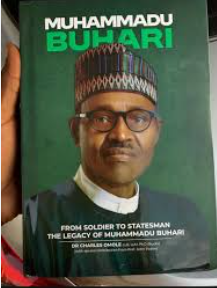
RECENT EXCERPTS circulating from a book authored by Dr. Charles Omole, Muhammadu Buhari: From Soldier to Statesman, purport to recount events and attitudes within the Buhari presidency, particularly as they relate to the presidential ambition of Vice President Yemi Osinbajo.
Because these accounts touch directly on matters I was personally and professionally involved in, I consider it necessary—indeed, a duty—to place the facts clearly and calmly before the Nigerian public.
Between 2016 and 2022, I served as Special Adviser on Political Matters in the Office of the Vice-President, Professor Yemi Osinbajo.
In that capacity, I was privy to several high-level engagements between President Muhammadu Buhari and his Vice President concerning the question of succession and the Vice President’s possible bid for the presidency.
The record is clear and unambiguous.
The matter of whether Vice President Osinbajo should run for President was discussed directly and personally between him and President Muhammadu Buhari on no fewer than four separate occasions. On each of these occasions, President Buhari expressed clear, unequivocal support for the Vice President’s ambition.
At no time—explicitly or implicitly—did President Buhari suggest that Professor Osinbajo should refrain from contesting. At no time did he indicate a preference that the Vice President should defer to, step aside for, or subordinate his ambition to any other aspirant, including the eventual nominee of the party.
On the first occasion, President Buhari advised the Vice-President to reflect carefully on the prospects of a presidential bid, make up his mind, and assured him that he would support whatever decision he took.
By the third discussion, President Buhari went further. In his considered judgment, he stated plainly that Professor Osinbajo was by far the best person for the job. He emphasised continuity and stability, noting that after nearly seven years in office the Vice President had:
• developed an intimate understanding of the workings of government,
• worked diligently and loyally,
• successfully acted as President on multiple occasions, and
• demonstrated the steadiness required to lead the country forward.
President Buhari reiterated more than once that he believed Vice President Osinbajo’s candidature was best for continuity and stability, and he assured him that he would do all he reasonably could to support him.
The fourth discussion took place shortly before friends and associates obtained the presidential nomination forms on the Vice President’s behalf. Once again, President Buhari expressed his full support, leaving no room for ambiguity as to his position.
This support was not confined to private conversations. During the primary season, President Buhari publicly remarked at a Federal Executive Council meeting that he observed how tirelessly his Vice-President was campaigning across the country.
He further advised him to consult widely—specifically encouraging engagement with state governors and the leadership of the National Assembly—before formally declaring his ambition. The Vice-President followed this advice faithfully.
Upon the Vice-President’s declaration,
President Buhari once again commended him and requested to see the declaration speech, which was duly presented to him.
Furthermore, at least three governors met privately with President Buhari at different times to discuss the Vice-President’s candidature. On each of these occasions, President Buhari told them, unequivocally, that Professor Yemi Osinbajo was the best man for the job.
In any event, given the long-standing relationship of trust, confidence, and mutual respect that existed between President Muhammadu Buhari and his Vice-President, it is both implausible and mischievous to suggest that Professor Osinbajo would have embarked upon a presidential ambition without the clear knowledge and approval of his principal.
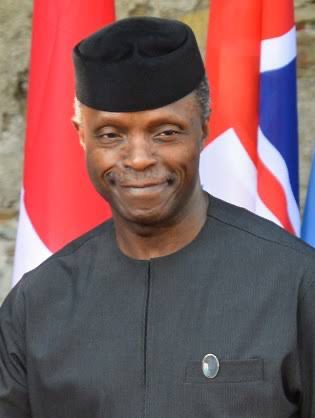
Indeed, all of us who were close to him understood one fundamental political reality: without a personal war chest or entrenched political machinery of his own, the Vice-President could not realistically have contemplated a presidential run without the active backing of President Buhari.
Any suggestion to the contrary ignores both political reality and the character of the men involved.
Finally, a word on method and integrity. Anyone who sets out to write about the Buhari presidency—and about men and women who served closely and visibly for eight years—has a basic obligation to fairness and inquiry. That obligation includes giving those concerned the opportunity to state their own case.
To embark on such a project without seeking their account is not serious scholarship or history. It is advocacy masquerading as biography.
Only a hack would attempt to fix the record of a complex administration by relying on hearsay, grievance, and one-sided recollection while deliberately ignoring those who were central actors in the events being described.
History is not written to settle scores. It is written to illuminate truth. And those who bend it to serve personal animus may enjoy a fleeting moment of attention, but they rarely survive the judgment of time.