By Olukorede Yishau
SHE WAS only fifteen. Her best friend was Moniba, and she had imagined many more years of easy companionship with this special being she could talk to from morning till night without ever feeling bored.
But this friendship, and indeed their future, came under a grave threat. The Taliban had invaded their Pakistani village. They were killing people, issuing diktats, and one of their most chilling commands, when Malala was eleven, was that girls must stop attending school.
Malala Yousafzai found that order impossible to accept. Instead of surrendering to fear, she spoke out against the Taliban and their attempt to deny girls an education, to push them towards becoming child brides and mothers before they even turned twenty. Her defiance did not go unnoticed.
The men who spread terror in her village watched her, learnt her routine, and one afternoon one of them boarded her school bus. The gunman asked, “Who is Malala?” and without waiting for confirmation, shot her at point-blank range. She went into coma.
That incident enlisted her in the exclusive club of people globally identifiable simply by their first name. Think Fela. Think Chimamanda. Think Malala.
When she came to, she was far away from home. She had been flown to the United Kingdom, a country that would become her new home. Even as she lay in the hospital, recovering from surgeries that kept her alive, offers began pouring in. Agents wanted to represent her. Publishers wanted book rights.
Journalists competed for the first interview. She survived operation after operation and emerged as an international figure, invited to conferences around the world to speak about her experience and to become a global voice for the girl-child. The stakes grew even higher when she was awarded the Nobel Peace Prize.
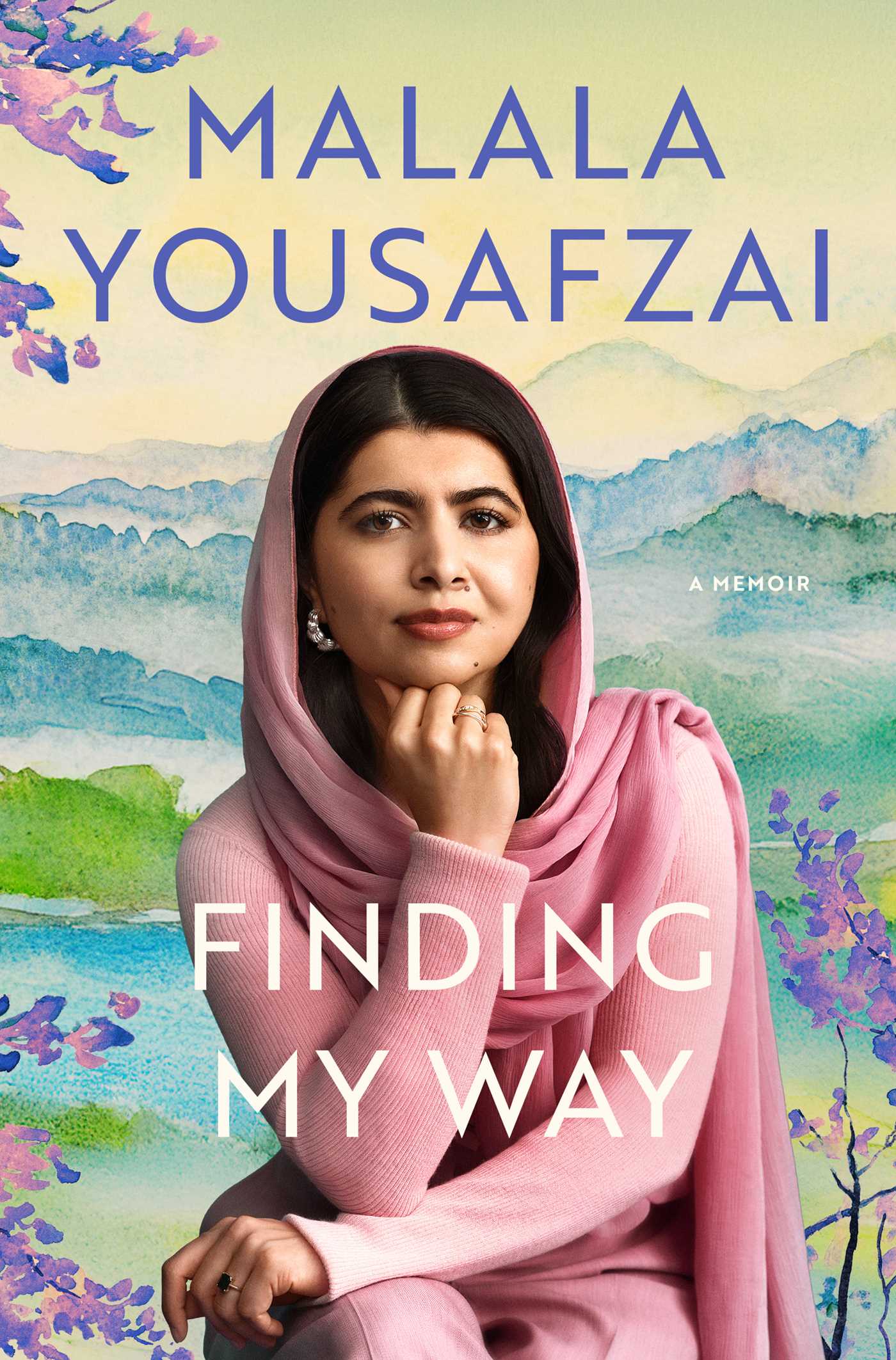
But behind the attention and accolades, what was truly happening in her life? Malala provides those answers in her memoir ‘Finding My Way’. She reveals that her secondary school years in Birmingham were often lonely. She longed for the easy friendships she had once enjoyed in Pakistan, for girls she could talk to freely without feeling like her life was constantly under scrutiny.
Her story, as she tells it, is not only about resilience in the face of violence, but also about navigating adolescence in a foreign country while carrying the weight of global expectation.
After surviving the loneliness of secondary school, she was determined to avoid a repeat in Oxford, where she had been admitted to study Philosophy, Politics and Economics (PPE). Her mother, dominant like most mothers, we find out at the beginning of her Oxford journey, was determined to dictate her life in the elite university.
She chose her wardrobe, but unknown to her, Malala had done her research and had secretly shopped for clothes suitable for her college years. In school, she joined as many clubs as possible, chatted up as many girls as possible and within a short period of time, she made friends whose company she shared daily.
While she tried to live a normal life as possible, security men lurked in the background. They had been there since she got to the UK. They are still there now. Taliban men have not withdrawn their quest to kill her.
But Taliban or no Taliban, life must go on. Malala must find her way. And Oxford helped her find it.
Her decision to truly feel like every normal campus girl didn’t go well with many morality police. One day she was photographed wearing jeans and T-shirt and a nylon bomber jacket. Many Pakistani men, who saw the picture online, called her names: traitor, porn star. She was accused of abandoning her country and faith. All because of jeans. Her mother too was mad at her.
“Our relatives are calling. Everyone at home is talking about you,” her mother said.
But she remained resolute in her quest not to have her parents, or anyone, run her life.
“I was going to a rowing club, not on a religious pilgrimage, Mom. I’m not a diplomat representing my country or culture. I’m just a student! And I want to have a normal life while I’m at college.”
It will not be the only time she will face the challenges of being a woman whose body and what she wears play a significant role in how strong or weak her faith is perceived. On an occasion, a picture she took with David Beckham led to her being accused of dishonouring her faith and, on another instance, her mother stepped in front of cameras and slapped off Prince Harry’s hand from her shoulders.
Combining academic work with girl-child advocacy was a major challenge. Oxford didn’t expect students to travel during academic session, but invitations were pouring in from all over the world asking her to use her voice for the girl-child. Turned between turning them down and facing her studies, guilt enveloped her.
Malala felt God saved her for a reason and soon began to say yes to the invitations because the organisers said her voice would make a difference for girl-child education. Essays and tutorials took the back row as she flew from one country to the other.
“I would ask why you missed your tutorials last week, but I don’t have to because you were on the news twice from two different countries,” her course adviser, Lara, said and admitted her professors were aware she had responsibilities her peers didn’t have. Lara wanted an assurance that she would not travel again during school term.
This was a day before she was supposed to be in Monaco for a paid speaking engagement. The money from such engagement was very important to her, her parents and her siblings.
Since they moved to the UK, she had been the sole provider. Her teacher father wasn’t licensed to teach in the UK; her mother couldn’t speak English and so couldn’t work.
So, it was impossible for her to promise Lara what would amount to signing her death sentence. Lara offered to work out a make-up arrangement with her professors.
While her friends were involved in college romance, she feared following suit would make her a pariah in the eyes of her people. But, it was only a matter of time before she activated her agency. Enter Tarik. But nothing much came out of her attachment to him.
Asser’s appearance changed it all. He became the centre of her world in no time when she turned twenty. He was in his late 20s. Theirs was an affair fraught with concern, of course from Malala’s side. She was worried about what Pakistani people would make of it.
“It was exhausting to constantly worry about being observed or photographed, to spend so much energy being aware of my surroundings that I could never fully be myself,” she observes.
But, the thrill of being loved overpowered her fears and the relationship continued and dramatically got her father’s blessing and now they are husband and wife.
My final take: I don’t envy Malala. Every day of her life she goes out with security guards and even when she is inside, they are lurking outside making sure no one is trying to scale the fence to complete the assignment started when she was fifteen. What her life tells me is that extremism of any kind is bad. It doesn’t matter whether it is religious, social or ethnic in nature. The fact that we all don’t think the same way, worship the same way or pursue the same agenda should never be an issue.
Please live and let live and that way the world will be a lot better.
Quote
Extremism of any kind is bad. It doesn’t matter whether it is religious, social or ethnic in nature. The fact that we all don’t think the same way, worship the same way or pursue the same agenda should never be an issue.