By JKNewsMedia
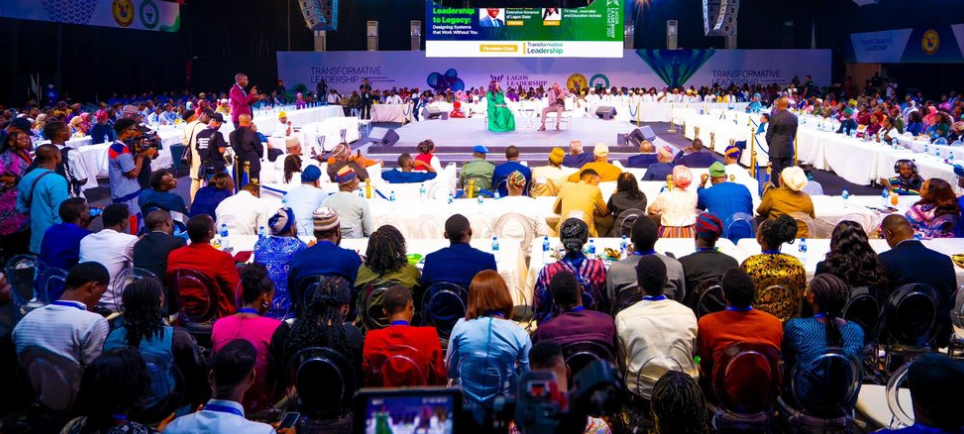
YOUR SMALLEST task could become the spark that ignites your future, Lagos State Governor Babajide Sanwo-Olu told a packed audience of young people on Wednesday at the Lagos Leadership Summit in Lekki.
Drawing from his own journey in public service, Sanwo-Olu described how taking on seemingly minor roles under then-Governor Bola Ahmed Tinubu helped him build the capacity and resilience that now defines his leadership.
The summit, held at Konga Place and organised by the Lateef Jakande Leadership Academy (LJLA), centred on the theme: “Transformative Leadership: Developing Responsive, Adaptive and Inclusive Models.”
The event also featured former Governor and Minister for Works and Housing, Babatunde Raji Fashola, and other notable leaders across traditional and civic domains.
Sanwo-Olu, an investment banker-turned-public servant, recounted his 2002 appointment as Special Adviser on Economic Matters by then-Governor Tinubu.
That early role, he said, immersed him in a cycle of responsibility across various government sectors—including transportation, environment, public safety, and education.
“I was crisscrossing from one portfolio to another,” Sanwo-Olu said. “In Transportation, I challenged the system. In Revenue, I boosted figures and staff performance. In Environment, I disrupted the status quo—all without any thought of future reward. It was all about service.”
He underscored the value of accepting roles that may not seem attractive at first glance. After Tinubu’s tenure, Sanwo-Olu served in the Fashola administration, where he was assigned to what many considered a “dry land” ministry.
“That post demanded deep human capital transformation,” he said. “It gave me space to reassess and retool myself. I built from there—each opportunity stacking into the next, until it led me here.”
The Governor encouraged young Nigerians not to let setbacks break their resolve. Instead, he urged them to use disappointment as fuel for self-improvement.
“For the brief period I was outside Government, I rebuilt myself, learned new things, and refined old lessons,” he said. “Learn, unlearn, and relearn—because your future may depend on how well you recover.”
Fashola, who delivered a keynote on “The Inclusion Imperative,” stressed that inclusive leadership goes beyond representation—it is about perception and action.
“A leader cannot include everyone—but must work so that the majority feel they have not been left behind,” he said. “Section 14 to 19 of our Constitution demands fairness and Federal Character. Leaders must build coalitions and foster belonging.”
Fashola advocated for regular town hall engagements as a means of reinforcing inclusivity. “People want to feel heard. Consult them, talk to them, include them in the journey,” he said.
The summit featured panel discussions with traditional leaders including the Olu of Warri, Ogiame Atuwatse III; the Emir of Zazzau, Ambassador Ahmed Nuhu Bamali; and the Oniru of Iru Kingdom, Oba Omogbolahan Lawal.
Executive Secretary of LJLA, Ayisat Agbaje-Okunade, said the turnout reflected a hunger among youth for shared leadership and nation-building.
“This summit bridges generations,” she said. “It’s a space for collaboration—not just ideas, but action. Progress won’t come from individuals, but from communities working together.”