By Joke Kujenya
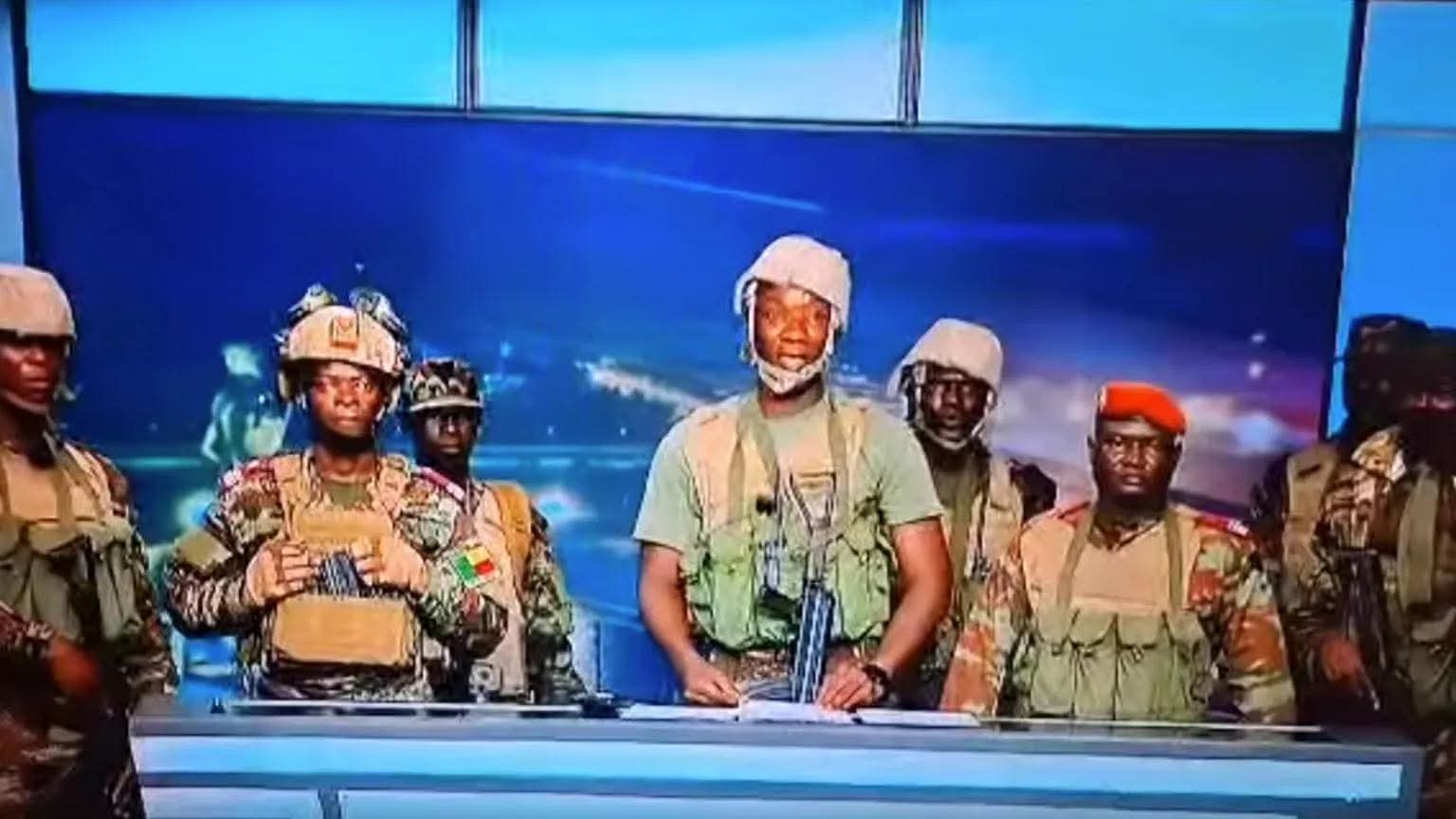
UNREST SEIZED national attention after soldiers announced the dissolution of Benin’s government during a state television broadcast, declaring they had assumed control of federal authority.
The supposed intervention came as the group stated that political officeholders had been removed and state institutions dissolved, presenting their action through Benin’s public broadcaster.
The announcement was delivered by military personnel identifying themselves as the Military Committee for Refoundation.
Also, their broadcast stated that they had met and resolved that President Patrice Talon was removed from office, as their declaration included a claim that all political authorities had been dismissed and that the new group had taken responsibility for national administration.
The televised statement positioned the development within a rising wave of military actions in parts of the continent, noting that other West African nations had recently experienced armed takeovers.
The soldiers referenced changes in Madagascar and Guinea-Bissau in recent months, linking their declaration to an emerging regional trend.
Amid the claims of a takeover, Talon’s entourage said the president was safe.
His office said the situation involved a small group controlling the broadcast channel and stated that the regular army was regaining authority.
According to the response shared with AFP, the president’s team said the city and the country remained secure.
The French Embassy shared an advisory urging French citizens to stay indoors after reports of gunfire at Camp Guezo near the president’s official residence in the economic capital. The embassy communicated the alert through X, drawing attention to concerns for civilians in the area.
Information released from Talon’s office reiterated that the president had been in power for 10 years and was approaching the end of his current timeline in office.
He also remained safe as security personnel sought to bring the situation under control, as the response referenced the regular army’s efforts to stabilise the city and noted their confidence in restoring order.
The broadcast from the Military Committee for Refoundation stated that Talon and all political leaders had been removed and that institutions across the country had been dissolved.
Their declaration positioned the action as a complete reset of authority. The statement was made during a televised announcement that sought to assert the committee as the new central actor.
Meanwhile, Benin’s political history has featured several coups and attempted coups, and the development aligns with earlier periods of instability described in national records.
Sunday’s announcement emerged against a backdrop of tensions surrounding political participation as the main opposition party had been excluded from the contest to succeed Talon, leaving the ruling party to face a group described in the statement as a “moderate” opposition.
Talon’s Emergence
Talon came to power in 2016 and has served two terms and was due to complete his second term in 2026, which is the constitutional limit.
He was a former businessman known for economic initiatives that had shaped development in Benin.
Critics in the country accused him of authoritarian practices, though his administration has pointed to economic advances as achievements.
It was also referenced that the president had promised to leave office in April 2026 after the presidential poll, however, it was recalled that in September 2024, Djimon Tevoedjre, commander of the Republican Guard and head of Talon’s security, had been arrested following an attempted coup.
As events unfold, the Benin takeover has been described as the latest in a series of military changes in West Africa, recalling that last month, military officers in Guinea-Bissau had captured power after President Umaro Embaló and Fernando Dias both declared victory before official results were announced by the electoral commission.
Coup In Other African Countries
An outline of current coups in other African countries under military rule, include:
▪️Burkina Faso since 2022,
▪️Guinea since 2021,
▪️Mali since 2020 and
▪️Niger since 2023 positioning the Benin development within this wider picture of regional changes.