By Joke Kujenya
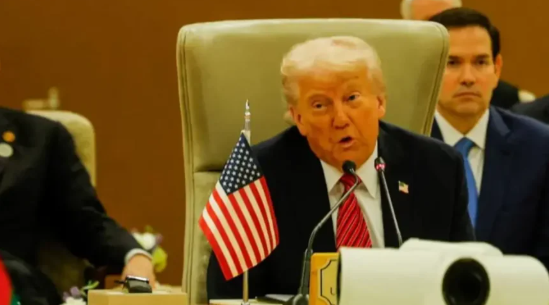
THE UNITED States Donald Trump administration has issued a directive to all the country’s embassies worldwide to immediately suspend the scheduling of new visa interviews for international students and exchange visitors, citing a forthcoming expansion of social media screening requirements.
A confidential cable from Secretary of State Marco Rubio, now confirmed by multiple news agencies, outlines an immediate halt to new appointments for F, M, and J visa categories.
The instruction states that consular officers are to refrain from adding new appointment capacity until further guidance is issued following a comprehensive review of screening and vetting processes.
The decision comes as the US State Department moves to broaden social media scrutiny for all student and exchange visa applicants.
According to the cable, consular officials will assess applicants’ social media content across platforms such as Instagram, X, and `to determine eligibility based on perceived threats to national security.
The expansion builds on earlier requirements from March, when visa officers began mandatory social media reviews of students linked to pro-Palestinian activism.
Although the suspension does not affect students who have already scheduled interviews, it remains unclear how long the freeze will last.
State Department spokesperson Tammy Bruce declined to confirm the contents of the cable but emphasised the administration’s commitment to robust screening measures.
The move threatens to delay thousands of students planning to study in the US for the 2024–2025 academic year.
Most student visa applicants begin the process after receiving admissions decisions in March or April, with many relying on timely visa processing to commence studies by late summer.
International students contributed $43.8 billion to the US economy and supported over 378,000 jobs in the past academic year, according to data from NAFSA.
The Open Doors report, jointly released by the Institute of International Education and the State Department, shows that the number of international students in the US reached a record 1.13 million during 2023–2024.
Of these, 71.5 percent came from Asia, led by India with 331,602 students and China with 277,398.
The suspension coincides with broader political tensions between the Trump administration and US academic institutions.
The administration recently revoked Harvard University’s approval to enroll international students, citing unspecified violations.
Harvard, which has 6,800 international students, is among several institutions facing scrutiny, particularly those with vocal pro-Palestinian student groups.
At Columbia University, a recent visa revocation drew media attention when PhD candidate Ranjani Srinivasan lost her visa despite no formal charges or group affiliations.
Her online activity included criticism of Israeli actions in Gaza and support for Palestinian rights.
She told reporters that she believed the revocation was due to her political speech rather than any violation of visa conditions.
The expanded vetting measures have sparked concerns among universities that rely on international students for revenue and diversity.
New York University hosted the largest number of foreign students in 2023–2024, with 27,247 enrolments, followed by Northeastern University and Columbia.
While the full implications of the visa pause remain uncertain, academic institutions are bracing for disruptions.
Renewals and extensions for students already in the US may also be affected, particularly for those transitioning between programmes or undertaking long-term studies like PhDs.
The administration maintains that the move is necessary to safeguard national interests and combat threats linked to extremist ideologies.
Rubio has confirmed that thousands of visas have already been revoked in recent months, signalling a more assertive stance as the administration ramps up enforcement.