For years, residents of Olufa in Ondo State have watched an unfinished government-funded healthcare centre decay behind overgrown bushes. As expectant mothers travel dangerous roads, families sink into debt and lives are lost in medical emergencies, the abandoned project has become a painful symbol of broken promises and rural healthcare neglect, Fatimah Idera, reports.
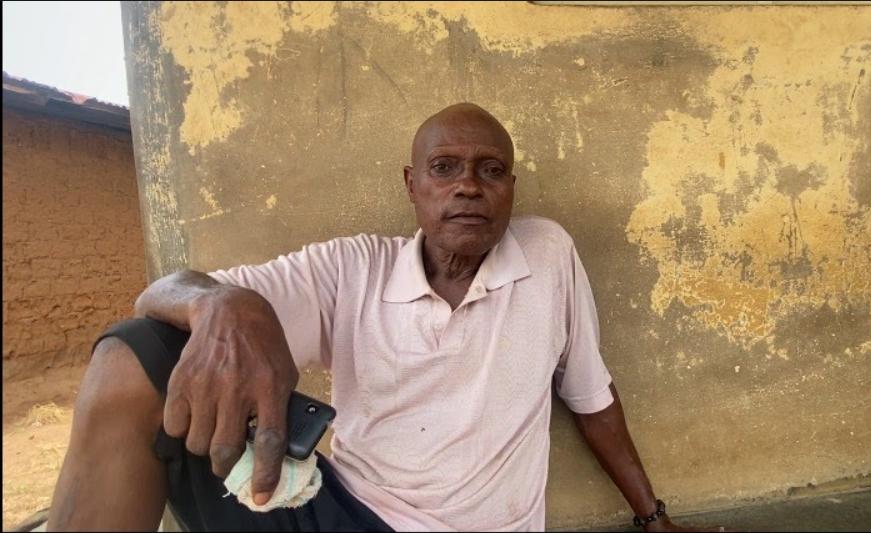
TIME HAS moved on, but the grief has not. The memories of that tragic night remain as vivid as ever for Mr. Francis Alabi.
The village had fallen silent except for the desperate cries coming from his modest home in Olufa, a remote farming community tucked deep inside Ose Local Government Area of Ondo State.
His wife had gone into labour, but what should have been a moment of joy quickly turned into a race against time as she began bleeding heavily.
There was no hospital in the community. No doctor could be called. No ambulance could reach them.
The nearest health facilities were several kilometres away in Elegbeka and Oka, connected to Olufa by rough roads winding through thick forests were travelling after dark carries the twin dangers of road accidents and kidnapping. At that hour, finding a commercial motorcycle rider willing to make the journey was almost impossible.
Before help could arrive, both mother and child were gone.
“I lost my beloved wife and our baby to the cold hands of death because there is no hospital in this community,” Alabi said quietly, struggling to hold back tears.
“Pregnant women here travel as far as 10 kilometres before they can get treatment.”
His story is one of many painful reminders of what residents describe as years of neglect.
For more than a decade, Olufa has lived beside an abandoned healthcare project that was expected to save lives and provide basic medical services for thousands of residents.
Instead, the unfinished building has become a symbol of broken promises, standing silently behind overgrown vegetation while villagers continue risking their lives in search of healthcare.
When this reporter visited the community in April, the journey itself revealed the isolation residents endure daily.
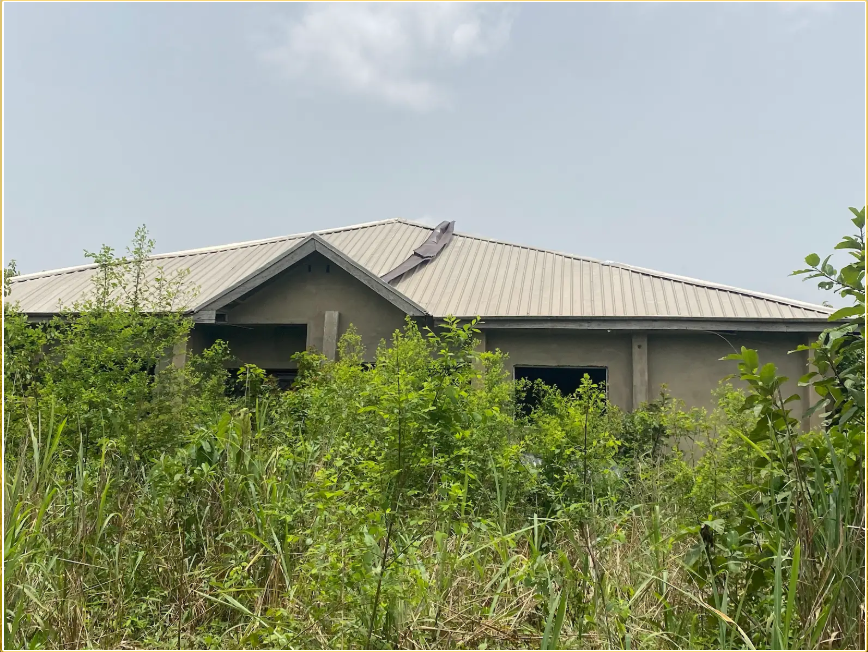
The healthcare centre was hidden behind thick bushes and overgrown grass.
Mobile network coverage disappeared along the road, making navigation almost impossible without directions from local residents, who repeatedly warned against travelling alone because of persistent kidnapping fears in the area.
The dangers became evident even before reaching the facility.
While approaching the site, this reporter encountered a long green snake slithering beside the narrow path. The accompanying motorcycle rider quickly threw a stone to scare the reptile away before the journey continued.
The abandoned healthcare centre eventually emerged from the thick vegetation.
Bushes had swallowed much of the structure.
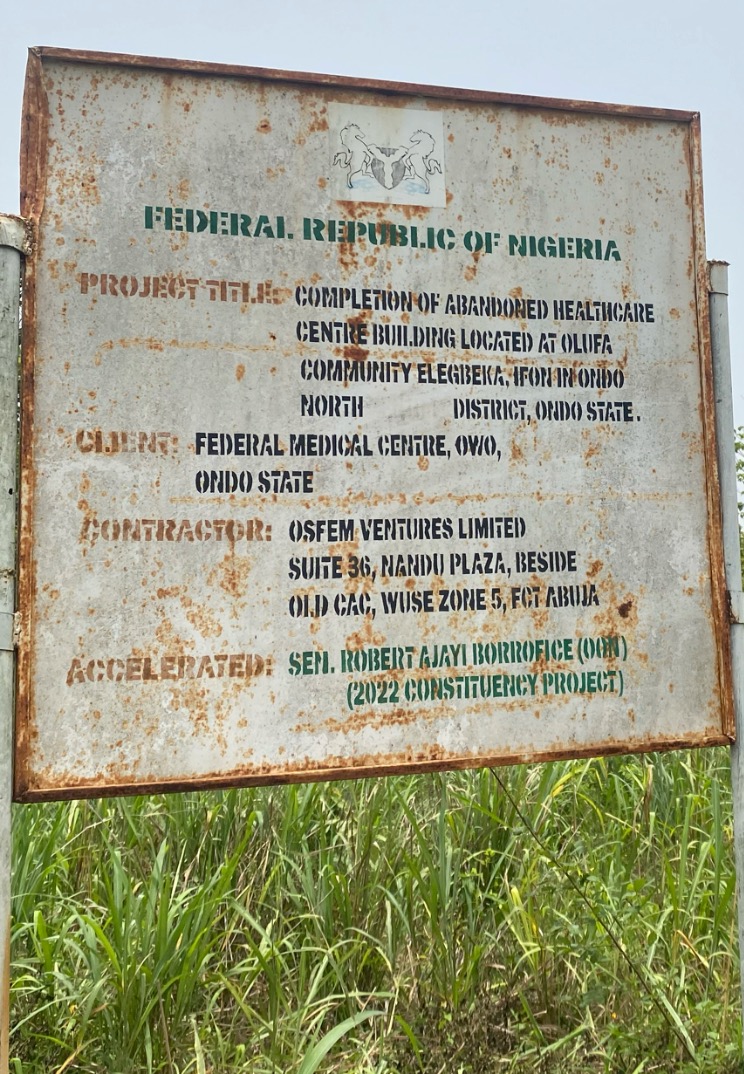
Tall grass covered the entrance, the building itself and even the soak-away. The project, funded in 2022 as part of Nigeria’s healthcare reform efforts, had deteriorated further.
The roof had begun to cave in, windows had not been installed, and the doors remained permanently shut.
The facility was intended to provide healthcare services for more than 5,000 residents living in the agrarian community.
Instead, it remains another unfinished public project.
As a farmer, Alabi said even seemingly minor emergencies often become life-threatening because medical care is so far away.
“When someone sustains a deep cut while working on the farm, the whole community contributes money to buy fuel before looking for someone willing to take the patient on a motorcycle,” he explained.
“Imagine how long it takes to gather the money as well as travel such a distance.”
Actually, the project was first initiated in 2007, later captured in the federal budget, and revived in 2022 under a fresh allocation.
A Community Without A Lifeline
For many women in Olufa, pregnancy means making an impossible choice between staying with their families or relocating elsewhere in search of safe delivery.
Mrs. Ashilu Olufa understands that choice all too well.
Each time she becomes pregnant, she leaves her husband behind and moves out of the community because she cannot risk giving birth in a place without healthcare.
“Every part of my pregnancy journey, I have to leave my husband because there is no healthcare facility in my community,” she said.
Her most recent pregnancy became especially difficult after complications developed.
She travelled to Oka to stay with her parents before eventually undergoing a Caesarean section at Iwaro General Hospital.
“This last child I gave birth to came after several complications. I eventually had to undergo a Caesarean section.”
Even after delivery, accessing routine healthcare has remained a struggle.
Every two weeks, she travels outside the community to immunise her baby. On several occasions, she has missed appointments because she could not afford transportation.
“Recently, I had malaria and had to be rushed out of the community for treatment. It affected my business because my work requires my presence.”
Ashilu earns a living by selling fried meat and locally produced palm wine to farmers.
However, frequent medical trips outside Olufa have steadily reduced her income. Every journey means closing her business for the day, losing customers and spending money she can barely afford on transportation.
What should have been routine healthcare has instead become an exhausting financial and emotional burden.
Her experience reflects the daily reality of many women in Olufa, where accessing even the most basic maternal and child healthcare often begins with leaving home.
A Crisis Measured In Lives
Francis Alabi’s loss is not an isolated tragedy.
Across rural Nigeria, countless families face similar realities where the absence of accessible healthcare turns treatable conditions and routine pregnancies into life-threatening emergencies.
Global and national data reflect the scale of the crisis
More than 700 women died every day from pregnancy-related causes in 2023, with about 92 percent of those deaths occurring in low-resource settings, particularly in sub-Saharan Africa.
According to the United Nations Children’s Education Fund (UNICEF), an estimated 287,000 women died from complications related to pregnancy and childbirth in 2020.
The burden is equally evident in Nigeria
Research shows that healthcare facilities in Ondo State remain unevenly distributed, with urban centres enjoying significantly greater access than many rural communities.
The imbalance continues to contribute to the state’s maternal mortality ratio, estimated at 233 deaths per 100,000 live births as of 2026.
Children are also paying the price.
Globally, about 4.9 million children under the age of five died in 2024, with nearly half of those deaths occurring within the first 28 days of life from preventable causes such as prematurity, infections and inadequate immunisation.
Despite significant public spending, rural communities such as Olufa continue to experience severe shortages of basic healthcare services.
In October and November 2025, the Federal Government approved N32.9 billion for the upgrade of primary healthcare facilities across the country. Collectively, Nigeria’s 36 states allocated about N2.36 trillion to the health sector in their 2025 budgets, with roughly 30 per cent earmarked for primary healthcare.
Yet for many residents of Olufa, those figures have brought little visible change.
Ashilu believes a functional healthcare centre within the community would spare countless families the financial hardship, emotional distress and dangerous journeys that have become part of everyday life.
She appealed to the government to complete the facility and equip it with a maternity ward, labour room, laboratory and surgical unit so women no longer have to travel long distances for basic healthcare.
Choosing Herbs Over Hospital
In Olufa, illness often forces residents into impossible choices.
For Lateef Segun, one of those choices came when his daughter developed typhoid fever.
With no money to seek medical treatment outside the community and no healthcare facility nearby, he turned to traditional herbs.
“I didn’t have a dime on me, so I decided to give her some traditional herbs,” Segun recalled.
Her condition, however, continued to deteriorate.
Realising that home remedies were no longer enough, he borrowed money to transport her to a healthcare facility outside the community.
“It has not been easy at all to access basic healthcare,” he said.
“The distance we travel is deadly. I had to source a loan to take my daughter out of this community for proper treatment, and it cost me a lot.”
Transportation alone places healthcare beyond the reach of many families.
“To go to Elegbeka alone costs about N6,000 for transport back and forth. Many people here simply cannot afford that.”
Without a functioning healthcare facility, residents depend largely on herbal remedies prepared by elderly women with knowledge of traditional medicine.
“We have grannies that help with herbal remedies that seldom work, and most times they fail, especially when the illness becomes critical,” he said.
Segun lamented that successive lawmakers had continued budgeting for the Olufa healthcare project for years, yet the facility remained abandoned.
For older residents, delayed access to treatment can be equally devastating.
Oluwafemi Caleb, a septuagenarian farmer, vividly recalled collapsing while working on his farm during a community festival.
“I started having chest pain and serious breathing problems. My condition became very bad,” he recounted.
He was initially taken to the healthcare centre in Elegbeka before doctors referred him to the Federal Medical Centre, Akure.
“On my sick bed, my friend had already sung ‘adieu papa’ as my condition worsened with severe malaria,” Caleb said.
“I would have died if I wasn’t rushed to an available healthcare facility.”
The Deadly Cost of Distance
For Ologun Victoria, every medical emergency begins with fear.
Whenever someone falls ill in Olufa, she said, residents know they must embark on a dangerous journey before help can be found.
The risks become even greater at night, particularly for pregnant women and mothers travelling with young children.
“Transporting people at midnight is quite difficult,” she said.
“When women go into labour, reaching Elegbeka or Ifon healthcare facilities often takes too long, and the patient may lose his or her life because many motorcycle riders are reluctant to travel at that time.”
According to her, the journey itself can become more dangerous than the illness.
“Going such a long distance is more dangerous to our health than the sickness we are battling. Accidents are common at midnight, and there is also the fear of kidnapping in the bush.”
Public health experts say Olufa’s experience reflects a wider national challenge.
Professor Tanimola Akande, a public health expert at the University of Ilorin, said poor road infrastructure, the absence of ambulances and the abandonment of healthcare projects continue to undermine maternal and child health outcomes in many rural communities across Nigeria.
According to him, geographical access remains one of the greatest barriers to healthcare.
“A woman in rural Nigeria can go into labour and her biggest challenge is not childbirth but how to get to the hospital,” he said.
“Maternal health in rural Nigeria is not just a medical issue; it is a story of distance, poverty and difficult choices.”
A History Of Failed Promises
For residents of Olufa, the abandoned healthcare centre represents nearly two decades of unfulfilled promises.
The community head, Elder Solomon Orundiyi, said work on the first phase of the project began in 2007 under former Senator Bode Olajumoke.
Construction started with high expectations
A few blocks were laid before work abruptly stopped.
Years later, community leaders appealed to former Senator Robert Ajayi Boroffice to revive the project. In 2022, responsibility for the contract was transferred to the Federal Medical Centre, Owo.
Construction workers returned.
Parts of the building were plastered, ceilings installed and some electrical wiring completed before work once again came to a halt.
“We were told another allocation was needed before the project could continue. Since then, nothing has happened,” Solomon said.
The community, he added, did everything within its power to support the project.
Residents cleared bushes, uprooted trees, supplied sharp sand and even provided accommodation for construction workers in the hope that the healthcare centre would finally become operational.
Their efforts, however, yielded little.
The building remains abandoned.
“Sometimes, God helps us to take care of our sick relatives through traditional medicine to prevent their condition from getting worse. We are suffering in silence,” he said.
Solomon disclosed that community elders later visited Boroffice, who advised them to meet the current senator representing Ondo North Senatorial District, Jide Ipinsagba.
“What is most painful is that the government remembers this community during election campaigns but neglects us when we seek help to complete our healthcare project.”
Multi-Million Naira Spent, Yet No Hospital
Findings by this reporter showed that N30 million was budgeted in 2022 for the completion of the Olufa healthcare centre as a constituency project facilitated by former Senator Robert Ajayi Boroffice and domiciled under the Federal Medical Centre, Owo.
However, the allocation proved insufficient to complete the project.
Insert budget screenshot here.
Despite repeated attempts to obtain his response, the former senator did not reply to telephone calls, text messages or emails seeking comment before this report was filed.
Victor Oluwarotimi, a community leader in Olufa, said residents had written several letters to both past and present lawmakers, but none had yielded the desired result.
“I told them government is a continuum, but they keep saying they cannot continue another person’s project,” Victor said.
According to him, medical equipment had been supplied to the community long before the building became functional.
Beds, furniture, refrigerators, generators and medicines worth hundreds of millions of naira were reportedly delivered years ago, but they were never put to use.
“Most of the equipment got damaged because they were never used. Some drugs expired and had to be burnt,” he said.
Victor further disclosed that he visited the Procurement Department of the National Primary Health Care Development Agency (NPHCDA) to seek clarification on the project’s funding.
“I was told they still owed the former contractor N3.6 million out of the N12 million approved for the project. The contractor had received N9 million as of then,” he said.
He explained that the healthcare project was first captured in the federal budget in 2011 and received partial funding. However, following the death of the original contractor, construction stalled for almost a decade.
In 2022, another contractor, Osfem Nigeria Limited, was engaged to continue the work.
‘I Used My Personal Money’ – Contractor
Babatunde Opadele, contractor for Osfem Nigeria Limited, attributed the project’s abandonment to inadequate funding and delayed payments.
According to him, his company completed substantial aspects of the work, including replacing the roof, plastering, electrification, plumbing, ceilings, soak-away construction, asbestos work and the installation of windowpanes.
He said what was expected to be completed within weeks stretched into several months because of payment delays.
“The project was budgeted at N30 million, but I received only N23 million,” he said.
“I even added N7 million from my personal money and I have not been reimbursed. We stopped work when the money finished.”
According to Opadele, when he approached the supervising agency about recovering the additional funds he spent, he was informed that reimbursement would be captured in the 2024 budget.
“That never happened,” he added.
He noted that critical components required to make the healthcare centre operational, including utility connections, installation of medical equipment and other finishing works, were not covered by the available funds.
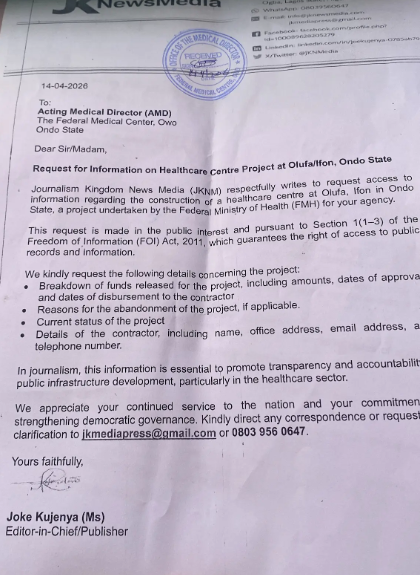
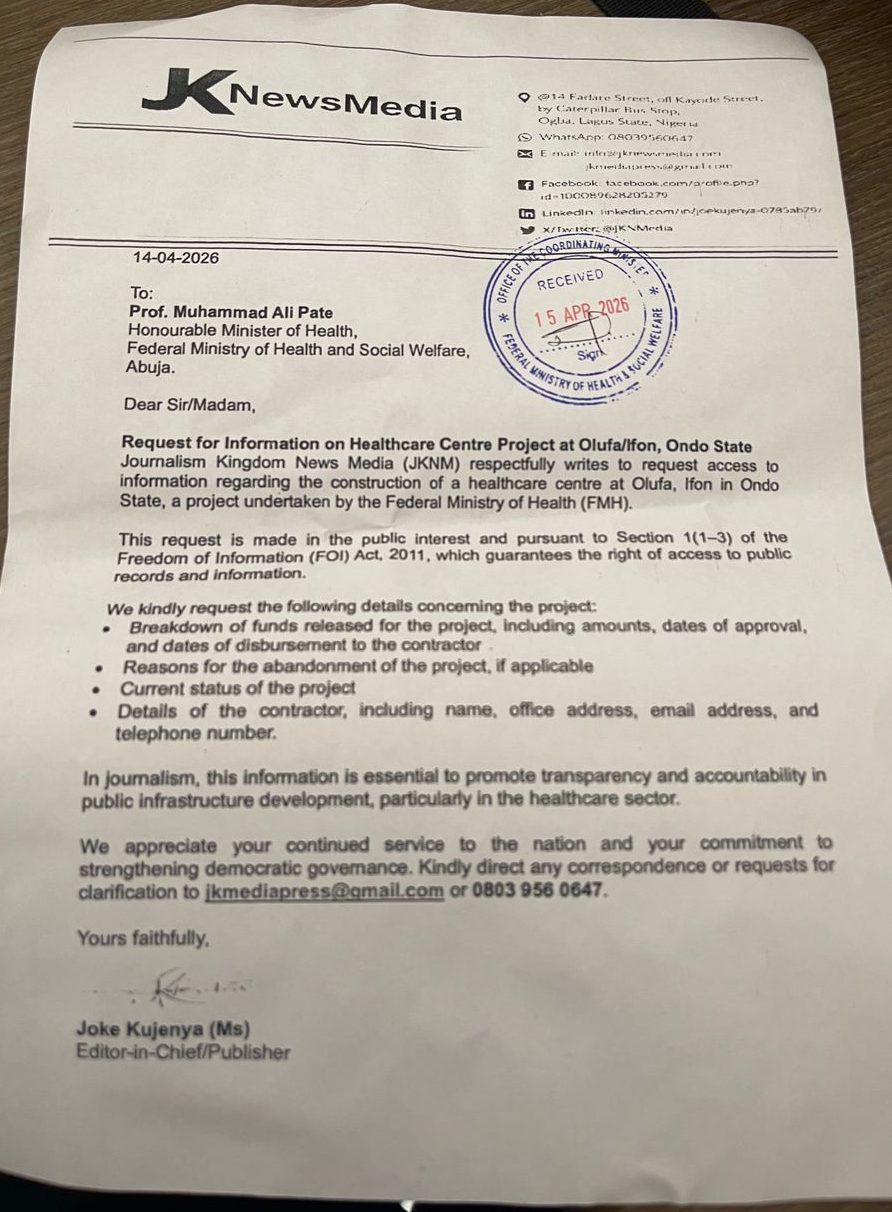
To verify the claims surrounding the project, this reporter sent Freedom of Information requests to the Federal Ministry of Health and Social Welfare and the Procurement Office of the Federal Medical Centre (FMC), Owo.
Neither institution had responded as of the time this report was filed.
Responding to questions on rural healthcare development in Ondo State, Oyeneyin Olamide of the Planning Department, Ondo State Ministry of Health, said the government had continued upgrading existing health facilities while constructing new ones across the state.
According to Olamide, the interventions include the provision of modern medical equipment, improved staffing and other measures aimed at strengthening healthcare delivery.
“It is important to note that the revitalisation of health facilities is a phased and continuous process, guided by strategic planning, budgetary provisions and priority needs assessment,” the official said.
FoI Requests Go Unanswered
To verify the claims surrounding the project, this reporter sent Freedom of Information (FoI) requests to the Federal Ministry of Health and Social Welfare and the Procurement Office of the FMC, Owo.
Neither institution had responded as of the time this report was filed.
Waiting For A Hospital That Never Opened
Today, the healthcare centre still sits quietly on the edge of Olufa.
Its doors remain locked.
Inside, empty rooms that were meant to save lives remain unused.
Outside, thick weeds and overgrown bushes continue to reclaim the premises, as though nature itself has accepted what residents still struggle to believe—that the promised hospital never came.
For families like Francis Alabi’s, the consequences can never be measured only in abandoned buildings or wasted public funds.
They are measured in a wife who never returned home after going into labour.
In a baby who never had the chance to live.
They are measured in pregnant women forced to leave their families weeks before delivery, in sick children whose parents must borrow money before seeking treatment, in elderly residents who gamble with time while travelling dangerous roads, and in countless families who continue to rely on luck where healthcare should exist.
For the people of Olufa, the unfinished healthcare centre has become more than an abandoned government project.
It stands as a painful reminder of promises left unfulfilled, opportunities lost and lives forever altered.
While the building remains silent behind overgrown bushes, residents continue to wait for the day its doors will finally open—not as another political promise, but as the lifeline they have been denied for far too long.
This report was funded by the Budeshi Media Grant, an initiative of the Public and Private Development Centre.
—