By Ajibola Olaide, JKNewsMedia Reporter
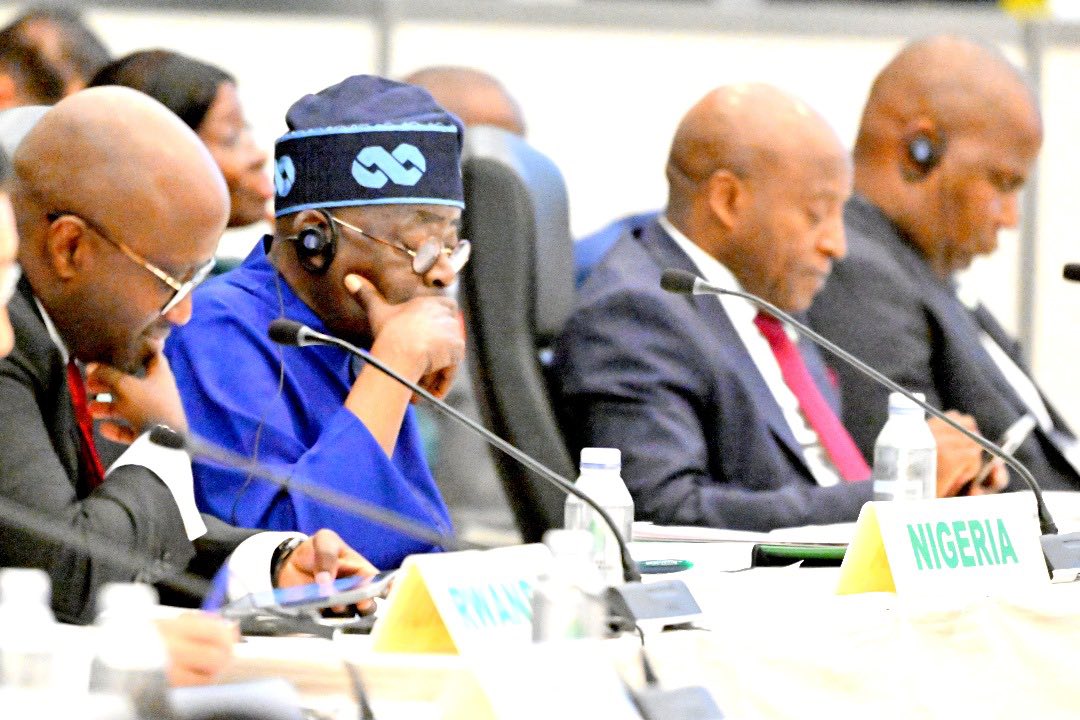
PRESIDENT BOLA Tinubu has renewed Nigeria’s call for Africa to secure permanent representation on the United Nations Security Council, declaring that the continent deserves equal privileges in global decision-making.
Speaking at the plenary session on peace and stability during the 9th Tokyo International Conference on African Development (TICAD9) in Yokohama, Japan, the President said Africa’s demand for reform at the UN was consistent with the Ezulwini consensus and the Sirte declaration, which seek fairer continental representation.
“It is the view of Nigeria that Africa’s quest for fair and equitable representation in the UN Security Council is a just and fair demand,” Tinubu stated.
“Indeed, Africa deserves two seats in the permanent category, with all its prerogatives and privileges, including the right of veto.
Africa also deserves additional seats in the non-permanent seat category of the security council.”
The President said such reforms were overdue, stressing that Africa’s contribution to global peacekeeping and development justified its inclusion in the council’s most powerful decision-making body.
He also used the platform to commend the Nigerian armed forces for their recent achievements against insurgency and criminality, describing their gains as a foundation for national development. “Nigeria’s brave armed forces can win any number of battles, but we do justice to their heroism only when we, as government, are courageous in tackling not just terror but also the underlying causes,” he said.
According to Tinubu, addressing inequality, poverty and exclusion remained critical to lasting stability. He warned that military victories alone would not secure peace unless governments took bold steps to deal with structural causes of conflict. “We can do justice to their heroism and sacrifice only when we, as governments, display the courage to be tough, not only on terror, but on the causes of terror,” he said.
Citing examples from Central Africa, Tinubu pointed to mediation efforts in the Congo where agreements were linked directly to investment. He argued that this approach demonstrated how peace-building could be tied to economic opportunities. “In the past, competition for resources has weakened states and triggered conflict. Now, we see mediators directly linking outcomes to investment in Congo. It is working and underlines the need for fresh thinking in everything we do to deliver peace and stability,” he said.
The President urged African leaders to promote market-driven partnerships across borders as a path to peace and development, adding that reliance on aid or handouts was no longer sustainable. He pressed for collaborations that would advance growth through trade and investment, rather than dependence.
The session, attended by global leaders and development partners, also heard pledges of support for Africa, with the Japanese government announcing a commitment of $5.5 billion in funding to support peace, security and economic progress across the continent.
Tinubu concluded his intervention by insisting that Africa’s full representation on the UN Security Council was not only a matter of fairness but also a necessity for global security.