By Jemimah Wellington, JKNewsMedia Correspondent
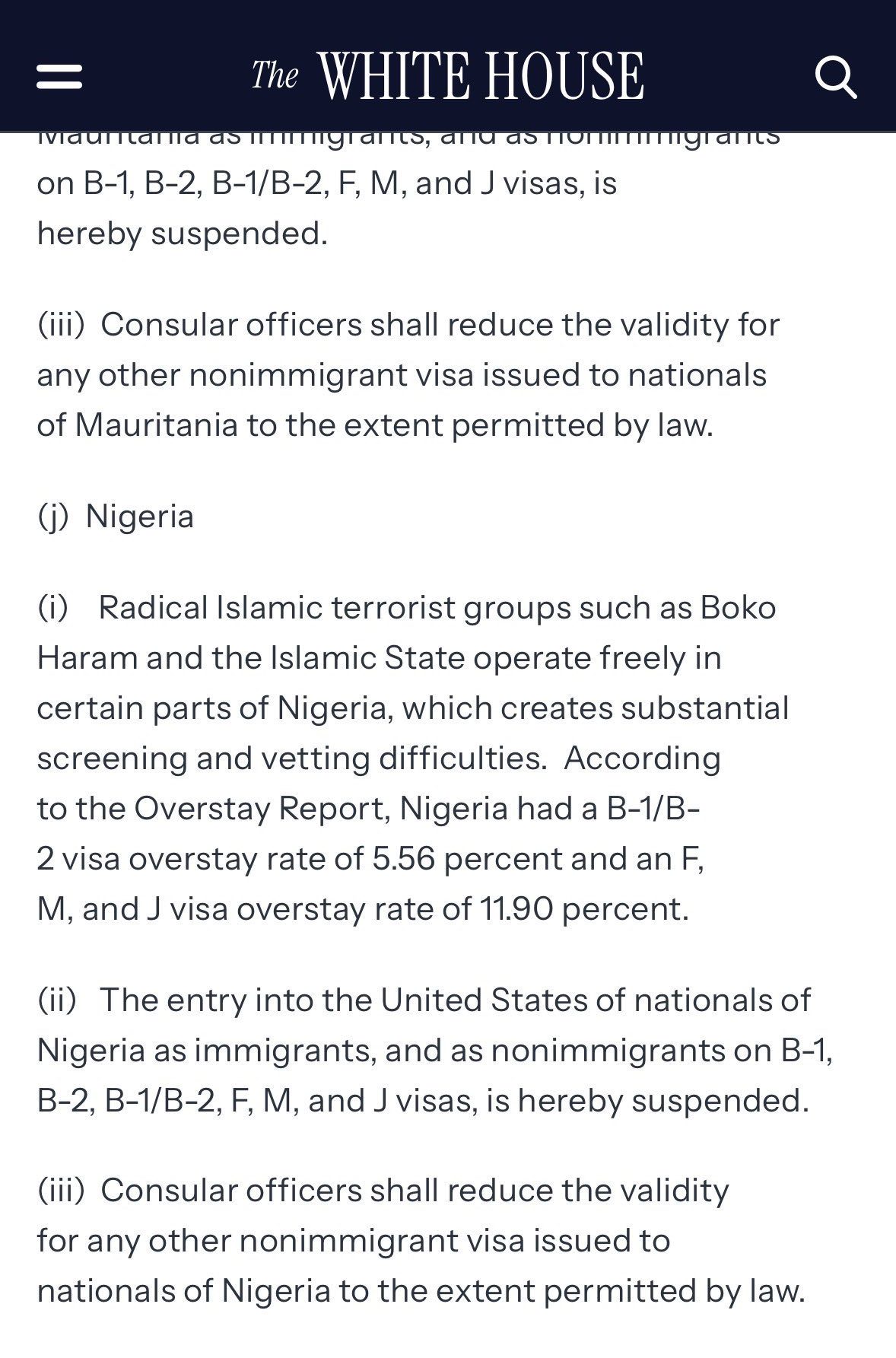
TRAVEL RESTRICTIONS imposed by the Donald Trump administration of the United States of America (USA) have been expanded to cover 39 countries including Nigeria and the Palestinian Authority, following the addition of 20 more countries and travel documents under the existing policy.
The administration said five countries would face a full ban from entering the United States, while citizens of 15 other countries would be subject to partial restrictions.
The changes double the number of countries affected by travel limits.
President Donald Trump announced in June that citizens of 12 countries would be banned from entering the United States, and travellers from seven additional countries would face heightened restrictions.
Those measures remain in effect alongside the new additions.
The original full ban included Afghanistan, Myanmar, Chad, the Republic of Congo, Equatorial Guinea, Eritrea, Haiti, Iran, Libya, Somalia, Sudan and Yemen.
Heightened restrictions applied to visitors from Burundi, Cuba, Laos, Sierra Leone, Togo, Turkmenistan and Venezuela.
The new full bans cover Burkina Faso, Mali, Niger, South Sudan and Syria.
The 15 countries with partial restrictions are Angola, Antigua and Barbuda, Benin, Ivory Coast, Dominica, Gabon, Gambia, Malawi, Mauritania, Nigeria, Senegal, Tanzania, Tonga, Zambia and Zimbabwe adding that the restrictions apply to those seeking to travel as visitors or to emigrate.
Exemptions include people with valid visas, lawful permanent residents, certain visa categories such as diplomats or athletes, and those whose entry is believed to serve United States interests.
The restrictions take effect on 1 January.
Also, the new measures expand previous restrictions on Palestinians.
US government said earlier limits made it nearly impossible for holders of Palestinian Authority passports to obtain travel documents for business, work, pleasure or education in the United States.
The new restrictions also bar them from emigrating to the United States.
Trump’s government also cited widespread corruption, fraudulent or unreliable civil documents, criminal records, high visa overstays, refusals to accept deported citizens, and general instability or weak government control as reasons for the expansion.
Immigration enforcement, foreign policy and national security concerns were also mentioned.
Critics responded swiftly.
Laurie Ball Cooper, vice president of United States Legal Programs at the International Refugee Assistance Project, said, “This expanded ban is not about national security but instead is another shameful attempt to demonise people simply for where they are from.”
Advocates for Afghans who supported the US during its war said the updated travel ban no longer contains an exception for Afghans eligible for the Special Immigrant Visa, a category for those who assisted the US war effort at great personal risk.
Countries newly added to the banned or restricted list said they were reviewing the announcement.
In particular, Dominica said it was treating the issue with the “utmost seriousness and urgency” and was contacting US officials to clarify the restrictions and address potential problems.
Ronald Saunders, ambassador of Antigua and Barbuda to the US, said the “matter is quite serious” and he would seek more information from US officials.
The administration also upgraded restrictions on Laos and Sierra Leone while easing some restrictions on Turkmenistan. All other measures from the June announcement remain in place.