By Olukorede Yishau
IT CAN almost be taken for granted that the next governor of Lagos State is Obafemi Hamzat, the man who has seen the in and out of governance in the last two decades.
What cannot be taken for granted, however, is whether or not his administration will be able to deliver the Fourth Mainland Bridge, one of Nigeria’s most ambitious and technically challenging infrastructure projects because much of the alignment crosses lagoon environments and wetlands.
This bridge’s story started over two decades ago when Bola Ahmed Tinubu, now Nigeria’s President, was in office as Lagos State governor. He conceived the project, but he was unable to realise it.
His successor, Babatunde Raji Fashola, who later went on to serve for eight years as Minister under the Muhammadu Buhari administration, tried to get it on track, but he didn’t succeed.
His successor, Akinwunmi Ambode, couldn’t do much about it before political wind swept him away after four years in power. And the beneficiary of Ambode’s political misfortune, Babajide Sanwo-Olu, is on his way out of office and still Fourth Mainland Bridge is on paper.
It is yet to transform from being a dream to a reality, it is yet to become a road that we can travel with song and joy in our souls. It remains something we are salivating over and unsure of when we will partake in its consumption.
With the imminence of the Hamzat era, I wonder if Lagos will get this much-needed Fourth Mainland Bridge under his watch. I wonder if his time will come and go and all we will get is to continue to talk about this bridge, which when completed, will create another major transport corridor linking the island and mainland parts of Lagos.
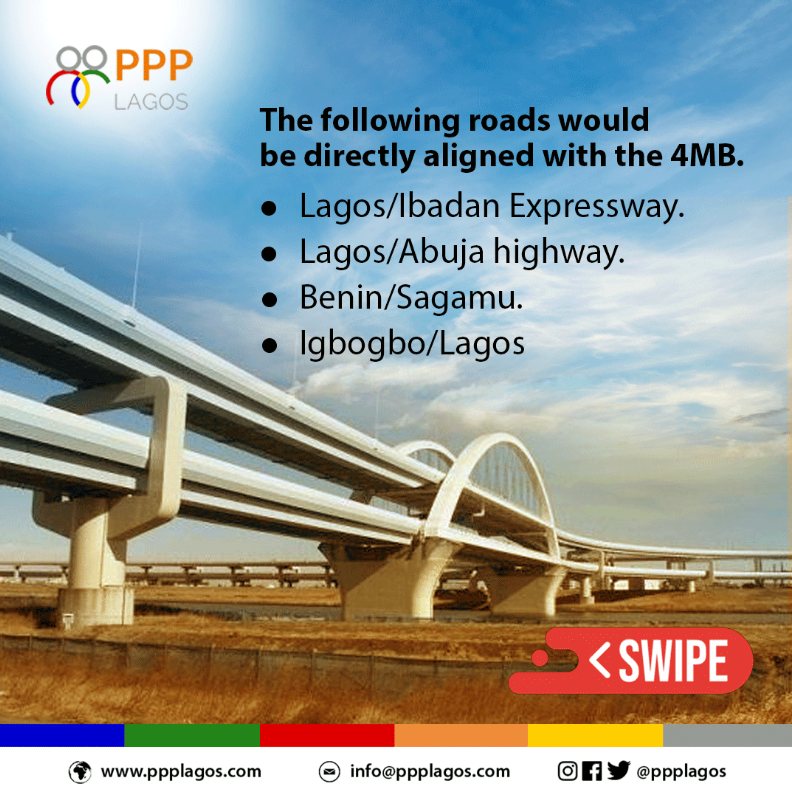
Planned as a roughly 38-kilometre dual carriageway bridge, it will connect the Lekki/Ajah axis to Ikorodu and the Lagos-Ibadan Expressway.
It will reduce pressure on the heavily congested the Third Mainland Bridge, which we all refuse to call its official name: Ibrahim Babangida Bridge.
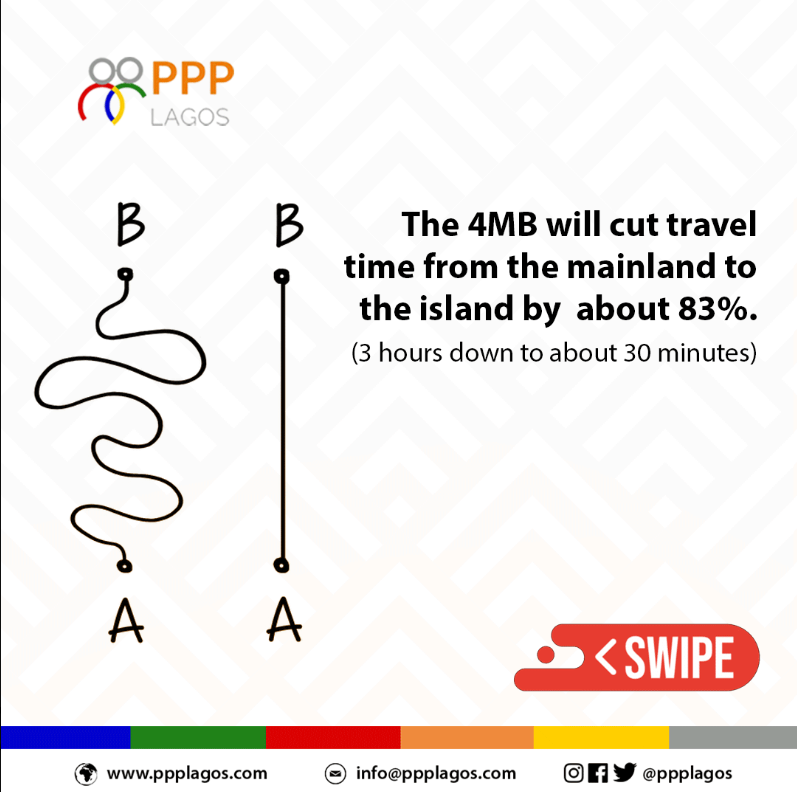
Our Lagos has for years suffered from chronic traffic congestion and a Fourth Mainland Bridge will not only reduce travel time, but it will also ease the pressure on the Third Mainland, Carter, and Eko bridges and open up new real estate corridors.
I can almost picture what will happen to the corridor: Ikorodu and the other Lagos suburbs it will link will never be the same again. The bridge will breathe life into their commercial activities and support industrial growth around the axis. It has a massive potential to create jobs, thus reducing the army of the unemployed in our land.
Over the years, the estimated cost has changed from around ₦844 billion to approximately $2.2–$2.5 billion due to inflation, scope changes, and exchange-rate pressures.
Because of the massive financial implications, it has been structured as a Public-Private Partnership (PPP) and institutions and companies such as Julius Berger Nigeria Plc, Africa Finance Corporation, Access Bank Plc and J.P. Morgan have been mentioned as partners.
But despite repeated announcements over the years, actual construction has not commenced. The government selected the CCECC-CRCCIG Consortium as preferred bidder for the project in late 2022 and government officials projected construction commencement around 2023 and completion within four years. That obviously is not feasible.
I have seen reports blaming the delays on funding challenges, environmental concerns, right-of-way and demolition issues.
While these challenges remain, Lagos also retains a not-so-good image.
At the moment, and it has been this way for donkey years, Lagos shows the signs of a city bursting beyond its limits, a bullish metropolis where millions chase survival and ambition at the same time. Because of this, it is a common sight to see Lagos awake as early as 5:00 a.m. or earlier, with the restless growl of engines.
At these early hours across Lagos, headlights stretch like endless chains of fire on major and minor roads. Danfo buses lean impatiently into narrow gaps, their conductors hanging halfway out of the doors, shouting destinations into thick humid air already heavy with exhaust fumes,
Okadas dart through impossible spaces like desperate fish escaping a fisherman’s net, while frustrated private car drivers pound their horns in a language of anger only Lagosians understand instinctively.
In this traffic that barely moves an inch in twenty minutes or more, sweat gathers on foreheads and trickles down necks as strangers press shoulder to shoulder; hawkers weave expertly between cars frozen in time, balancing trays of plantain chips, cold drinks, phone chargers, bread, and newspapers on their heads as though the gridlock itself were a marketplace designed for them to thrive; and somewhere ahead, a broken-down vehicle, maybe a truck or even a Danfo, has reduced four lanes into one, and somewhere behind, another impatient driver has blocked the shoulder, creating a fresh knot on an already tired road network.
On bridges such as Eko, Carter and Third Mainland, hundreds are prisoners of a city forever in a hurry and because they are held on these bridges, meetings are missed, tempers flare, and children fall asleep in the back seats.
This madness extends to nightfall, starting from the closing time. A Fourth Mainland Bridge can help repaint the Lagos picture, not that there will be no traffic again, especially in the rush hours but it will drastically reduce the traffic congestion and ease the stress of commuters between the Island and the Mainland. Stress is a major health concern and staying in traffic for hours can either create it or worsen already existing stress.
My final take: The Lagos State government knows the Fourth Mainland Bridge is so huge a project it cannot do it alone. With the man who conceived the idea as president, it will be befitting for Lagos to get the much-needed infrastructure before the end of his time in office.
Our dear state really needs it because it will straighten so many curves and bring alive dying communities on its path. While the Federal Government doesn’t have to take over the project, I believe that it can help in making the PPP easily implementable. I look forward to Hamzat driving the process to a logical conclusion.
Quote
The Lagos State government knows the Fourth Mainland Bridge is so huge a project it cannot do it alone. With the man who conceived the idea as president, it will be befitting for Lagos to get the much-needed infrastructure before the end of his time in office. Our dear state really needs it because it will straighten so many curves and bring alive dying communities on its path.
—