By Jemimah Wellington, JKNewsMedia Reporter
INTENSIFYING EFFORTS to end the war in Ukraine took centre stage at the Vatican on Saturday, as United States (US) Donald Trump and Volodymyr Zelensky held urgent private talks during the funeral of Pope Francis.
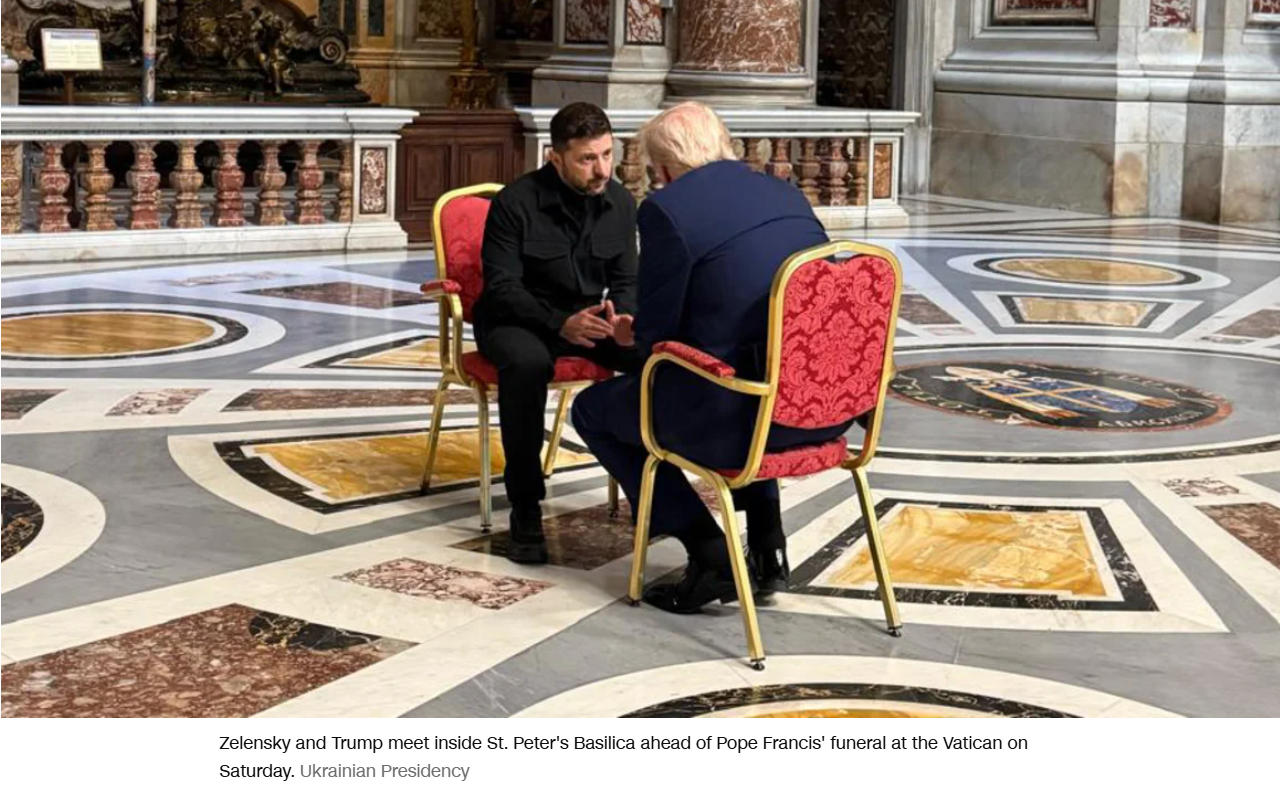
Against the backdrop of mourning, the two leaders met for 15-minutes inside St Peter’s Basilica, agreeing to continue negotiations later the same day.
The brief encounter marked their first face-to-face meeting since a volatile Oval Office clash in February, where Trump and other US officials accused Zelensky of failing to back American-led ceasefire proposals, leading to a temporary halt in arms and intelligence support.
Photographs released by Ukrainian officials captured the gravity of the occasion, showing Trump and Zelensky seated close together in the towering splendour of the basilica.
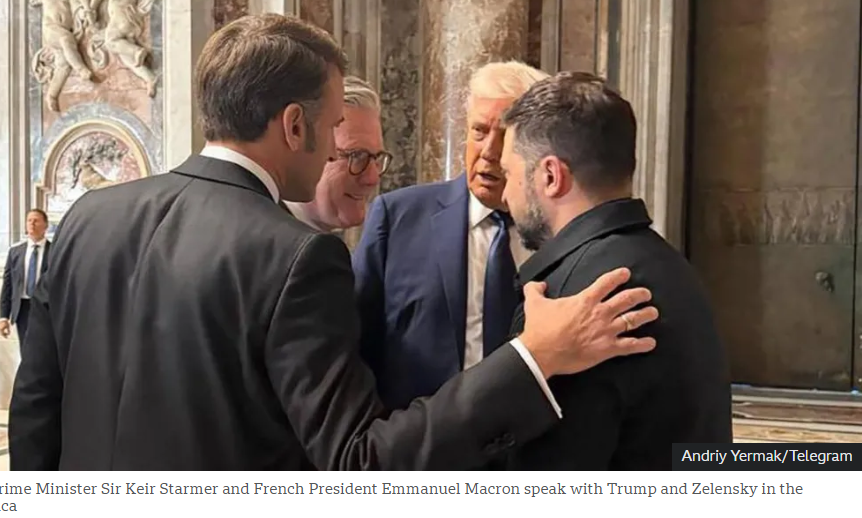
They later huddled alongside British Prime Minister Sir Keir Starmer and French President Emmanuel Macron, illustrating the heightened international stakes.
White House communications director Steven Cheung described the private meeting as “very productive,” while Ukrainian spokesman Serhii Nykyforov confirmed a second round of discussions was being arranged for later on Saturday.
The meeting came at a critical juncture.
Trump’s administration has been applying mounting pressure on Kyiv, warning that US support could be withdrawn within days if significant progress towards a peace deal is not achieved.
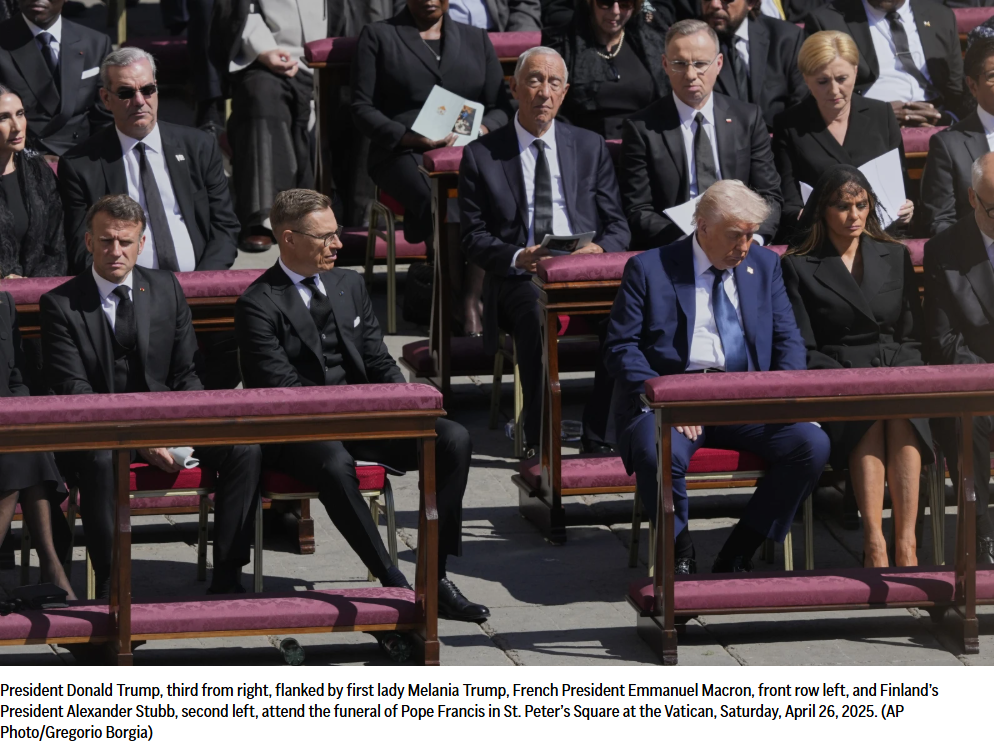
On Friday, Trump, who attended the Pope’s burial with his wife, Melania, said Russia and Ukraine were “very close to a deal,” following a three-hour meeting in Moscow between his special envoy, Steve Witkoff, and Russian President Vladimir Putin — talks described by Russian officials as “constructive and very useful.”
Inside Ukraine, tensions have spiked. Kyiv endured the largest wave of Russian missile attacks since July last year just days before the Vatican meeting, leaving twelve civilians dead.
Speaking ahead of his trip to Rome, Zelensky suggested a readiness to explore compromise, proposing stronger American-backed defence and European security guarantees systems in exchange for delaying Ukraine’s NATO ambitions.
Zelensky stressed that dialogue would only be possible following a complete and unconditional Russian ceasefire. “We are ready for dialogue,” he said, “but only after a real signal that Russia is ready to end the war.”
Draft proposals known as the “Ukraine Deal Framework,” obtained by Reuters, outline plans for an internationally monitored ceasefire and security guarantees resembling NATO’s collective defence commitments.
It also foresees Ukraine regaining control of the Zaporizhzhia nuclear power plant, though major territorial issues — particularly the status of Crimea — remain unresolved.
The status of Crimea remains a formidable barrier.
Witkoff’s plan reportedly floated US recognition of Crimea as Russian territory, but Zelensky has categorically rejected the idea, insisting that doing so would breach Ukraine’s constitution and international law.
“There is nothing to talk about,” Zelensky said on Friday, while acknowledging that Ukraine currently lacks the military strength to retake Crimea by force.
Instead, he urged the international community to maintain sanctions and economic pressure on Moscow.
Speaking to the BBC, Zelensky hinted that an unconditional ceasefire “opens up the possibility to discuss everything,” but reiterated that Ukraine would not concede territory under pressure.