By Joke Kujenya
DEPLOYMENT ORDERS for two United States (U.S.) nuclear submarines have been issued by President Donald Trump in response to increasingly hostile exchanges with Russia’s former president Dmitry Medvedev.
He remarked that the move signals a stark escalation in nuclear posturing as diplomatic tensions deepen over the war in Ukraine.
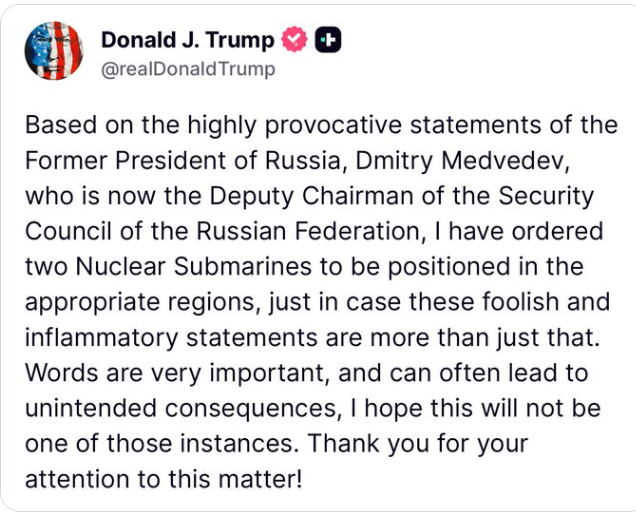
President Trump announced the decision publicly on Friday through his Truth Social platform, stating that the submarines had been repositioned to “appropriate regions” following what he described as “highly provocative statements” from Russian officials.
While the US routinely maintains a global nuclear submarine presence, the announcement signals a rare public display of strategic intent.
“Words are very important, and can often lead to unintended consequences,” Trump posted. “I hope this will not be one of those instances.”
The order came as President Trump reinforced a deadline previously issued to Russia, urging it to take concrete steps to end its military campaign in Ukraine by the end of the following week.
Failure to comply, he warned, would trigger a new round of secondary sanctions, targeting both Russia and any nations trading with it.
Russian Deputy Security Council Chairman Dmitry Medvedev had described the threat of sanctions as “a step toward war.”
His comment drew a direct rebuke from President Trump, who responded by calling the statement “foolish and inflammatory.”
He added, “I have ordered two nuclear submarines to be positioned in the appropriate regions, just in case these statements are more than just that.”
Addressing reporters before departing the White House for New Jersey, Trump stated, “A threat was made by a former president of Russia, and we’re going to protect our people.”
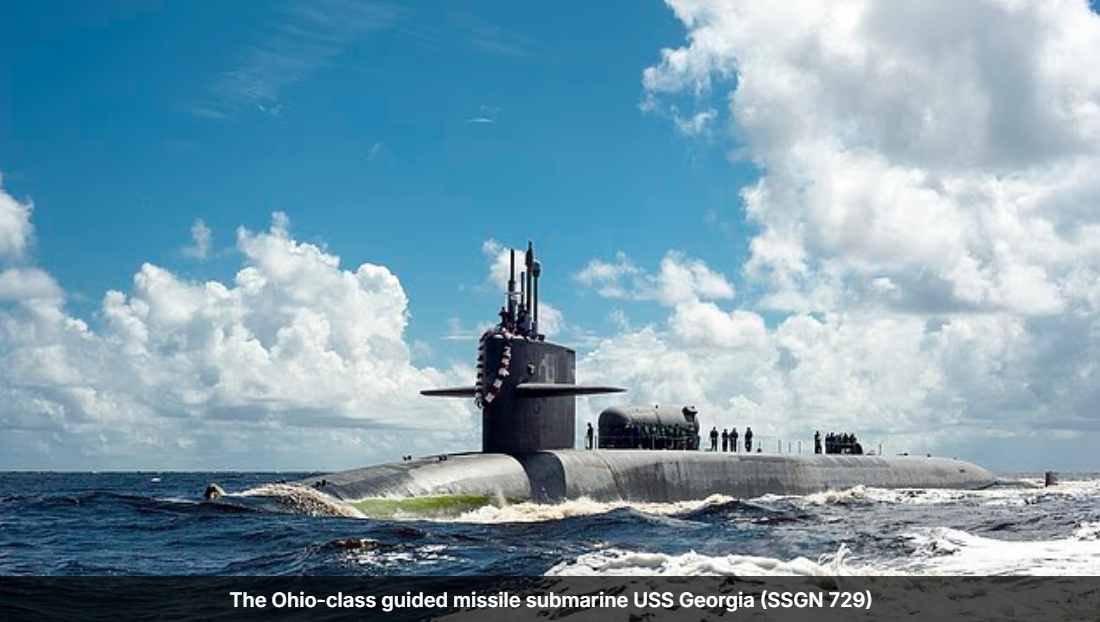
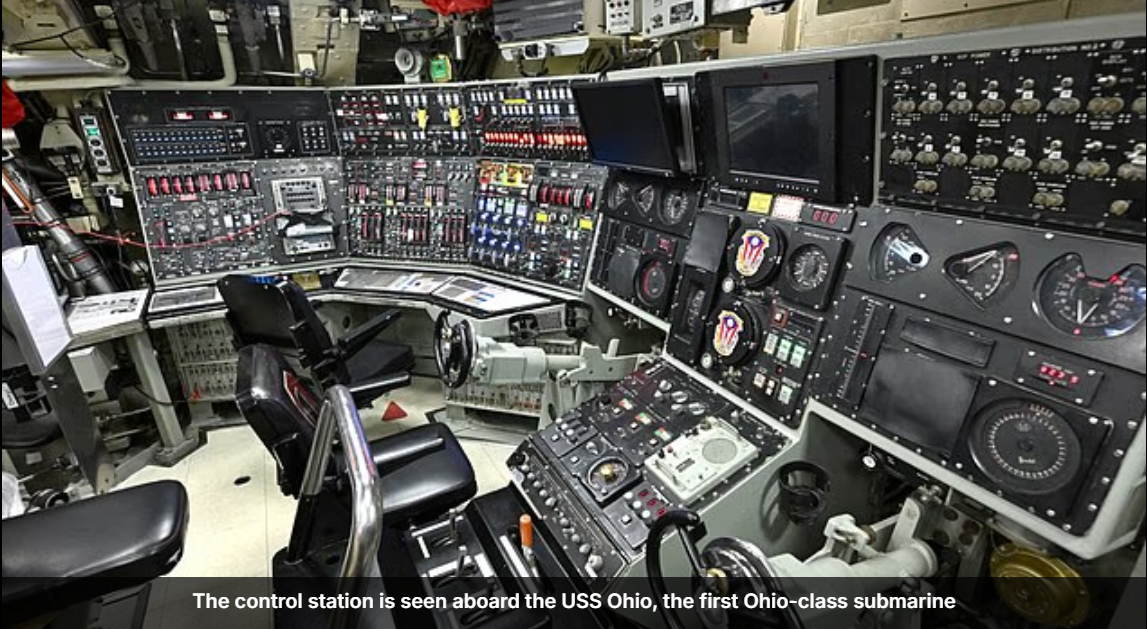
The Ohio-class nuclear submarines deployed under Trump’s order each carry Trident II ballistic missiles capable of delivering multiple nuclear warheads with ranges exceeding 7,500 miles.
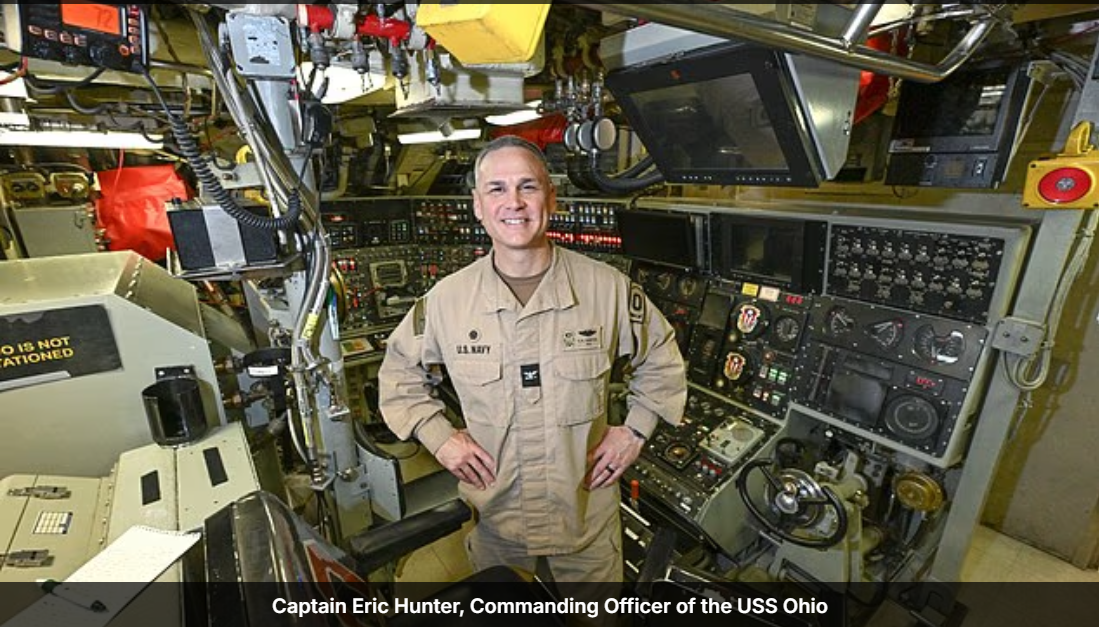
These submarines form the cornerstone of the U.S. Navy’s nuclear deterrent and typically operate under classified locations and missions.
This military movement followed an intensified wave of attacks in Ukraine. Ukrainian authorities reported that a combined missile and drone strike on Kyiv early Thursday killed 31 people, including five children.
The onslaught, the deadliest in weeks, coincided with a record number of drone launches by Russian forces throughout July.
Ukrainian President Volodymyr Zelensky shared footage from the strike, stating, “Kyiv. Missile strike. Directly into a residential building. People under the rubble. All services are on site. Russian terrorists.”
Russian President Vladimir Putin responded publicly on Friday, repeating longstanding demands that Ukraine abandon aspirations to join NATO and cede certain territories as preconditions for peace.
He noted, “All disappointments come from inflated expectations…
In order to solve the issue in a peaceful way, we need deep conversations, not in public, but in the silence of a negotiating process.”
President Trump also referenced recent conversations with his wife, First Lady Melania Trump, who has raised concerns about civilian casualties during their private discussions.
During a White House meeting with NATO Secretary General Mark Rutte, Trump recounted, “I go home, I tell the First Lady, ‘You know, I spoke to Vladimir today. We had a wonderful conversation.’ And she said, ‘Oh really? Another city was just hit.’”
While avoiding direct criticism of President Putin, Trump has intensified his warnings to Moscow, signalling a shift from his previous tone of accommodation.
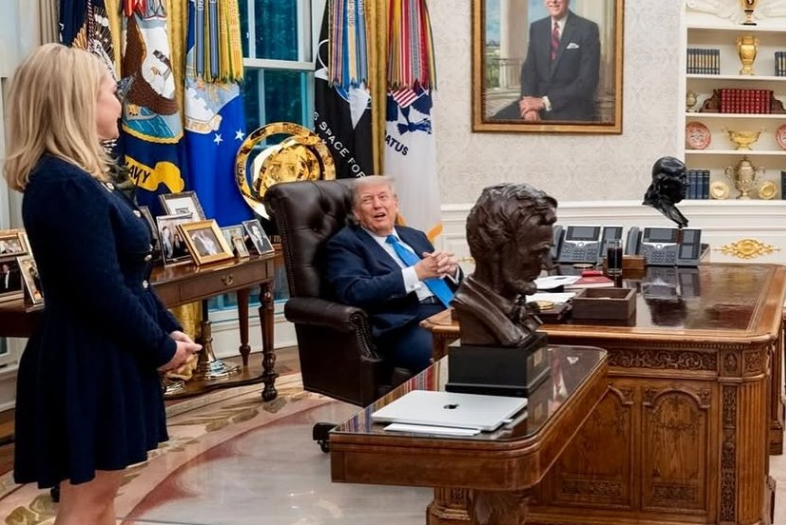
The public deployment of nuclear submarines underscores a sharper posture from Washington amid renewed hostilities and wavering international consensus on Ukraine.