By Jemimah Wellington, JKNewsMedia Correspondent
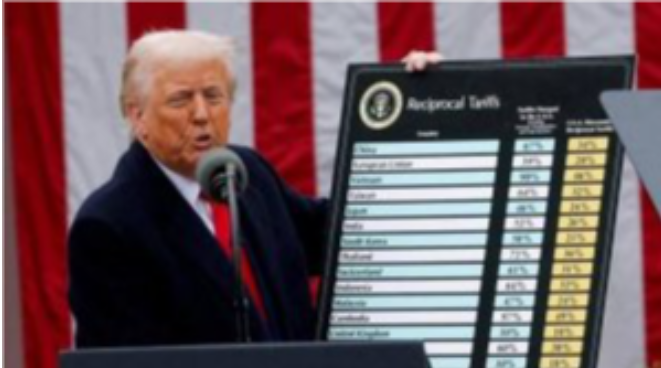
A FRESH blow to Nigeria’s economic recovery may be on the horizon as United States (US) President Donald Trump renews threats to impose additional tariffs on BRICS-aligned nations.
The looming 10 percent tariff, if enforced, could further destabilise Africa’s largest economy, which has battled high inflation and sluggish growth in recent years.
The BRICS bloc – originally composed of Brazil, Russia, India, China, and South Africa – had expanded in 2024 to include Egypt, Ethiopia, the United Arab Emirates, Iran, Saudi Arabia, and Indonesia.
Nigeria joined the coalition as the ninth BRICS partner country in January 2025, after receiving a formal invitation during the 16th BRICS Summit in October 2024.
Though not yet a full member, Nigeria’s upgraded partner status enables it to contribute to BRICS initiatives and policy discussions.
Trump’s declaration on Sunday via Truth Social signalled a hardened stance against nations he accused of backing “anti-American policies.”
The post read: “Any Country aligning themselves with the Anti-American policies of BRICS, will be charged an ADDITIONAL 10% Tariff. There will be no exceptions to this policy.”
That message coincided with the BRICS leaders’ response at the ongoing summit in Rio de Janeiro, where Nigerian President Bola Tinubu is attending on the invitation of Brazil’s President Luiz Inacio Lula da Silva.
The summit’s joint communiqué criticised what it described as “indiscriminate” US tariffs and condemned recent strikes by Israeli and US forces on Iranian targets.
Trump’s warning follows earlier threats made in April to impose unilateral duties on both allies and rivals unless bilateral trade deals are renegotiated by 1 August.
While those initial threats were delayed after spooking global markets, his latest statement indicates no such reprieve this time around.
Nigeria’s economic vulnerabilities place it at significant risk should the US follow through on this latest tariff move.
The nation’s headline inflation rate climbed to 28.92 per cent by the end of 2023—up from 18.85 per cent the previous year—and peaked at 34.2 per cent in June 2024.
Though it recently dropped to 27.50 per cent, according to the Central Bank of Nigeria, underlying pressures persist.
The apex bank has introduced sweeping reforms, including the removal of fuel subsidies and allowing the naira to float, in a bid to stabilise the economy.
Still, Nigeria’s overreliance on crude oil, which constitutes more than 90 per cent of its exports to the US, leaves it exposed to trade policy shifts.
Any additional duty on crude oil or petroleum derivatives could reduce export volumes, increase transaction costs, and undermine efforts to diversify the economy.
Even non-oil exports – comprising fertiliser, agricultural goods, and manufactured products – could face added costs, complicating Nigeria’s long-term trade strategy.
Analysts have long flagged Nigeria’s narrow export base and vulnerability to global oil market volatility as persistent threats to economic resilience.