By Joke Kujenya
BRITAIN’s HIGHEST court has ruled that under the Equality Act 2010, the legal definition of a woman refers to biological sex — not gender identity — in a landmark judgment that could reshape access to single-sex spaces and clarify the boundaries of equality law across the United Kingdom.
The Supreme Court’s unanimous verdict, delivered by a panel of five justices, came in response to a legal challenge by campaign group For Women Scotland (FWS).
At the centre of the dispute was whether the Scottish government had overstepped the law by allowing transgender women with gender recognition certificates (GRCs) to be counted as women under a 2018 law aimed at improving female representation on public sector boards.
The court sided with FWS, concluding that the Scottish guidance wrongly interpreted key definitions in the Equality Act.
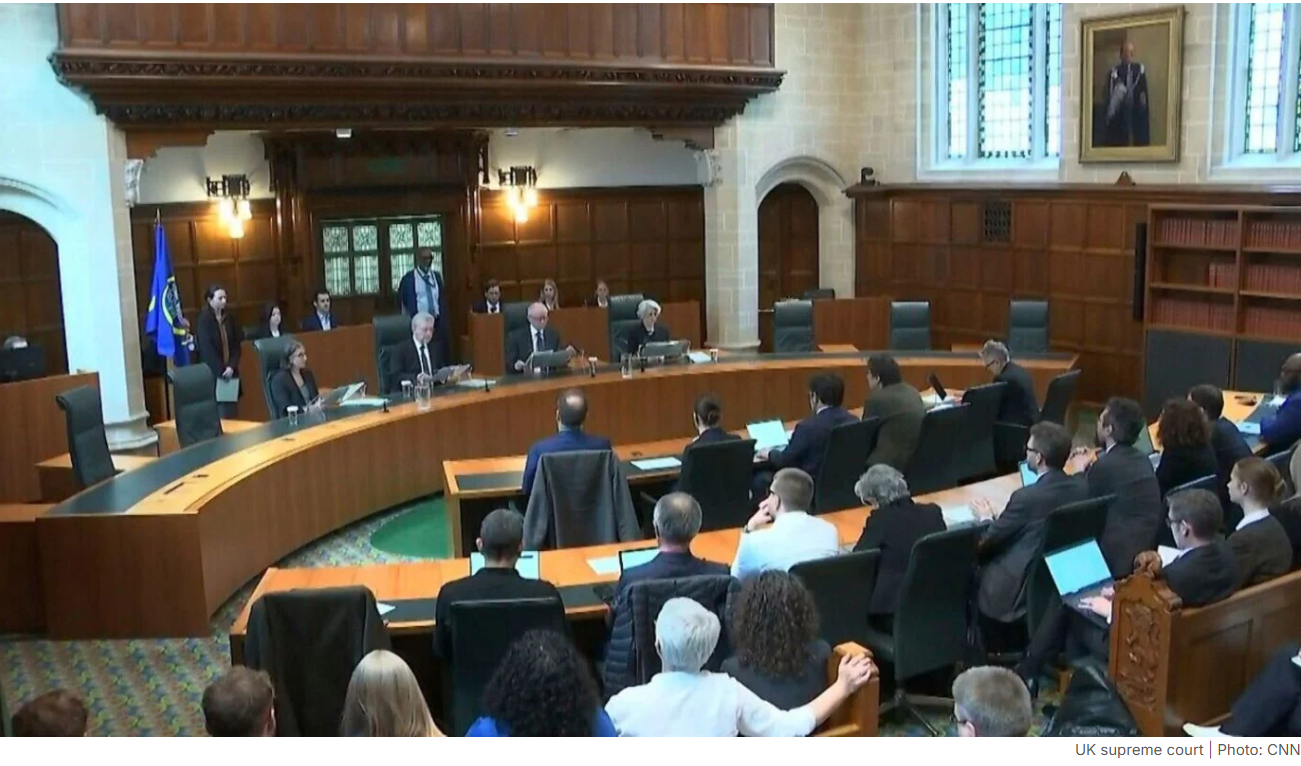
In his statement, Deputy President Lord Hodge said the terms “woman” and “sex” refer to biological sex, not legal gender status. However, he cautioned against viewing the judgment as a triumph for one group over another.
“This is not a ruling against trans rights,” Hodge stressed.
“Trans people remain protected under the characteristic of gender reassignment.”
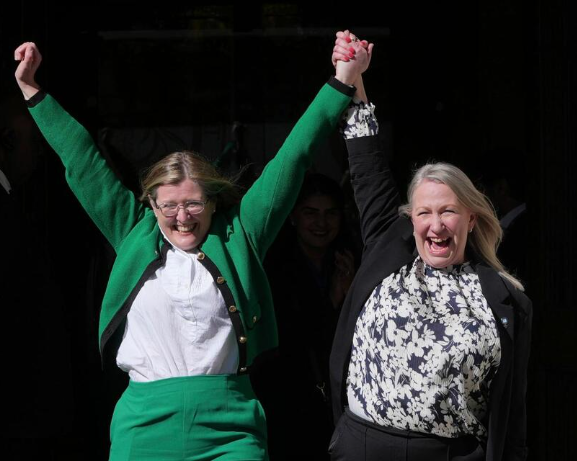
Campaigners outside the court embraced the verdict with tears and cheers. Susan Smith, co-director of FWS, addressed supporters with resolve: “Women can now feel safe that services and spaces designated for women are for women.”
The ruling has sparked strong reactions from all sides of the gender rights debate.
Kemi Badenoch, a senior Conservative figure, described the outcome as a “victory” for women’s rights.
“Saying ‘trans women are women’ was never true in fact, and now isn’t true in law either,” she said, applauding women who, she claimed, had suffered for asserting “biological reality”.
Trans advocates expressed deep concern at the implications of the judgment, particularly its potential impact on employment rights and access to single-sex spaces.
A coalition of 2SLGBTQ+ groups, including Stonewall, said the ruling marked a “challenging day” for the community and warned of harmful consequences.
Transgender campaigner Ellie Gomersall said the verdict felt like “another attack on the rights of trans people to live our lives in peace.”
Despite the ruling, the court reaffirmed that transgender individuals remain shielded from discrimination through protections embedded in the Equality Act under gender reassignment provisions.
The Scottish government had argued that a GRC changed a person’s legal sex “for all purposes,” under the 2004 Gender Recognition Act.
But the court rejected that interpretation in the context of equality law, ruling that reserved matters such as the definition of “woman” in the Equality Act cannot be altered by devolved administrations.
The judgment may influence how other single-sex provisions are applied — from hospital wards and women’s refuges to sporting categories — and has reignited calls to clarify or update the Equality Act to reflect contemporary understandings of gender.
Some legal experts say the decision will offer employers and institutions clearer guidance amid years of uncertainty. Phillip Pepper, employment law partner at Shakespeare Martineau, said businesses had been navigating “ambiguous, contradictory legislation” with the risk of legal exposure.
The Equality and Human Rights Commission (EHRC), Britain’s human rights watchdog, said it welcomed the court’s clarification but would take time to consider its full implications.
Internationally, the UK ruling echoes developments in the United States, where sex-based legal definitions have resurfaced as political flashpoints.
Just hours into his second term, President Donald Trump signed an executive order affirming a binary definition of sex, pushing back against gender-inclusive interpretations under federal law.
The ruling by the UK Supreme Court, extending across England, Wales, and Scotland, marks the conclusion of a long-fought legal dispute and may influence how legislative boundaries are drawn in future gender-related policies.