By Ajibola Olaide, JKNewsMedia Reporter
GLOBAL RECOGNITION has placed Nigeria at the forefront of media and information literacy development following the formal approval by the United Nations Educational, Scientific and Cultural Organization (UNESCO) to designate the International Media and Information Literacy Institute (IMLI), Abuja, as a UNESCO Category 2 Institute.
The announcement was made at the 43rd General Conference of the Communication and Information Commission (CI Session) held in Samarkand, Uzbekistan.
The designation marks a historic milestone as the first of its kind globally, positioning Nigeria as a leader in combating misinformation and disinformation while advancing global research, policy dialogue, and digital literacy capacity-building.
According to the Honourable Minister of Information and National Orientation, Mohammed Idris, the approval is “a strong vote of confidence in our nation.”
The Minister, who addressed the UNESCO General Conference, reaffirmed Nigeria’s readiness to assume this global responsibility, stating that the Institute would serve as an international observatory and hub dedicated to equipping individuals and communities worldwide with the skills to navigate the digital landscape with discernment and confidence.
“The Nigerian government, under the leadership of President Bola Ahmed Tinubu, is committed to fostering a society where responsible free speech is seen as the engine of national progress,” Idris said.
He explained that the federal administration views the democratisation of digital opportunities as a central pillar of national development, with media and information literacy serving as a key driver.
The Minister noted that the achievement was the culmination of a long and deliberate process that began in October 2022, when Nigeria hosted the 10th Global Media and Information Literacy and Feature Conference in Abuja.
During that event, Nigeria pledged to the global community to establish a UNESCO International Media and Information Literacy Institute within its borders—a promise that has now materialised through UNESCO’s official endorsement.
“This historic designation is a testament to Nigeria’s steadfast commitment to advancing knowledge, promoting responsible communication, and building a society anchored on informed citizenship,” Idris stated.
He extended congratulations to President Tinubu, describing the development as “a reflection of his commitment to the Nigerian project aptly encapsulated in the Renewed Hope Agenda.”
He added that the milestone represented not only a national success but also a significant achievement for the African continent. “This is equally a big win for all Nigerians and the continent of Africa,” he said.
Minister Idris pledged that the government would sustain close collaboration with UNESCO to ensure that the Institute’s infrastructure, governance, and operational frameworks meet international standards.
He disclosed plans to establish a multidisciplinary team of experts to guide the Institute’s growth and ensure that it delivers effectively on its global mandate.
He further announced that the formal launch of the International Media and Information Literacy Institute is scheduled for February 2026 in Abuja, with senior UNESCO officials, representatives of member states, and global strategic partners expected to attend the inauguration.
The designation of IMLI Nigeria as a UNESCO Category 2 Institute reinforces Nigeria’s increasing visibility in global knowledge and communication development efforts.
It also highlights the country’s capacity to drive cross-border collaboration on digital literacy, countering misinformation, and strengthening democratic discourse through informed participation.
The recognition by UNESCO is part of the organisation’s strategy to establish specialised centres that support its core objectives through research, training, and advisory services.
As a Category 2 Institute, IMLI Nigeria will operate under UNESCO’s auspices but with its own governance and funding, offering expertise and programmes to member states and global partners seeking to enhance media and information literacy in their societies.
The Nigerian government considers this development a major step towards consolidating its leadership in media innovation and the responsible use of information technology.
Officials emphasised that the Institute will advance UNESCO’s Media and Information Literacy framework and provide policy support, research coordination, and technical training for practitioners, educators, and policymakers worldwide.
The approval also complements Nigeria’s broader digital transformation goals, which include expanding access to digital education, strengthening ethical journalism, and curbing the spread of fake news through civic education and media awareness.
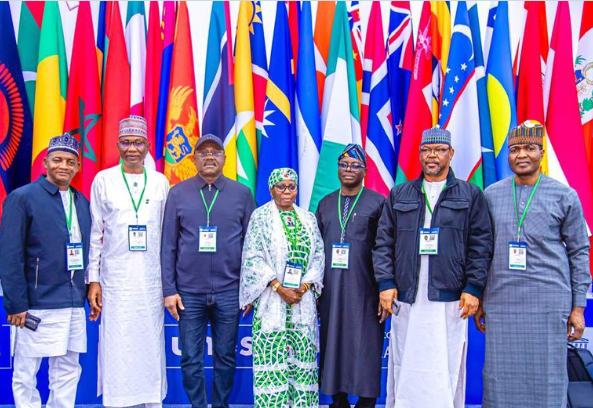
Delegates from Nigeria were present at the UNESCO General Conference in Samarkand to witness the formal adoption of the Institute’s designation.
The Nigerian delegation included the Senate Committee Chairman on Information and National Orientation, Senator Engr. Kenneth Eze; the House Committee Chairman on Information, National Ethics and Values, Honourable Olusola Fatoba; and the Director General of the Federal Radio Corporation of Nigeria (FRCN), Dr Mohammed Bulama, who represented the Minister of Information and National Orientation.
Others in attendance were the Director General of the Nigerian Television Authority (NTA), Malam Abdulhamid Salihu Dembos; the Director-General of the Advertising Regulatory Council of Nigeria (ARCON), Dr Olalekan Fadolapo; the Director General of the Voice of Nigeria (VON), Malam Jibrin Baba Ndace; and Nigeria’s Ambassador to UNESCO, Dr Hajo Sani, alongside other senior government officials.
Nigeria’s successful bid for the establishment of the Institute underscores its deepening relationship with UNESCO and its ongoing commitment to advancing education, communication, and information development.
It also reinforces the country’s strategic role in shaping global policy and practice in media literacy and responsible communication in the digital age.
With the establishment of IMLI Nigeria, the country joins a select group of nations hosting UNESCO-affiliated institutions tasked with supporting international cooperation and research in specialised fields.
The new Institute is expected to provide a central platform for collaboration among governments, academia, civil society, and media stakeholders to build resilience against the growing threats of misinformation and digital manipulation.
The Ministry of Information and National Orientation affirmed that this milestone aligns with Nigeria’s strategic national goals to strengthen social cohesion, promote civic responsibility, and enable citizens to participate meaningfully in democratic processes through accurate and reliable information access.
Rabiu Ibrahim, Special Assistant (Media) to the Minister of Information and National Orientation, confirmed that preparations for the official launch are ongoing, with a focus on ensuring that the Institute begins operations with a robust institutional framework and international partnership support.
The Ministry reiterated its commitment to supporting UNESCO’s objectives and sustaining Nigeria’s leadership role in the global dialogue on responsible communication and media literacy.